

Ethiopia’s experiment with ethnic federalism, established in 1995, was designed to address historical grievances and manage the country’s remarkable ethnic diversity. The system granted “Nations, Nationalities, and Peoples” substantial rights to self-governance and, most controversially, the “unconditional right to self-determination, including the right to secession” under Article 39 of the Constitution.
This analysis examines what lies ahead for Ethiopia’s federal system if the current political leadership, which critics describe as centralizing and authoritarian, remains in power without progressive reform. The evidence suggests a trajectory toward deepening fragmentation, escalating conflict, and potentially violent state disintegration.
The Current State of Ethiopia’s Federal System
The Structural Flaws of Ethnic Federalism
Ethiopia’s federal system has been criticized for fundamentally entrenching division. By making ethnicity the “sole organizing principle of the state,” the 1995 Constitution effectively transformed ethnic identity into a political and legal entity. Citizenship became layered: “an individual’s rights, access to resources, and political participation were intrinsically tied to their ethnic identity and, by extension, to the regional state ‘belonging’ to their group”.
This created what scholars describe as a “bifurcated power structure where institutional impartiality is supplanted by coercive centralization”. The system has transformed political competition into a zero-sum ethnic census, fueling cycles of horrific violence and birthing insurgencies that now challenge the state’s survival.
The 2018 Shift: From Hope to Crisis
The rise of Abiy Ahmed in 2018 initially raised hopes for national unity and democratic reform. However, these hopes quickly deteriorated. The subsequent trajectory has been marked by “the centralization of power, militarized crackdowns in Tigray, Amhara and Oromia and ambiguous alignment with Oromo ethno-nationalism [that] heightened civil conflict and undermined federal legitimacy”.
The system’s core contradictions have become increasingly apparent. Regions operate with what scholars describe as “competitive sovereignty,” where “constitutional autonomy devolves into competitive sovereignty” and “fragility stems from the instrumentalization of identity and a lack of neutral arbitration”.
The Absence of Progressive Leadership
What “Progressive Leadership” Would Entail
Progressive leadership in Ethiopia’s context would involve several key elements:
1. Genuine inclusivity: Bringing all stakeholders, including armed groups and major opposition parties, into meaningful dialogue
2. Respect for constitutional federalism: Allowing regional states genuine autonomy while maintaining a cooperative federal framework
3. Democratic deepening: Ensuring free and fair elections, protecting civil liberties, and allowing political competition
4. De-escalation: Prioritizing negotiation over military solutions to conflicts
5. Reform of the federal system: Addressing the structural flaws of ethnic federalism through inclusive constitutional processes
The Current Leadership Trajectory
Current leadership has been characterized by what scholars describe as “authoritarian governance” that has “amplified elite fragmentation”. Rather than fostering national unity, ruling elites have “prioritized divergent security agendas,” with “regime security” often taking precedence over state security or societal security.
The evidence points to a pattern of centralization that undermines the federal system. As one study found, “Ethiopia’s experiment with the developmental state model has been characterized largely by centralized and authoritarian governance of development,” resulting in “de facto one-party rule that contributed not only to shrinking democratic space but also to undermining multilevel development governance”.
Scenario One – Accelerated Fragmentation and Balkanization
The Balkanization Trajectory
Without progressive leadership, Ethiopia faces what scholars describe as a “trajectory of violent disintegration reminiscent of the Balkans”. This scenario would see:
1. Tigray operating quasi-independently: Already a reality, with the region having established de facto autonomy following the 2020-2022 war
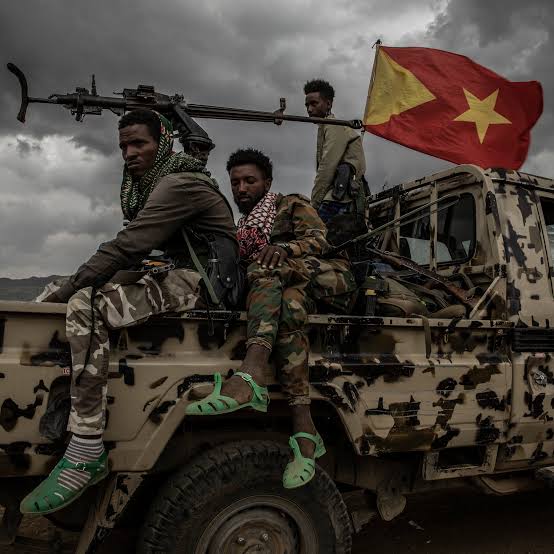
2. Separatist movements gaining ground in Oromia: Armed insurgency continues to destabilize the country’s most populous region
3. Armed insurgency in Amhara: The region faces ongoing conflict that challenges federal authority
The Mechanism of Fragmentation
Ethnic federalism provides the framework for this fragmentation. By welding identity to territory, the constitution turned administrative boundaries into high-stakes ethnic borders. This has led to “dozens of persistent, low-grade wars across the country,” with land disputes becoming potential ethnic flashpoints.
The constitutional right to secession has “hung over the nation like a guillotine.” Regional elites, whenever in dispute with the central government, can threaten to invoke Article 39, holding the entire country’s stability hostage. This provision “fundamentally undermines the permanence of the state and encourages extremist ethno-nationalist movements whose ultimate goal is not reform, but separation”.
The Role of Elite Fragmentation
The fragmentation is exacerbated by elite polarization. Research shows that “elite fragmentation and polarization driven by modernization, ethnic federalism, and authoritarian governance have been central to the country’s insecurity dynamics.” Elites have become “polarized actors who prioritized divergent security agendas,” making violence “the primary tool for asserting dominance”.
Scenario Two – Centralization and De Facto Unitarism
The Centralization Threat
An alternative scenario involves the gradual erosion of federalism through centralization. This would see the federal government increasingly concentrating power, using its control over security forces and resources to subordinate regional states.
Evidence of this trajectory already exists. The government’s approach to development has been marked by “state’s top-down, exclusionary and coercive approach,” as seen in the “Integrated Master Plan for Addis Ababa City and the surrounding areas of the Oromia region, as well as in large-scale farming and industrial parks development projects which encroached on the prerogatives of regional states”.
The National Dialogue as a Vehicle for Centralization
The ongoing National Dialogue has been criticized as a mechanism for centralization. According to a political analyst, the ENDC’s “proposed decision-making framework” is “mathematically and procedurally rigged to outvote the Oromo nation, dilute its demographic weight, and legally dismantle the multinational federal system”.
The design gives Oromia, home to approximately 35-40% of Ethiopia’s population, only 14 out of 211 seats in the key decision-making assembly—merely “6.6% of the voting power in the assembly that will decide the fate of the country”. This structural gerrymandering effectively disenfranchises the country’s largest ethnic group.
The Consequences of Centralization
Forcing centralization on a diverse society will likely backfire. As one critic warns, “attempting to enforce profound constitutional changes on a population of 40 million people who have been structurally cheated out of their representation will not bring peace. You cannot legally bind a nation to a contract in which its signature was forged”.
Centralization would likely trigger increased resistance, armed insurgency, and further fragmentation. The “manufactured consensus” approach “will inevitably exacerbate ethnic polarization and institutionalize conflict for generations”.
Scenario Three – Controlled Fragmentation and Managed State Collapse
The Possibility of Peaceful Dissolution
Some scholars have begun discussing “negotiated dissolution or alternative governance models” as potential pathways forward. This scenario would involve acknowledging that the current state structure cannot hold and negotiating a peaceful separation.
This approach would require:
1. Honest acknowledgment of the failure of the current model
2. Inclusive negotiations among all stakeholders
3. International mediation and support
4. Protection of minority rights and individual citizens
Why This Is Unlikely Without Progressive Leadership
However, without progressive leadership, controlled fragmentation is unlikely. The current pattern is one of violence and coercion rather than negotiation. The “securitized responses of federal and regional authorities” have “worsened the different layers of insecurity” rather than resolving them.
The experience of the Tigray War demonstrates that the federal government is more inclined toward military solutions than negotiated settlements. The war resulted in “hundreds of thousands of deaths and untold atrocities” without achieving a sustainable political resolution.
The South Sudan Precedent
Ethiopia risks following the path of South Sudan, where political fragmentation and elite competition led to devastating civil war. Without progressive, inclusive leadership, Ethiopia could experience a similar collapse into protracted conflict.
The Role of the National Dialogue in Shaping the Future
The Current Dialogue: A Missed Opportunity
The National Dialogue, as currently constituted, appears to be failing as a vehicle for reconciliation. Rather than fostering genuine consensus, it has been described as “a structural trap” that is “engineered to marginalise the country’s largest demographic constituency and dismantle its constitutional foundations”.
What Genuine Dialogue Would Require
Progressive leadership would transform the dialogue into a genuinely inclusive process that:
1. Includes all armed groups and opposition parties
2. Respects demographic realities in decision-making
3. Addresses the structural flaws of ethnic federalism
4. Protects minority and individual rights
5. Results in outcomes that all major groups can accept
The Consequences of a Flawed Dialogue
A flawed dialogue that produces a “manufactured consensus” will likely deepen divisions rather than heal them. As the Oromo Federalist Congress has warned, “this manufactured consensus will inevitably exacerbate ethnic polarisation and institutionalise conflict for generations”.
The dialogue’s outcomes are meant to be submitted to the House of Peoples’ Representatives for implementation, “effectively laying the groundwork for constitutional amendments.” If these amendments are perceived as illegitimate by major population groups, they will trigger further conflict.
Pathways Forward and Critical Conclusions
The Urgent Need for Progressive Leadership
The evidence points to a clear conclusion: without progressive leadership committed to genuine federalism, inclusive politics, and peaceful conflict resolution, Ethiopia’s federal system faces a bleak future. The “status quo is untenable” and “actively driving the country toward fragmentation”.
Elements of a Progressive Approach
A progressive approach would need to include:
1. A genuine constitutional dialogue: One that includes all stakeholders and addresses the fundamental contradictions of the federal system
2. Movement from ethnic to territorial federalism: Decoupling ethnicity from territory while protecting minority rights
3. Depoliticization of the security apparatus: Ensuring that federal and regional security forces serve citizens rather than ethnic interests
4. Protection of individual rights: Ensuring that all citizens can live, work, and own property anywhere in the country regardless of ethnicity
5. Inclusive democratic politics: Allowing meaningful political competition and protecting civil liberties
The Price of Failure
The cost of failure is immense. Without progressive leadership, Ethiopia faces “a trajectory of violent disintegration reminiscent of the Balkans,” with devastating consequences for its 120 million citizens.
The “integration-fragmentation continuum” framework shows that Ethiopia is progressing “towards the continuum’s final stage—Balkanisation” in the “absence of integrative civic frameworks”.
A Call for Change
Ethiopia’s future depends on whether political elites can move beyond ethnic competition and authoritarian governance. The current path leads to disintegration and conflict. Progressive leadership, by contrast, could transform the federal system into a genuine framework for managing diversity and building a shared future.
However, as one scholar concludes, “democratization in Ethiopia thus remains untenable without a renegotiated political settlement balancing autonomy and national unity”. Such a settlement requires leadership committed to dialogue, inclusivity, and peace rather than centralization, exclusion, and coercion.
Conclusion
Ethiopia’s federal system stands at a critical crossroads. Without progressive leadership, the system will continue to generate conflict and instability. The evidence from the National Dialogue, electoral politics, and ongoing armed conflicts all point to a trajectory of deepening fragmentation.
The question is not whether Ethiopia will change, but how. Progressive leadership could guide a peaceful transformation toward a more inclusive and stable federal system. But if current authoritarian and centralizing tendencies continue, the future will likely be one of violent disintegration, with all the human suffering that entails.


Leave a Reply