
Today, we examine whether Ethiopia can escape the cycle of revenge politics under Prime Minister Abiy Ahmed. This commentary argues that the current trajectory—characterized by the instrumentalization of ethnicity, the weaponization of legal institutions, and the fracture of the Tigray region—suggests that escape is improbable without fundamental changes in both leadership behavior and institutional architecture. The cycle is not merely persistent; it is being actively reinforced.
The Roots of Revenge Politics in Abiy’s Consolidation of Power
Understanding the revenge cycle requires examining how Abiy arrived at power and the political calculus that has defined his tenure. His ascent was driven by a populist youth movement, particularly the Qeerroo in Oromia, which forced the EPRDF to undertake “deep reform”. Abiy was not himself a product of this movement; he rode its wave, and once in power, he began systematically dismantling the coalition that brought him to prominence.
The Purge of Team Lemma
Within months of assuming the premiership, Abiy began purging his allies. The most notable was Lemma Megersa, then president of Oromia and a key figure in the reform movement. In April 2019, Abiy unconstitutionally removed Lemma from the Oromia presidency, replacing him with Shimelis Abdisa without regard for the regional state council’s procedures. This act was widely seen as a betrayal—intentional, calculated, and executed to eliminate potential competitors.
The Dissolution of the EPRDF and the Creation of the Prosperity Party
Abiy’s creation of the Prosperity Party in late 2019 represented a fundamental shift. The EPRDF, the long-ruling coalition of ethnic parties, was dissolved and replaced with a centralized pan-Ethiopian party. The Tigray People’s Liberation Front (TPLF) refused to join, viewing the move as a dismantling of the ethnic federalist system it had architectured.
The Prosperity Party, however, was never merely a reformist vehicle. It enabled Abiy to remove and appoint regional governors at will, bypassing constitutional processes. For Oromo nationalists, this represented a betrayal of the movement’s core demand for greater autonomy. The shift toward Ethiopian nationalism—centered on Amharic language, Orthodox Christian culture, and unitarist governance—alienated the Oromo constituencies that had propelled Abiy to power.
Instrumentalization of Anti-Tigrayan Sentiment
As Abiy consolidated power, anti-Tigrayan rhetoric became a central tool. The TPLF, once the dominant force within the EPRDF, was vilified as the enemy of the Ethiopian nation by Abiy Ahmed. Dehumanizing language—calling Tigrayans “weeds,” “cancer,” and “daytime hyenas”—became a staple of official and quasi-official discourse.
But the rhetoric was not incidental; it was strategic. By framing the TPLF as a mortal threat, Abiy could justify both the centralization of power and the eventual military campaign.
This is the foundation of revenge politics: the construction of a political enemy as an existential threat, followed by the pursuit of total victory rather than political resolution.
The War Against Tigray and Its Aftermath
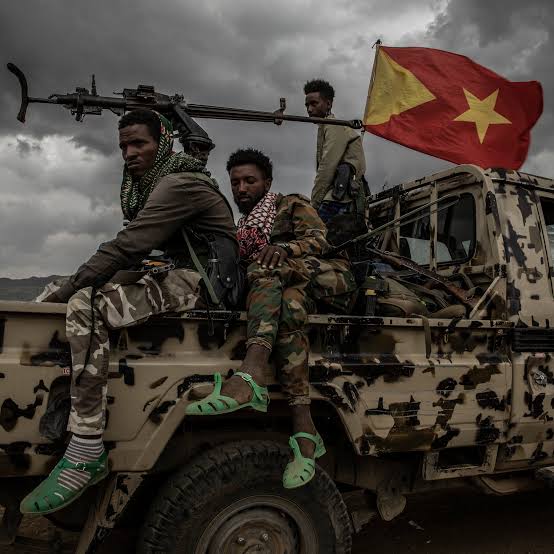
The November 2020 military operation against the TPLF marked the most destructive phase of the revenge cycle. Abiy framed the operation as a “law enforcement” measure in response to the TPLF’s attack on federal military bases in Tigray. What followed was a two-year conflict that, by some estimates, claimed hundreds of thousands of lives. The African Union mediator Olusegun Obasanjo estimated the death toll at around 600,000; other estimates have placed it as high as 800,000.
The Genocidal Dimension
Analysts and human rights organizations have characterized the campaign in Tigray as genocidal in intent. The goals were unambiguous: the “clean slate” or “purification” of Tigray was openly discussed. Tigrayans were ethnically cleansed from Western Tigray, with over one million displaced and many remaining in Sudanese refugee camps. Eritrean forces, allied with Abiy, participated in atrocities, taking advantage of the opportunity to settle scores with the TPLF from the 1998-2000 war.
The war was preceded by systematic weakening of Tigray: denial of federal budget allocation, refusal of pesticide spraying for locusts, withholding of COVID-19 protective materials, and the grounding of a pesticide-drone purchased by Tigrayan residents in Israel.
The Pretoria Agreement: A Weapon Rather Than a Settlement
The November 2022 Pretoria Cessation of Hostilities Agreement (CoHA) was heralded as a diplomatic success. In practice, it has been used by Abiy’s government as an instrument to further dismantle Tigray’s political and territorial integrity.
Under the guise of implementation, the federal government has:
Fractured Tigray politically: The TPLF’s legal party status has been revoked by the National Electoral Board of Ethiopia (NEBE) unconstitutionally, contravening the agreement’s terms. An interim administration was established under Getachew which was refused by the people.
Delayed the return of occupied territories: Western Tigray, including Welkait-Tsegede and Setit-Humera are hijacked by Abiy Ahmed. Tigrayans ethnically cleansed from these areas have not been permitted to return. The federal government has proposed referenda to determine the status of these territories, but Tigrayan authorities argue that any vote held while the population remains displaced would ratify ethnic cleansing rather than resolve it.
Maintained a de facto blockade: Access to medicine, fuel, cash, and salaries has been restricted in Tigray, with nearly 60% of households facing severe hunger. The UN documented this pattern during the war; it has continued through the “peace” agreement.
Exploited the internal split: In January 2026, clashes broke out between federal forces and Tigray Defense Forces in Tselemti, followed by drone strikes that hit civilian targets. The federal government has backed armed groups aligned with factions willing to cooperate with Addis Ababa.
The Weaponization of Legal Institutions
NEBE, once viewed as a potential pillar of democratic transition, has become a tool for conflict ignition. The board allowed Abiy to circumvent electoral laws to dissolve the EPRDF and create the Prosperity Party. It postponed the 2020 elections under the guise of COVID-19, a claim widely viewed as pretextual given the government’s lax enforcement of other public health measures.
Most crucially, NEBE has refused to recognize the TPLF, effectively nullifying the CoHA and keeping Tigray in legal limbo. In February 2026, the House of Federation removed five electoral constituencies from Tigrayan oversight, instructing NEBE to hold federal elections in occupied territories while postponing regional council elections indefinitely. All major Tigrayan political parties rejected this as unconstitutional and a direct violation of the Pretoria Agreement.
The Spreading Conflict in Amhara
The revenge cycle is not confined to Tigray. The Amhara region, which was duped unknowingly, provided crucial support to Abiy, has itself become a battleground.
The Rise of Fano and the Government’s Response
Amhara Fano, has turned against the government. The trigger was the federal government’s attempt to disarm Fano after the war. Since August 2023, a state of emergency has been in place in Amhara, with government forces using heavy artillery and drones against Fano insurgents.
The Leadership Void
The federal government’s approach in Amhara has been securitization rather than political resolution. Deputy Prime Minister Demeke Mekonnen, an Amhara, resigned in January 2024, leaving a void in the Amhara Prosperity Party. He was replaced by Temesgen Tiruneh, a former intelligence chief, signaling a security-first approach to Amhara’s unrest.
The Cycle of Violence
Amhara nationalists accuse the government of Oromo bias, pointing to peace talks with the TPLF (Pretoria) and the OLA (Dar es Salaam) while refusing dialogue with Fano. The government claims that Fano lacks coherent leadership. Meanwhile, violence continues: coordinated Fano attacks on Bahir Dar, Gondar, and Lalibela in February 2024 were followed by a shift to rural insurgency, with both sides accused of targeting civilians.
The Foreign Policy Dimension: Externalizing Internal Conflict
Abiy has framed internal conflicts as part of a broader struggle against foreign interference, particularly from Western powers. This serves to delegitimize domestic opposition and to portray critics as agents of external enemies.
The Red Sea Ambitions
Abiy’s assertive Red Sea ambitions—expressed through a controversial MoU with Somaliland—have been met with international pushback. The US State Department has expressed concern about any policy that might reward or empower Abiy. But within Ethiopia, these external pressures are reframed as attacks on Ethiopian sovereignty, further narrowing the political space for dissent.
The International Response
The international community has been complicit in enabling the revenge cycle. The US and EU maintain leverage through aid, trade, and diplomatic pressure, but have largely failed to use it. The US Department of State, for example, has thrown “cold water” on the Somaliland MoU but has not addressed the deeper abuses within Ethiopia.
Can Ethiopia Escape the Cycle?
The evidence suggests that escape from the revenge cycle is currently unlikely. Here is why:
The Structural Impediments
1. The Ethnic Federalist Trap: The 1995 constitution institutionalized ethnicity as the basis of political representation. This system was designed to accommodate diversity but has instead generated competing claims of victimhood and entitlement. The prosperity Party, far from resolving this, has deepened the contradictions by moving toward unitarism while maintaining the constitutional framework of ethnic federalism.
2. The Institutional Capture: NEBE, the judiciary, and the executive are fused under Abiy’s control. Legal institutions are deployed to consolidate power, not to resolve disputes. “Abiy maintains the appearance of the rule of law while systematically dismantling its substance,” one analysis notes.
3. The Military Logic: The government’s use of drones and heavy artillery in Amhara and Tigray signals that it prioritizes submission over negotiation.
The Leadership Factor
Abiy’s leadership appears to be a central obstacle to reconciliation. Ethiopians describe him as “thin-skinned and megalomaniacal,” “bent more on avenging past slights, real and imagined, rather than advancing and reforming Ethiopia”. His belief in his own divine right to rule and his willingness to frame opponents as enemies to be destroyed rather than citizens to be reconciled suggest that he will not be the architect of the national unity he claims to seek.
The Absence of National Dialogue
A national dialogue process has been proposed but has not materialized in a meaningful way. Without inclusive governance and genuine reconciliation, the cycle of conflict is likely to continue. As one study concludes, “sustainable democratization hinges on constitutional reform, inclusive governance, and institutional resilience,” and “without these, Ethiopia risks cyclical instability despite its reform ambitions”.
Conclusion: A Nation’s Political Culture Hardened by Revenge
Ethiopia’s political culture has been fundamentally transformed by constant conflict and the revenge politics that has driven it. Trust between ethnic groups and between citizens and the state has been eroded. Legal institutions have been weaponized. Violence has been normalized.
Under Abiy Ahmed, the mechanisms of revenge have been refined: the instrumentalization of ethnicity, the exploitation of legal institutions, the fragmentation of opponents, and the externalization of internal conflict. The Pretoria Agreement, far from breaking the cycle, has provided cover for a continued assault on Tigray’s political and territorial integrity.
Can Ethiopia escape this cycle? On the current trajectory, the answer is no. The leadership is committed to revenge politics, the institutions that could provide checks are captured, and the deep grievances that fuel conflict remain unaddressed. Escape would require:
A fundamental change in leadership behavior—a commitment to reconciliation over retribution, to political resolution over military victory.
Institutional reform—an independent judiciary, a neutral electoral board, and a constitution that can accommodate diversity without generating endless conflict.
A genuine national dialogue—one that includes all parties, confronts historical grievances, and builds a shared vision of the Ethiopian state.
These are not merely policy choices; they are cultural transformations. And they require leadership that is willing to see opponents as citizens, not enemies; to make peace rather than to fight; to build institutions rather than to capture them.
There is no sign of such leadership in Addis Ababa today. The cycle continues, and with each cycle, the political culture hardens, making the eventual escape more difficult. For Ethiopia, the path forward is not yet clear, but the path already taken has led to a dark place.


Leave a Reply