
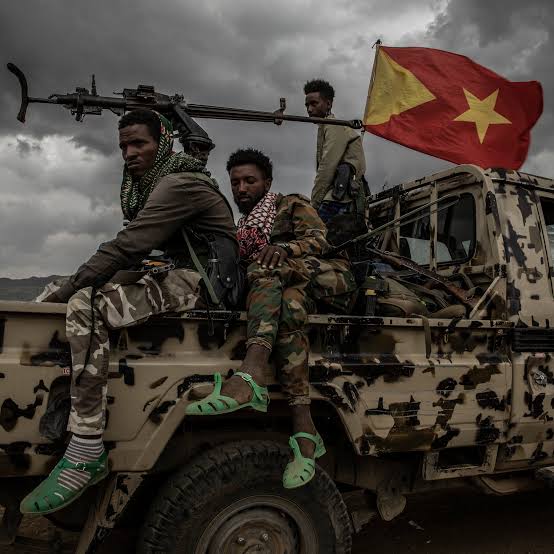
Today we will talk about a very painful subject. We will discuss what the tears of the Tigrayan people mean for the government of Prime Minister Abiy Ahmed. We will look at how the people of Tigray now see the federal government after it waged war on them. And most importantly, we will examine the trauma that this war will cause for future generations in Tigray.
This is a heavy topic. It involves war, loss, and deep psychological wounds. The war in Tigray lasted from 2020 to 2022. It was a brutal conflict that tore families apart and destroyed communities. Even though a peace agreement was signed in November 2022, the pain is far from over.
To understand this situation, we must look at it from the perspective of the Tigrayan people. How do they feel after surviving such a devastating war? And what happens when the government that attacked them refuses to truly listen?
Part 1: What the Tears Mean for Abiy’s Regime
The tears of Tigrayans represent a huge failure for Abiy Ahmed’s government. When he came to power in 2018, he was seen as a peacemaker. He won the Nobel Peace Prize in 2019 for making peace with Eritrea. But the war in Tigray changed everything.
A Symbol of Broken Trust
For the Tigrayan people, the war was not just a military conflict. It was a betrayal. The federal government, under Abiy Ahmed, used the full force of the Ethiopian military against them. They also brought in Eritrean forces to help fight. This was a shock to many .
According to analysis from the Addis Standard, at the core of Abiy Ahmed’s hostility toward Tigray lies a deep personal ambition to centralize power. He wants to be the so called modern-day leader who controls everything. Tigray’s insistence on self-rule and autonomy has been a persistent obstacle to this.
A Failed Military Campaign
Despite using massive military force, the federal government did not succeed in subjugating Tigray. The Tigray Defense Forces (TDF) fought back fiercely. Even today, the region continues to resist federal control. This is deeply embarrassing for Abiy Ahmed. He promised a quick victory but instead got a long and bloody war.
Collective Punishment Continues
The pain of Tigrayans does not end with the fighting. Since the war, the federal government has been accused of imposing a de facto blockade on the region. This means blocking access to medicine, fuel, cash, and salaries. This is seen as collective punishment of the entire Tigrayan population.
Many Tigrayans feel that the government is still punishing them even after the war is over. This creates deep anger and resentment. These tears are not just from the past. They are being shed every day because of the harsh conditions people are living under.
Part 2: How Tigrayans See the Federal Government Now
After being attacked by their own government, how do the people of Tigray see Abiy Ahmed’s regime? The answer is clear: they see it as an enemy.
A Government of Occupation
Many Tigrayans do not see the federal government as a legitimate authority. They see it as an occupying force. This is especially true in areas like Western Tigray. Thousands of Tigrayans were forced from their homes. Their land was given to others.
The Pretoria Peace Agreement was supposed to restore constitutional order and allow displaced people to return home. But nearly three years later, this has not happened.
Feelings of Abandonment and Betrayal
Beyond the physical occupation, there is a deep sense of abandonment. Tigrayans feel that the rest of Ethiopia does not care about them. They feel that the international community has failed them as well.
A report from Pambazuka News describes Tigrayans as “disillusioned” with the federal government. They feel betrayed by the new federal government .
One survivor, Gebreyohanes, described his daily struggle to Doctors Without Borders: “Life is very hard… The rain comes through the roof and floods the ground. I don’t have a proper place to sleep. Back home, I used to farm and feed myself… after I came here, I’ve been very sad” . This is not just sadness. This is the feeling of being abandoned by the government that is supposed to protect you.
Part 3: The Trauma for Future Generations
Perhaps the most tragic part of this story is the trauma that will be passed down to future generations. War does not end when the fighting stops. It lives on in the minds and hearts of those who survived. It is passed down to their children.
The Trauma of Loss
The war in Tigray resulted in catastrophic loss of life, with estimates ranging from hundreds of thousands to nearly 800,000 deaths. Countless families were torn apart. Children lost their parents. Parents lost their children.
Solomon is a 14-year-old boy from Tigray. His father joined the military and was killed. His mother was so devastated by the loss that she fell ill and died shortly after. Solomon and his four siblings were separated because no relative could care for them all. He felt angry, depressed, and hopeless.
This is not just one story. This is the story of a generation.
The Scars on Children
Children in conflict zones experience profound shifts in their social, cultural, and educational worlds. They are forced to adapt to life-threatening conditions. Research shows that how parents and elders talk about the war has a huge impact on children’s minds.
In Tigray, children have witnessed violence, displacement, and death. They have lost their homes and their sense of safety. This can cause long-term psychological problems like aggression, sleep disturbance, grief, and depression.
Passing Down the Pain
One of the most dangerous things about war trauma is that it can be passed from one generation to the next. Parents who have been deeply hurt may transmit feelings of resentment, hatred, and a desire for revenge to their children.
This can create a cycle of conflict. Children grow up hearing stories of how their government killed their grandparents. They learn to mistrust the authorities. This makes it very hard for any peace to last.
The Refusal to Listen
This trauma is made much worse when the government refuses to listen. There is a deep sense among Tigrayans that Abiy Ahmed’s regime does not care about their suffering. When they try to speak, they are ignored.
For example, Tigrayan elders who traveled to Addis Ababa seeking reconciliation were denied a meeting with the federal leadership. They were sent back empty-handed . This is not just a missed opportunity. It is a sign that the government does not want to hear what Tigrayans have to say.
When victims are not listened to, their wounds cannot heal. The trauma deepens and is passed on to the next generation.
Conclusion
The tears of Tigrayans are a deep wound on the soul of Ethiopia. For Abiy Ahmed’s regime, these tears represent a huge failure. A leader who was once a peacemaker is now seen by many as a tyrant who waged war on his own people.
For the Tigrayan people, the federal government is not a protector. It is an occupier. It is a source of pain and fear. They feel betrayed, abandoned, and silenced.
The trauma of this war will last for generations. Children who lost their parents are growing up with deep psychological scars. They are learning to mistrust the government and to hold onto grievances that will be passed down to their own children.
When a government refuses to listen to the suffering of its people, it plants the seeds of future conflict. The war in Tigray may have paused, but until there is real justice, real accountability, and real listening, the cycle of pain will continue.
The question for Abiy Ahmed is simple: will he finally listen to the tears of Tigrayans? Or will he let the wounds fester and create more suffering for future generations?


Leave a Reply