

Political culture is not static. It is the slow sediment of a nation’s experiences—the shared assumptions about power, loyalty, violence, and justice that shape how citizens relate to their state and to each other. When a nation endures prolonged conflict, these sediments are disturbed. New patterns emerge, often in ways that persist long after the guns fall silent.
Ethiopia, Africa’s second most populous nation, offers a stark contemporary case study. Since 2018, under Prime Minister Abiy Ahmed, the country has transitioned from a period of intense protest to outright civil war, ethnic violence, and foreign entanglements. This analysis argues that constant conflict fundamentally reshapes political culture along three axes: it normalizes political violence as a legitimate tool, it fractures national identity into mutually suspicious ethnic blocs, and it transforms the state from a provider of development into a security apparatus that citizens seek to capture or evade. The process is accelerated by Abiy Ahmed’s governance choices, which have paradoxically deepened the very fractures he once promised to heal.
Part I: Abiy Ahmed and the Unraveling of the Old Order
To understand how conflict is changing Ethiopia’s political culture, one must first understand the moment of Abiy’s ascent. By the mid-2010s, Ethiopia’s ruling coalition, the Ethiopian People’s Revolutionary Democratic Front (EPRDF), faced a “distributive crisis”—a severe shortage of land and employment, particularly affecting young adults . Mass anti-government protests exploded first in Oromiya in 2014 and again in late 2015, spreading to the Amhara region by 2016
By early 2018 Abiy Ahmed emerged as prime minister. His early promise was remarkable: he released political prisoners, lifted bans on opposition groups, and made peace with neighboring Eritrea, earning the Nobel Peace Prize in 2019 . Yet beneath this liberalizing veneer, the foundations of the old state were crumbling. The EPRDF collapsed, and Abiy’s vision of a centralized, pan-Ethiopian nationalism began to clash with the ethnic federalist structures he inherited.
Abiy has taken several steps that, while perhaps intended to consolidate power, have deepened conflict and reshaped political culture in damaging ways.
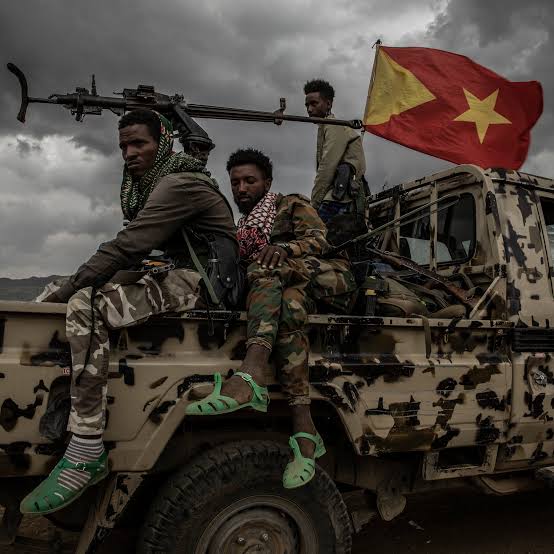
First, his militarization of political disputes. In November 2020, Abiy launched a military operation against the Tigray People’s Liberation Front (TPLF. His government framed this as a “law enforcement operation,” but the ensuing conflict has been devastating, characterized by atrocities, famine, and mass displacement . This decision fundamentally altered Ethiopian political culture: it signaled that internal political disagreements would be settled through force rather than negotiation. The genie of civil war, once released, could not be easily returned to the bottle.
Second, Abiy’s ethnicization of political narratives. While his rhetoric often emphasizes a unified Ethiopia, his actions have inadvertently stoked ethnic grievances. The TPLF, representing the Tigrayan minority, was vilified as the enemy of the Ethiopian nation. Meanwhile, conflicts have erupted along the Oromiya-Somali border and in other regions, with the state often unable or unwilling to mediate . When the prime minister frames politics as a battle between “Ethiopian” nationalists and ethnic “traitors,” he entrenches a political culture in which one’s ethnic identity determines one’s loyalty to the state.
Third, Abiy’s recalibration of foreign policy has entangled internal conflicts with external pressures. Ethiopia’s dispute with Egypt over the Grand Ethiopian Renaissance Dam has drawn in regional powers . The US and its allies have imposed sanctions over the Tigray conflict, prompting Addis Ababa to describe this as an “orchestrated attack” against Ethiopia . This external pressure, in turn, has allowed Abiy to frame domestic critics as foreign agents, further narrowing the space for political contestation.
Part II: Political Violence as a Normalized Tool
Perhaps the most profound change in Ethiopia’s political culture is the normalization of political violence. This is not a new phenomenon—Ethiopia has a long history of repression and armed struggle, from the Derg’s Red era to the decades-long civil war that brought the EPRDF to power . But the scale and frequency of violence since 2018 has reached a new level.
The desensitization to civilian suffering. In the 2015-2018 protests, the government’s violent response to peaceful demonstrations resulted in approximately 400 deaths by March 2016 . By 2021, the Tigray conflict had reportedly led to tens of thousands of deaths and the displacement of millions. Civilian casualties have become a grim statistic, not a national trauma. This desensitization has corrosive effects: when citizens no longer expect their state to protect them, and when they cease to be shocked by atrocities, a crucial moral boundary has been crossed. A political culture that tolerates mass suffering is one that has lost its capacity for empathy and solidarity.
The erosion of legal norms. In October 2016, following a stampede at the Irreecha festival that killed some 100 people, protestors launched “five days of rage” that targeted government offices, factories, and investment projects . The government declared a State of Emergency, giving security forces the authority to arrest individuals without warrant and shut down communications . This pattern has repeated under Abiy. The normal legal framework has been repeatedly suspended, and the rule of law has given way to a logic of emergency. A political culture built on emergency decrees and ad hoc arrests is not a culture of rights; it is a culture of fear.
Part III: The Fracturing of National Identity
Conflict does not simply rend the social fabric; it reforges it along new lines. In Ethiopia, the central fault line is ethnic identity.
The legacy of ethnic federalism. The EPRDF’s system gave each major ethnic group its own regional state, with its own administration and language policies. This was intended to acknowledge Ethiopia’s diversity . When resources were distributed, they were distributed along ethnic lines; when political battles were fought, they were fought between ethnic elites. The protests of 2015-2018 were refracted “through the prism of ethnic federalism,” with mass unrest and elite contestation dividing along ethnic lines
Conflict as identity accelerator. Prolonged conflict accelerates this process. In Tigray, the war against the TPLF has generated a siege mentality—a sense that the Tigrayan people are under existential threat from the Aby Ahmed’s tyrannical regime. This has produced a powerful solidarity, but also a deep resentment toward the federal government. Similarly, in Oromiya and Amhara, conflicts have generated narratives of victimhood and grievance that mobilize populations. When people are killed because of their ethnicity, when communities are displaced ,identity becomes a matter of life and death. It is no longer a political affiliation; it is a survival strategy.
The collapse of a unifying national narrative. The Ethiopian state has historically drawn on narratives of ancient nationhood—the Solomonic dynasty, the victory over Italian colonialism at Adwa in 1896—to build a sense of national unity . These narratives always excluded some groups, but they provided a shared history. Under Abiy, this unifying narrative has fractured. His government promotes a vision of Ethiopian nationalism of which as per now is a fallacy. The result is a political culture in which there is no agreed-upon “we.” There are only competing “us” and “them.”
Part IV: The Transformation of State and Citizen
The third change in political culture concerns the relationship between the state and its citizens. In the EPRDF era, the state was r developmental—it promised economic growth in exchange for political acquiescence. Under Abiy, the state’s developmental capacity has eroded, while its coercive capacity has been emphasized.
From developmental state to security state. The EPRDF’s rule was built on a promise: The state invested in infrastructure, education, and industrialization. Ethiopia was, for a time, Africa’s fastest-growing economy . Under Abiy, the state’s developmental capacity has been further eroded by conflict. Resources that might have gone to schools, hospitals, and roads are instead diverted to military spending and security. The economy has slowed. The state’s claim to legitimacy now rests less on what it provides and more on what it protects—or, increasingly, what it cannot protect.
The securitization of everyday life. In conflict zones, security is the primary concern. Checkpoints, curfews, and military operations structure daily life. In non-conflict zones, the threat of violence is ever-present—ethnic militias are active in many regions, and the next crisis could be just around the corner. This securitization changes how citizens experience the state. They no longer see the state as a provider of services but as a security apparatus that they must either support, evade, or fight. This transforms political participation: instead of demanding better services, citizens demand security; instead of electing representatives, they support armed actors.
The turn to foreign patrons. As the state’s capacity has eroded, both the government and opposition groups have turned to foreign patrons. Abiy has courted China, Ethiopia’s top trade and investment partner, and has framed Western pressure as an attack on Ethiopian sovereignty . The TPLF has sought support from Western governments and diaspora communities. This externalization of internal conflict has a perverse effect: it suggests that political survival depends not on domestic legitimacy but on international backing. A political culture oriented toward foreign patrons is a culture in which citizens become instruments of external agendas, rather than agents of their own governance.
Part V: The Perils of Nationalism and the Cycle of Conflict
One of the most dangerous legacies of constant conflict is the intensification of nationalism. Ethiopian nationalism has historically been a double-edged sword. On one hand, it has served to mobilize citizens against external threats—the battle against Italian colonialism, the war with Eritrea . On the other hand, it has been used to suppress internal dissent, conflating opposition with treason.
The mobilization against external threats. During the Eritrean-Ethiopian war (1998-2000), the Ethiopian government harnessed nationalist sentiment to suppress internal opposition. Citizens were expected to rally around the flag, and dissent was portrayed as unpatriotic . This pattern has repeated under Abiy. The conflict with the TPLF is framed not as a civil war but as a defense of Ethiopian unity against a separatist threat. The dispute with Egypt over the Grand Ethiopian Renaissance Dam is framed as a matter of national survival . This externalization of internal conflict serves the state in two ways: it diverts attention from domestic problems, and it labels critics as enemies of the nation.
The psychology of border conflicts. Scholars have noted that conflicts over territory are rarely about economics alone; they are deeply psychological . The border dispute with Eritrea, for example, was about national pride, historical grievance, and collective identity as much as it was about land. When such conflicts persist, they shape political culture: citizens come to define themselves in opposition to a hostile neighbor, and leaders gain legitimacy by standing firm against the enemy. The tragedy is that this dynamic makes peace harder to achieve—to make concessions to an enemy is to betray the nation.
The cycle of conflict and authoritarianism. Perhaps the most durable feature of Ethiopia’s changing political culture is the link between conflict and authoritarianism. Constant conflict demands strong leadership, or so the argument goes. Dissent is a luxury that cannot be afforded in wartime. Civil liberties are suspended in the name of security. The result is a political culture that cycles between conflict and repression, with each conflict justifying the next round of repression, and each round of repression producing new grievances that fuel the next conflict.
Conclusion: The Wounds That May Not Heal
The question is whether these changes are reversible. Political culture is not destiny, but it is stubborn. The trust that has been eroded between ethnic groups, between citizens and the state, between political elites and their constituencies—this trust may take generations to rebuild.
Abiy Ahmed came to power promising to transcend ethnic divisions, to build a new Ethiopia, to heal the wounds of the past. He inherited a system, and he has taken steps that have made it worse. The war in Tigray, the proliferation of ethnic militias, the militarization of politics—these are not the foundations of a stable political culture.
Ethiopia is, in the historian’s phrase, a “state-in-the-making.” Its political culture is not fixed; it is being forged in the crucible of conflict. But the metal that is being forged is brittle. It is a culture of suspicion, fear, and violence. Unless there is a change in the expression of nationalism and the perception of national identity, it will be difficult to address the dynamics of conflict and find lasting solutions .
The path forward requires something that is currently in short supply: the willingness to see the other as a fellow citizen, not an enemy; the commitment to democratic institutions over charismatic leadership; the courage to make peace rather than to fight. These are not merely policy choices; they are cultural transformations. And they must begin now, because every day of conflict makes the healing harder, and the political culture more hardened.

Leave a Reply