

Ethiopia stands at another decisive moment in its modern political history. The country’s recurring political crises, wars, ethnic tensions, and institutional fragility have raised a fundamental question: Is Ethiopia’s federal system responsible for its instability, or has the crisis been aggravated by the way power has been exercised under Prime Minister Abiy Ahmed?
My argument is that Ethiopia’s central problem today is not federalism itself. It is the concentration and use of political power, the erosion of institutional trust, and the failure of the current leadership to build a political settlement acceptable to Ethiopia’s diverse nations and nationalities.
When Abiy Ahmed came to power in 2018 following the resignation of Prime Minister Hailemariam Desalegn, expectations were extraordinarily high. As Ethiopia’s first Oromo prime minister, his emergence was viewed by many as an opportunity to correct historical political imbalances and open a new chapter of inclusion and reconciliation. His early reforms generated considerable domestic and international optimism.
That optimism, however, has been severely damaged by the conflicts that followed.
From Reformist Promise to Political Confrontation
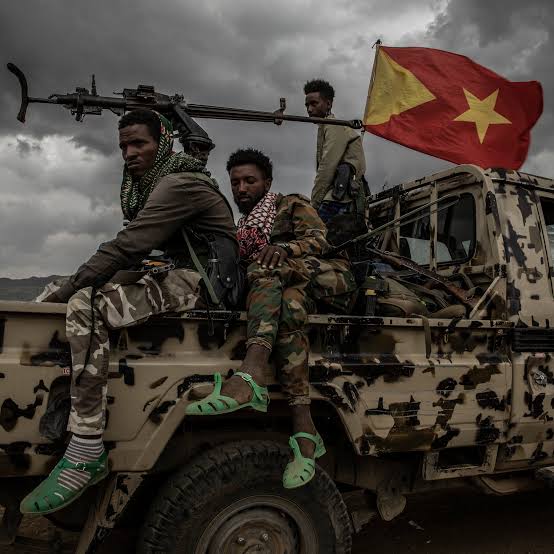
Rather than consolidating a broad national consensus, Abiy’s government increasingly became embroiled in confrontations with powerful regional and political actors. The most devastating was the war in Tigray, which erupted in November 2020.
The conflict involved Ethiopian federal forces, Tigrayan forces, Eritrean troops and Amhara forces. It produced enormous human suffering, including deaths, displacement, destruction of livelihoods and allegations of serious violations of international humanitarian and human rights law.
The Pretoria Agreement of November 2022 ended the large-scale fighting and created a framework for restoring peace. It was an important achievement because it stopped a devastating war. Yet the agreement left several difficult political questions unresolved, particularly the return of displaced people, the status of contested territories and the broader political relationship between Tigray and the federal government.
Peace agreements cannot succeed merely because the guns fall silent. They require political confidence, institutional commitment and implementation by all parties.
The continuing disputes surrounding Tigray demonstrate how fragile Ethiopia’s peace remains.
Welkait and the Politics of Territorial Disputes
The Welkait issue illustrates the broader problem. Territorial disputes between Tigray and Amhara communities have deep historical, political and emotional dimensions. Treating such disputes primarily as instruments of political competition risks transforming local grievances into national conflicts.
The federal government has a responsibility to facilitate a credible political and constitutional process through which contested questions can be addressed. Instead, when territorial and ethnic grievances become tools for strengthening political power, reconciliation becomes increasingly difficult.
Ethiopia cannot build lasting stability by allowing one community to believe that another community’s political advancement represents an existential threat.
The Question of Federalism
Supporters of greater centralization argue that Ethiopia’s federal structure has encouraged ethnic division and weakened the authority of the state. There is some truth in the criticism that ethnic politics can deepen polarization. But abolishing or hollowing out federalism would not necessarily solve the problem.
Ethiopia is one of Africa’s most diverse states, encompassing numerous nations, nationalities and peoples with distinct languages, histories and political identities. Federalism was designed, at least in principle, to provide mechanisms for self-rule while maintaining a common Ethiopian state.
The real question, therefore, should not be whether Ethiopia should simply have a strong central government or strong regional governments. The question is how to construct a federal system in which neither the center nor the regions can arbitrarily undermine the constitutional rights of the other.
A functioning federation requires an independent judiciary, credible elections, accountable security institutions, meaningful regional autonomy and political competition.
Without those safeguards, federalism can become dysfunctional. But centralization without safeguards can be even more dangerous.
The Rise of “Tsimdo” and a New Regional Equation
The emergence of the term “Tsimdo” in political discourse reflects another important development: the changing relationship between Tigray and Eritrea.
For decades, relations between Tigray and Eritrea were dominated by war, hostility and political rivalry. Yet Ethiopia’s current political crisis has created incentives for former adversaries to reassess their interests.
Any emerging rapprochement between Tigray and Eritrea should therefore be understood within the wider transformation of the Horn of Africa. It reflects not simply historical grievances but also contemporary calculations about security, sovereignty and the future balance of power.
Whether such an alignment becomes durable remains uncertain. But its emergence demonstrates that Ethiopia’s political crisis cannot be understood exclusively within Ethiopia’s borders. Eritrea, Sudan, Somalia and the wider Horn of Africa are deeply affected by Ethiopia’s internal instability.
Ethiopia Cannot Be Governed Through Permanent Confrontation
The greatest danger facing Ethiopia is the normalization of political confrontation.
A country of Ethiopia’s size and diversity cannot be governed sustainably through permanent conflict between the federal government and regional political forces. Nor can national unity be achieved by portraying political opposition as an enemy of the state.
The government has a legitimate responsibility to maintain constitutional order and national security. Regional governments and political movements also have obligations to respect constitutional rules and peaceful political competition. Neither side, however, should be permitted to redefine constitutional politics through military force.
Ethiopia needs politics strong enough to replace warfare.
That requires a national political dialogue in which the country’s major communities and political forces can discuss the future of the federation, regional boundaries, constitutional rights, security arrangements, elections and the distribution of political power.
The Legacy of the EPRDF
It is tempting to portray the 27-year rule of the Ethiopian People’s Revolutionary Democratic Front as an era of stability and development in contrast to the present crisis. There were undoubtedly significant economic and infrastructural achievements during that period. Ethiopia experienced rapid economic growth and major investments in roads, electricity, education and other sectors.
But the EPRDF era also had some shortcomings, including restrictions on political competition, and human-rights concerns.
Relatively, the past rule of EPRDF was much better than the current haphazard and dictatorial tendency tended by Abiy’s rule.
The country should preserve what worked—particularly the principle that Ethiopia’s diversity requires mechanisms of self-rule—while abandoning authoritarian practices and creating stronger democratic institutions.
Is the Problem Abiy or the System?
The most important question facing Ethiopia is therefore not simply whether Abiy Ahmed should remain in power.
Leadership matters, but Ethiopia’s crisis is larger than one individual.
If Abiy leaves office tomorrow but the same institutional weaknesses remain, Ethiopia will still face disputes over federalism, contested territories, political representation, security-sector accountability and relations between the center and the regions.
At the same time, leadership cannot be dismissed as irrelevant. Governments make choices. Political leaders determine whether disagreements become negotiations or wars, whether institutions become stronger or weaker, and whether opponents are treated as legitimate political actors or existential enemies.
Abiy’s greatest political failure may therefore be the failure to convert the enormous public optimism that accompanied his rise into a durable national political settlement.
Ethiopia Needs a New Political Contract
Ethiopia now needs something more profound than another change of government. It needs a new political contract.
That contract should guarantee meaningful federalism while protecting national institutions. It should establish credible elections, independent courts and accountable security forces. It should provide peaceful mechanisms for resolving territorial disputes and ensure the return and rehabilitation of displaced populations. Most importantly, it must make political competition possible without turning every disagreement into an existential struggle.
The choice before Ethiopia should not be presented as a simplistic contest between a centralized state and ethnic federalism.
The real choice is between constitutional politics and permanent confrontation.
Ethiopia does not need another political order built around the dominance of one party, one leader or one community.
It needs a federation in which diversity is treated as a political reality rather than a threat; a government whose authority derives from institutions rather than coercion; and a political system in which power can change hands peacefully.
But one lesson is already clear: Ethiopia cannot build lasting peace by concentrating power, weaponizing identity or postponing the difficult political questions that lie at the heart of its conflicts.
The future of Ethiopia will not be secured by defeating one region, one ethnic group or one political organization.
It will be secured when no Ethiopian community feels that its survival depends on controlling the state.
That is the political re-definition Ethiopia urgently needs.

Leave a Reply