
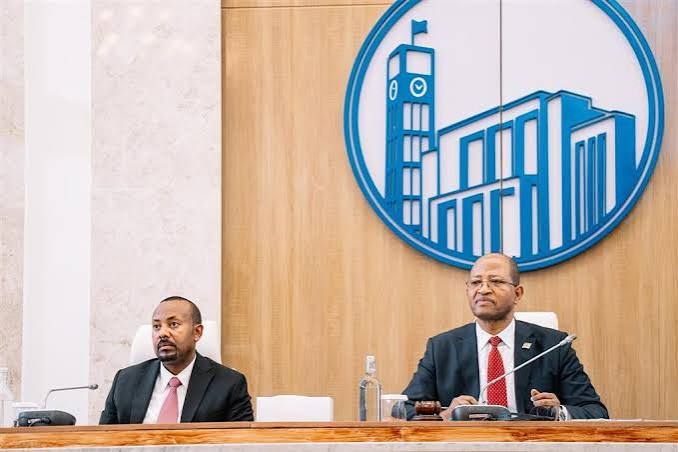
In contemporary democratic theory, parliaments serve three essential functions: making laws, exercising oversight over the executive, and representing the people. The extent to which a parliament effectively performs these functions determines the health of democratic governance and the degree to which citizens feel a sense of belonging and stake in the political system. In Ethiopia, however, significant structural and political factors have raised serious questions about whether the House of Peoples’ Representatives (HPR) effectively represents the country’s diverse citizenry under Prime Minister Abiy Ahmed’s administration.
The Electoral Landscape: Dominance Without Competition
The most fundamental challenge to effective parliamentary representation in Ethiopia is the overwhelming electoral dominance of the ruling Prosperity Party. In the June 2026 general election, the Prosperity Party fraudlently secured 438 of the 486 contested seats in the House of Peoples’ Representatives—a parliamentary majority. This victory followed the party’s 2021 performance, when it won 410 seats out of 484 contested.
While the ruling party secured a so called landslide victory, the election itself was characterized by significant limitations on full participation. The National Election Board reported that elections could not be conducted in certain constituencies due to security concerns, while others were excluded due to electoral irregularities. Crucially, the competition was suspended in 46 constituencies—8 in the Amhara region and 38 in the Tigray region—meaning the House will commence operations with only 501 of its 547 seats. This situation ” restricts the full federal representation of the House”.
This electoral context means that the opposition won between 10 and 15 percent of the contested seats.
Exclusion and Disenfranchisement
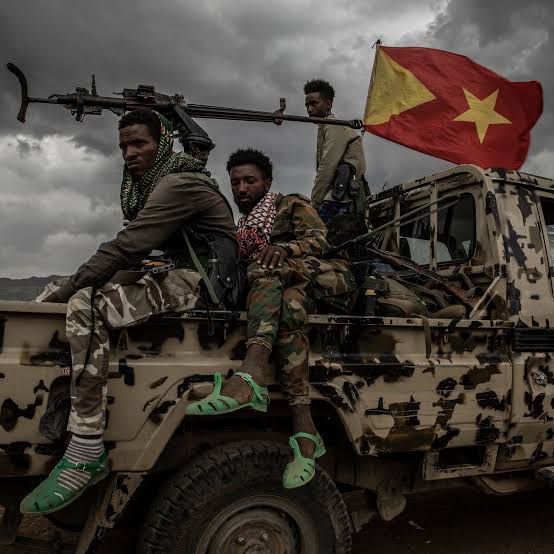
A deeper representational crisis emerges from the significant segments of the population effectively excluded from the electoral process. Multiple overlapping conflicts have displaced millions and weakened state authority in several parts of the country thanks to Aby’s tyrant regime. Insecurity prevented polling in large areas, including constituencies in northern Ethiopia such as Humera, Raya Alamata, and Tselemti.
The situation in Tigray is particularly instructive regarding representational failure. The Tigray People’s Liberation Front (TPLF), the dominant political force in Tigray and central to Ethiopian politics was banned from the election by the National Election Board. The party’s legal status was cancelled in May 2025. Consequently, with Tigray not participating, alongside major parts of Amhara and Oromia, analysts have questioned the legitimacy of the election itself.
This exclusion has profound implications for representation. When people gain political representation, they develop a sense of belongingness and stake in the system; conversely, exclusion alienates significant segments of the population and increases the “proclivity to subvert the system”.
The Structural Constraints on Parliamentary Power
Beyond electoral issues, the structure of Ethiopia’s parliamentary system under the Prosperity Party raises questions about whether parliament can effectively constrain executive power. A recent constitutional analysis argues that “the problem is not simply the absence of term limits” for prime ministers. Under classical parliamentarism, prime ministers are constrained through parliamentary confidence, electoral competition, and intra-party accountability. However, “where dominant-party politics overwhelms parliamentary competition, those mechanisms can cease to function as real constraints”.
The current political environment is characterized by narrowed civic space. Journalists, activists, and opposition figures have faced arrests, harassment, and pressure from security forces, particularly under emergency measures introduced during conflicts. Opposition parties have accused the government of using state institutions to tilt the political playing field in its favor, “further undermin[ing] faith in the electoral system”. This environment of constrained opposition and limited civic participation diminishes the environment in which parliamentary accountability can flourish.
The Federal Challenge
Ethiopia’s multi-ethnic federal system, introduced in 1991, was designed to accommodate diversity and grant significant autonomy to regional states. However, “in practice it has also sharpened struggles over territory, autonomy and access to political power”. Today, these unresolved tensions are visible in the insurgency in Amhara, the conflict in Oromia, and the fragile post-war order in Tigray. The absence of voting across these three major regions and ethnic groups fundamentally undermines the representational legitimacy of the federal parliament.
The ongoing National Dialogue process, which brought 4,000 representatives together in July 2026 to discuss governance structures—including whether Ethiopia should adopt a presidential or semi-presidential system—indicates a recognition that current representational mechanisms may be inadequate. This process requires a 75% consensus threshold for adopting recommendations, highlighting the difficulty of achieving broad-based agreement on Ethiopia’s political future.
Conclusion
The evidence suggests that Ethiopia’s parliament under Prime Minister Abiy Ahmed faces a representational deficit on multiple levels and the PM is confused.The forced dominance of the Prosperity Party limits meaningful legislative oversight and policy debate. Significant segments of the population are excluded from the electoral process due to conflict and insecurity, particularly in Amhara, Oromia, and Tigray. The constitutional mechanisms designed to constrain executive power appear ineffective when a dominant party controls parliament. And the broader ethnic federal framework has institutionalized identity-based political competition rather than resolving it.
As scholars have noted, strong parliamentary institutions that represent wide cross-sections of the population can “empower citizens to have a say in how they are governed through their legitimately elected representatives”. The current structure, in which a single party holds a commanding majority while millions of citizens are effectively disenfranchised, falls short of this ideal. Without addressing these fundamental challenges to representation, Ethiopia’s democratic transformation will remain incomplete.


Leave a Reply