
Aby Ahmed’s authoritarian regime can’t get anything right. Even with the obvious that is supposed to help Ethiopians. Ethiopia’s federal system was designed to give power to regions and local administrations so that communities could govern themselves according to their own priorities. Yet, in practice, Ethiopians argue that political power has become increasingly centralized under Prime Minister Abiy Ahmed’s administration.
This analysis explores how limited local autonomy has affected governance, public service delivery, regional stability, economic development and ultimately the political future of Ethiopia.
Ethiopia’s Federal Promise
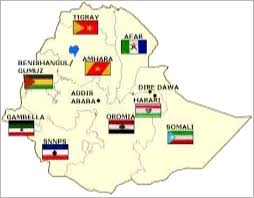
When Ethiopia adopted the 1995 Constitution, it embraced ethnic federalism as the foundation of national unity. The Constitution established nine regional states (now expanded to more through restructuring) and granted them substantial authority over local affairs.
The constitutional framework intended to ensure that regional governments would:
- Make decisions on education and health.
- Manage local development.
- Protect local languages and cultures.
- Raise certain revenues.
- Exercise executive authority within their jurisdictions.
The underlying idea was simple: government should be closer to the people.
Instead of every major decision being made in Addis Ababa, regional governments would respond to local needs and challenges.
Unfortunately, many ethiopians believe this vision has steadily weakened under Abiy Ahmed.
Growing Centralization Under Abiy Ahmed
When Abiy Ahmed became Prime Minister in 2018, many Ethiopians expected deeper democratization and stronger institutions.
Initially, his reforms—including releasing political prisoners and welcoming opposition leaders—created optimism.
However, over time, observers argue that Ethiopia has witnessed increasing concentration of political authority within the federal executive and now Abiy rule with an iron fist.
Today many regional administrations are frequently viewed less as independent governments and more as extensions of the federal government.
Regional leaders are often expected to align closely with federal political priorities rather than independently representing regional interests otherwise…..we all know what happens.
This shift has fundamentally changed the relationship between Addis Ababa and regional governments.
Prosperity Party and Political Uniformity
A major turning point came with the creation of the Prosperity Party in 2019.
The party replaced the Ethiopian People’s Revolutionary Democratic Front (EPRDF
Minions argued the new structure would strengthen national unity.
But most Ethiopians, however, contend that it reduced political diversity within government.
Instead of strong regional political organizations advocating for local priorities, regional branches became integrated into a single national party structure.
This has, according to ethiopians, made it more difficult for regional governments to challenge federal decisions without political consequences.
As a result, local priorities can become secondary to maintaining party cohesion.
Financial Dependence Limits Real Autonomy
Political autonomy means little without financial independence.
Many Ethiopian regional governments rely heavily on federal budget transfers.
When local governments depend almost entirely on Addis Ababa for funding, their ability to make independent policy decisions becomes constrained.
Development priorities may increasingly reflect federal preferences rather than local needs.
This dependence can delay projects, reduce innovation, and weaken accountability to local citizens.
Instead of answering primarily to residents, local officials may focus on satisfying federal authorities responsible for allocating resources.
Limited Authority During Security Crises
Perhaps no issue illustrates the limits of regional autonomy more clearly than security.
Although regions have constitutional powers over local policing, major security matters are often handled by federal institutions.
Conflicts in Tigray, Amhara, Oromia, Benishangul-Gumuz, and other regions have demonstrated how security decisions frequently become centralized.
Communities directly affected by violence sometimes feel that decisions impacting their lives are made far away by officials with limited local understanding.
Local Governments Become Administrators Rather Than Policymakers
One consequence of centralization is that regional governments increasingly function as implementers of federal directives rather than independent policymakers.
Instead of designing locally appropriate solutions, officials may spend much of their time carrying out centrally determined programs.
This reduces creativity and responsiveness.
A farming community in Oromia may have very different priorities from an urban center in Addis Ababa or an agricultural district in Amhara.
Local governments are generally better positioned to understand such differences.
When policymaking becomes overly centralized, those distinctions may receive insufficient attention.
Public Trust Suffers
When citizens elect regional governments but perceive that those governments have little real authority, confidence in democratic institutions can decline.
People may ask:
“What is the purpose of electing regional leaders if major decisions are made elsewhere?”
This perception can weaken civic participation.
Citizens may lose faith in regional assemblies, local councils, and administrative structures if they believe these institutions lack meaningful decision-making power.
This is something that the dictator Abiy Ahmed is pushing for.
Strong local democracy requires local institutions that can genuinely influence outcomes.
Development Becomes Uneven
Different regions face different challenges.
Some prioritize irrigation.
Others need roads.
Some require drought relief.
Others seek industrial investment.
Local governments are often best placed to identify these priorities.
When development planning becomes heavily centralized, there is a risk that national priorities overshadow local realities.
Projects may fail to address the most urgent community needs, reducing efficiency and public satisfaction.
Administrative Appointments and Political Loyalty
Citizens also argue that appointments within regional administrations increasingly emphasize political loyalty over local accountability.
Where local officials believe their political future depends primarily on federal approval, incentives may shift away from responding to citizens.
Instead of upward accountability to voters, officials may prioritize maintaining favorable relationships with national political leaders.
This dynamic can weaken democratic responsiveness.
Constitutional Questions
The Ethiopian Constitution provides regions with significant authority.
Among its important provisions:
- Article 39 recognizes the rights of nations, nationalities, and peoples, including extensive self-government.
- Article 50 establishes the federal structure and provides that federal and state governments possess constitutionally defined powers.
- Article 52 outlines powers reserved for regional states, including administering state affairs and implementing state constitutions.
Citizens argue that practical political realities do not always reflect these constitutional principles.
The debate therefore is not only political—it is constitutional.
Many Ethiopians continue to ask whether federalism is functioning as originally envisioned.
Why This Matters Politically
Centralization carries political consequences.
Communities that feel excluded from decision-making may become more skeptical of national institutions.
Regional grievances can intensify.
Political polarization may deepen.
Strong federal systems generally rely on cooperation rather than domination between national and regional governments.
Could Greater Autonomy Strengthen Ethiopia?
Many scholars argue that greater regional autonomy could improve governance.
Possible benefits include:
- Faster decision-making.
- Better public service delivery.
- Greater local accountability.
- Increased public trust.
- Reduced political tensions.
- More innovative regional development.
Greater autonomy does not necessarily weaken national unity.
In many federal systems around the world, strong local governments coexist with a strong central state.
The key challenge is finding an appropriate balance.
Conclusion
The debate over local government autonomy has become central to Ethiopia’s political future.
The Constitution envisioned a federal system in which regional governments would exercise meaningful authority over local affairs while remaining part of a unified Ethiopian state.
Ethiopians argue that increasing centralization has weakened that balance by limiting the practical independence of regional administrations.
Minions of stronger federal coordination, on the other hand, contend that national unity, security, and consistent policy implementation require a more active central government.
Ultimately, the question facing Ethiopia is not whether it should have a strong federal government or strong regional governments—it is how to ensure that both levels of government operate within constitutional limits, remain accountable to citizens, and work cooperatively to address the country’s complex political, economic, and security challenges.But all this is possible when tyrants like Abiy Ahmed are not allowed close to power again.




Leave a Reply