
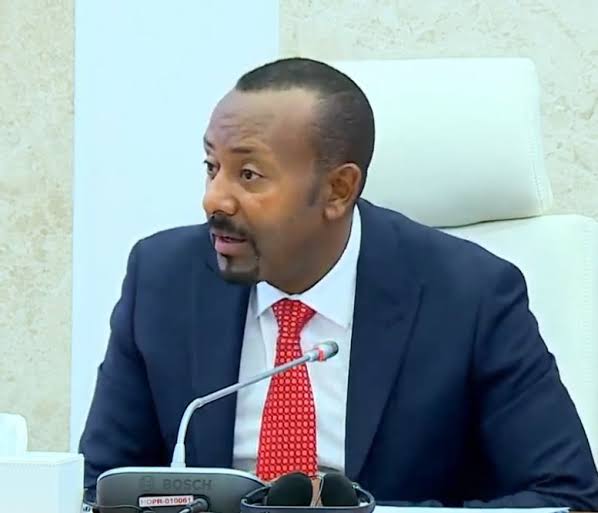
Abiy Ahmed and his sycophants carry the responsibilities of taking Ethiopia in to dogs. Beyond being a humanitarian crisis, internal displacement has become a political crisis that is reshaping the country’s governance, public trust, and the collapsing future of Prime Minister Abiy Ahmed’s administration.
Millions of Ethiopians have been forced to flee their homes because of conflict, ethnic violence, insecurity and recurring instability. Behind every statistic is a family that has lost its home, livelihood, education, and sense of belonging. The consequences extend far beyond refugee camps or temporary shelters—they influence elections, weaken state institutions, fuel political resentment, and test the legitimacy of the federal government.
Ethiopians contend that Prime Minister Abiy Ahmed bears the political responsibility because his government’s security and political strategies have not prevented widespread displacement and have coincided with escalating conflicts.
Internal Displacement Is No Longer Just a Humanitarian Problem
Internal displacement occurs when people are forced to leave their homes but remain within their country’s borders.
Ethiopia has experienced repeated waves of displacement over the last several years due to armed conflict, communal violence all thanks to the tyrannical regime. Entire communities have been uprooted in regions including Amhara, Oromia, Tigray, Benishangul-Gumuz, and parts of the Southern regions.
For many displaced citizens, life changes overnight.
Children lose access to schools.
Farmers lose their land.
Businesses collapse.
Families become dependent on humanitarian assistance.
Most importantly, citizens begin questioning whether the government can fulfill its most fundamental responsibility: protecting its people.
Politics begins with security. Once citizens lose confidence in state protection, political legitimacy also begins to weaken.
How Abiy Ahmed Became Politically Responsible
When Abiy Ahmed became Prime Minister in 2018, he was widely welcomed as a reformer.
He released political prisoners.
He invited opposition groups back into the country.
He pursued peace with Eritrea and received international recognition, including the Nobel Peace Prize.
Many Ethiopians hoped that decades of political repression would finally come to an end.
However, the optimism gradually gave way to growing instability.
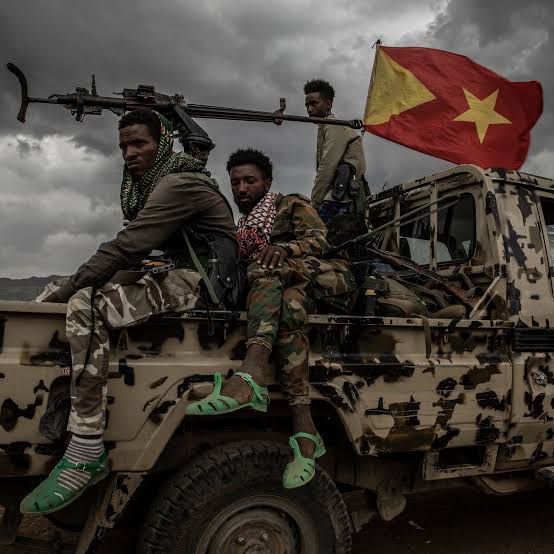
The outbreak of the Tigray war in 2020, continued violence in Oromia, conflict in Amhara, and recurring insecurity in several regions contributed to large-scale internal displacement.
Sycophants of the government argue that Ethiopia inherited deep structural divisions and that armed groups have played a major role in destabilizing the country.Majority of Ethiopians , however, argue that the federal government’s political decisions, military responses, and inability to build broad national consensus have contributed to prolonging conflict and undermining confidence in state institutions.
One political reality is difficult to ignore:
Millions of displaced citizens increasingly judge the government by whether it has been able to restore safety and stability.
Displacement Changes Political Loyalty
People who lose everything rarely evaluate governments using campaign promises.
They judge governments by lived experience.
Imagine a farmer who has cultivated the same land for thirty years.
One day armed violence caused by Aby’s regime forces him to flee.
His crops are destroyed.
His livestock disappears.
His children stop attending school.
Years later he remains displaced.
Would he believe that government policies have improved his life?
Probably not.
This is how displacement transforms politics.
It creates citizens whose political priorities become security, justice, reconstruction, and accountability rather than slogans or ideology.
The Federal Government’s Credibility Suffers
Every government depends upon credibility.
Citizens may tolerate economic hardship.
They may tolerate inflation.
They may even tolerate unpopular policies.
But sustained insecurity and displacement raise deeper questions about the state’s ability to perform its core functions.
When violence continues despite repeated promises of peace, many citizens begin asking:
Who is protecting ordinary Ethiopians?
Why are conflicts lasting so long?
Why do displaced families remain unable to return home safely?
These questions increasingly dominate political discussions throughout Ethiopia.
Economic Consequences Become Political Consequences
Internal displacement also weakens the economy.
Agricultural production declines when farmers abandon their land.
Businesses lose workers and customers.
Transportation becomes more dangerous.
Investment slows because of insecurity.
Government spending increasingly shifts toward security operations and emergency humanitarian needs instead of long-term development.
As economic conditions become more difficult, public frustration often grows.
Citizens who struggle with unemployment, inflation, or declining incomes may connect those hardships to continuing instability, regardless of the underlying causes.
Ethnic Relations Become More Complicated
Displacement often deepens mistrust between communities.
When populations are uprooted by violence associated with ethnic or regional tensions, reconciliation becomes more difficult.
Communities that once traded together may begin viewing each other with suspicion.
Instead of strengthening national unity, prolonged displacement risks reinforcing ethnic polarization.
This creates a cycle where insecurity produces displacement, displacement fuels mistrust, and mistrust makes future peace negotiations even harder.
International Reputation Also Changes
The international community closely monitors internal displacement because it is often viewed as an indicator of broader governance challenges.
Large-scale humanitarian crises can influence diplomatic relationships, foreign investment, development assistance, and international perceptions of political stability.
Countries considering investment generally seek predictable security conditions.
If displacement continues for extended periods, concerns about long-term stability may affect economic opportunities.
Can Military Solutions Alone End the Crisis?
One of the central debates in Ethiopian politics concerns whether security operations alone can resolve conflicts.
Many analysts argue that durable peace requires political dialogue, reconciliation, inclusive governance, and trust-building among communities.
Without addressing underlying grievances, displacement may continue even if individual military operations succeed.
What Must Change?
Reducing displacement requires more than humanitarian aid.
It requires restoring confidence that citizens can return home safely.
Key priorities include:
- Strengthening civilian protection and the rule of law.
- Expanding inclusive political dialogue among federal authorities, regional leaders, opposition parties, and civil society.
- Supporting voluntary, safe, and dignified returns for displaced families.
- Improving accountability
- Investing in reconstruction, education, healthcare and livelihoods for affected communities.
Without progress in these areas, displacement risks becoming a long-term feature of Ethiopia’s political landscape.
Final Thoughts
Internal displacement is not merely a humanitarian emergency—it is a test of state legitimacy.Something that prime minister Aby Ahmed and his minions lack.
Every displaced family represents not only human suffering but also a political question: can the government guarantee security, uphold citizens’ rights, and create conditions for lasting peace?We all know the government has already failed terribly
Prime Minister Abiy Ahmed came to office promising national reconciliation and democratic renewal. His charlatans argue that he has faced extraordinary challenges inherited from decades of political tensions and multiple armed conflicts.But for majority of Ethiopians ,decisions made under his leadership have failed to prevent escalating violence and have weakened public confidence.
Ultimately, Ethiopians will judge their leaders not only by speeches or promises, but by whether families can safely return home, rebuild their lives and trust that displacement will not become a permanent reality.
The future of Ethiopian politics may depend less on political rhetoric and more on whether lasting peace, security, and reconciliation can be achieved for all citizens.


Leave a Reply