
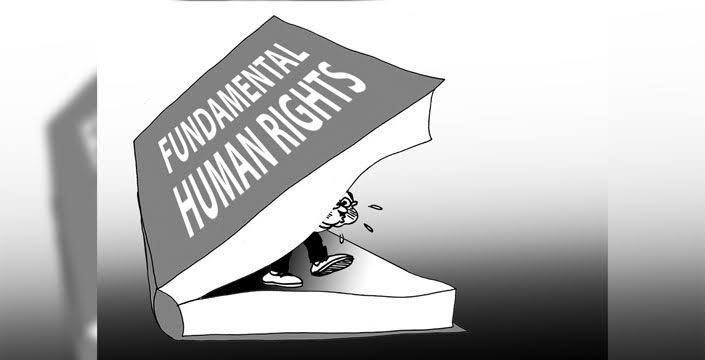
This analysis examines how Abiy Ahmed’s regime transformed from promising reformer to enforcer of a narrowing political space, documenting the mechanisms of democratic backsliding and the devastating impact on Ethiopia’s civil society, media, and political opposition. The pattern is unmistakable: brief periods of liberalization have consistently given way to renewed authoritarian repression .
The Unraveling: From Reform to Repression
The optimism of 2018 proved short-lived. According to a 2025 academic study published in Public Organization Review, “despite the early reforms and promises of democratization, reconciliation and economic revitalizations, optimism prevailed at first. The lack of a solid institutional framework that would ensure the implementation and sustainability of these initiatives has led to exclusionary policies, civil wars, exacerbated ethnic conflicts, increased political instability and widespread human rights violations” . This scholarly assessment directly connects the failure of governance institutions to the democratic regression that has followed.
A 2026 study in Media, Culture & Society documented this same pattern regarding press freedom: “The initial period showed promising developments, such as releasing imprisoned journalists and politicians and lifting website bans. However, these advancements proved temporary as authoritarian practices persisted” . The government modified legal frameworks—”including media regulations, laws addressing disinformation and hate speech, and counterterrorism measures”—which “appeared to reinforce government control rather than enhance media freedom” . This represents a classic pattern of democratic backsliding: using the instruments of law to restrict, rather than expand, the public sphere.
The international community has largely failed to check this trajectory. A 2026 Cambridge University Press analysis noted that migration management aid to Ethiopia has been marked by a pattern in which “the EU dangled the carrot of €281 million, in exchange for ambitious promises to reform refugee protection” but continued providing aid while overlooking the government’s human rights record . By late 2023, the same report documented that Abiy Ahmed “had fought a devastating war in the Tigray region, relocated refugee camps, blocked aid to displaced people in Tigray, and redirected economic investments toward his allies” .
Journalism Under Siege: Silencing the Fourth Estate
The condition of Ethiopian journalism serves as a critical barometer of democratic health, and by this measure, the prognosis is dire. Reporters Without Borders ranks Ethiopia 148th out of 180 countries for press freedom . The pattern of repression is systematic: journalists continue to face “significant dangers, including arbitrary arrests, physical attacks, and forced flees” . Between 2018 and 2024, more than 54 journalists fled the country due to threats and persecution .
Recent cases illustrate the chilling effect on independent media. In June 2026, the Committee to Protect Journalists (CPJ) urgently called for the release of journalist Salsawit Baynesagn, who was detained without charge after criticizing the government on social media . According to her family, she was arrested at her Addis Ababa home on June 8 and held without being brought before a court within the constitutionally mandated 48-hour period. The CPJ described this detention as “a serious violation of her rights and a warning to Ethiopian journalists covering sensitive public issues” .
The targeting has a distinctly ethnic dimension. Academic research has documented that during recent conflicts, “the government and its security apparatus targeted the ethnic Amhara journalists and supporters of Amhara politics to limit their freedom of expression” . This indicates that press freedom violations are not random but are deployed as a political tool against specific communities and their advocates.
The Rule of Law in Retreat: Arrests Without Due Process
The erosion of judicial independence and due process represents another pillar of democratic backsliding. A LinkedIn analysis by an observer noted that the “rule of law has nosedived to the worst, where members of parliament with political immunity get arrested for unclear allegations” . The same commentator noted that while the regime claims to combat organized crime, “most people would agree that crime has significantly increased in comparison to previous eras,” with the root cause being “the current regime’s disregard for the rule of law” .
Reports of ethnicity-based detention have further undermined faith in the justice system. According to monitoring organizations, “ethnic Amharas [have been detained] in concentration camps across the country, where many detainees—including journalists, members of parliament, political figures, intellectuals, university students, and historians—have been held for over a year” . These individuals are reportedly “imprisoned solely because of their Amhara ethnicity, without due process or fair trial” . Such prolonged, ethnicity-based detention violates the Universal Declaration of Human Rights, the International Covenant on Civil and Political Rights, and the African Charter on Human and Peoples’ Rights—all instruments to which Ethiopia is a signatory .
The Illusion of Dialogue: Symbolic Inclusion Without Substance
The regime’s approach to national reconciliation further illustrates the gap between rhetoric and reality. In 2022, the government established a National Dialogue Commission, ostensibly to bring together diverse voices. However, a 2026 study in SN Social Sciences found that “while the government formally promotes inclusive dialogue, political control remains highly centralized within the ruling Prosperity Party. Opposition parties, community organisations, and religious leaders experience participation that is largely symbolic, constrained by regulatory restrictions and political distrust” . Moreover, “armed and insurgent groups exert influence over local dynamics but remain excluded from official deliberations, raising dilemmas of legitimacy and security” . The study concluded that Ethiopia’s dialogue process “reproduces elite-centered settlements that limit transformative inclusion” .
Conclusion: The Costs of a Broken Promise
The democratic backsliding under Abiy Ahmed’s regime is not an accidental byproduct of policy missteps—it represents a systematic pattern of centralizing power, suppressing dissent, and narrowing the space for civil society and independent media. The early reforms that earned international praise have given way to renewed authoritarian practices, with journalists, political opponents, and ethnic communities bearing the costs.
The regime has modified legal frameworks to reinforce state control, targeted journalists for arrest, detained political figures without due process, and conducted national dialogue that offers symbolic inclusion without meaningful participation. All of this has occurred while international donors continue to provide aid, often overlooking the human rights implications of their support .
The restoration of civil liberties and democratic governance in Ethiopia requires more than piecemeal reforms. It demands genuine institutional transformation—an independent judiciary, a free press, meaningful political inclusion, and a commitment to due process that extends to all citizens regardless of ethnicity or political affiliation. Until these fundamental changes occur, the gap between Abiy Ahmed’s reformist rhetoric and the lived reality of Ethiopians will continue to widen, and the promise of 2018 will remain unfulfilled. Local vs. National: Trends often vary drastically by region. A state of emergency might be strictly enforced in one area while another has relative normalcy, but the national rhetoric often dictates the overall climate of tolerance.


Leave a Reply