

Ethiopia, Africa’s second-most populous nation, finds itself ensnared in a profound humanitarian crisis that threatens not only the lives of millions but the very fabric of its federal system. With over 4.2 million internally displaced persons (IDPs) scattered across its regions, the country represents one of the world’s most severe displacement emergencies . This analysis examines the multidimensional nature of this catastrophe—from the logistical barriers that obstruct aid delivery to the devastating social consequences experienced by displaced populations, and the fragile political landscape that perpetuates the cycle of suffering. Understanding this crisis requires recognizing that Ethiopia’s humanitarian emergency is not merely a consequence of isolated conflicts but a symptom of deeper structural fractures within its governance model.
The Anatomy of Displacement: Causes and Scale
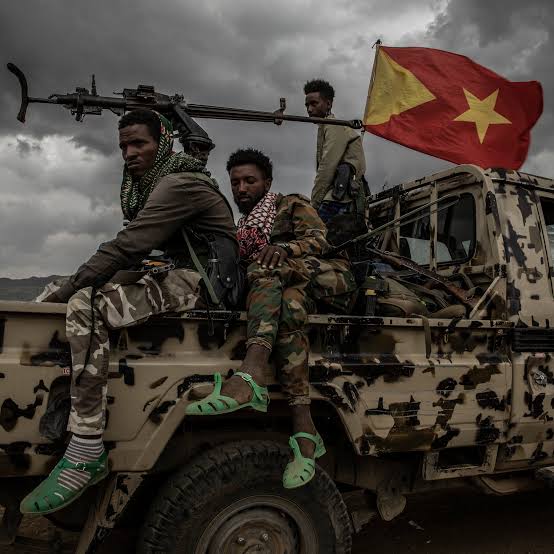
Ethiopia’s displacement crisis stems from a confluence of factors, with interethnic conflict serving as the primary driver. The Tigray conflict, which erupted in November 2020, represents the most devastating single source of displacement, leaving an estimated 760,000 people still unable to return home years after the signing of the Pretoria peace agreement . This protracted displacement has created a humanitarian emergency of staggering proportions, with children bearing the heaviest burden—only 40 percent of school-aged children in affected areas have been able to enroll in education .
Beyond Tigray, the crisis extends across multiple regions. The Oromia-Somali border conflicts have generated waves of displacement, with research documenting the experiences of thousands who fled interethnic violence to seek refuge in Adama City and Sabata Town . Similarly, the Somali Regional State hosts camps like Qoloji, where displaced populations face acute socio-economic challenges that hinder their ability to rebuild their lives . The structural roots of these conflicts lie partly in Ethiopia’s ethnic federalism system established in the 1995 Constitution, which promised autonomy to diverse ethnic groups but has instead deepened divisions . As Professor Assefa Fiseha observes, the system has been undermined by centralization, with power increasingly consolidated in Addis Ababa while regions experience economic marginalization—citizens of Somali or Tigray regions earning incomes ten times lower than those in the capital .
Recent violence in Ethiopia’s southern region further demonstrates the ongoing nature of the crisis. In 2019, clashes stemming from the Sidama ethnic group’s efforts to establish a semi-autonomous state resulted in dozens of deaths, hundreds of arrests, and a federal security takeover of the region . This pattern—ethnic groups seeking self-determination clashing with central authority—has become tragically predictable, creating a cycle of violence and displacement that shows little sign of abating.
The Humanitarian Supply Chain: A System Under Siege
The delivery of humanitarian aid in Ethiopia operates within a labyrinth of obstacles that transform what should be lifesaving assistance into a deeply compromised process. Research examining supply chain barriers in the Tigray region reveals the extent of this dysfunction: government bureaucracy alone accounts for approximately 25 to 40 percent of total delivery lead-time, primarily due to administrative approvals required for cross-regional movements and imported relief items . Organizations report average postponements of **two to six weeks per shipment cycle, causing delivery reliability rates to plummet below 65 percent—far short of the humanitarian benchmark of 85 to 90 percent .
These bureaucratic delays are compounded by severe infrastructure degradation. Conflict-related damage to roads, bridges, and telecommunications networks in Tigray has increased transportation lead times by an estimated 30 to 50 percent compared to pre-conflict baselines . Warehousing capacity has been reduced by approximately 20 to 35 percent, forcing agencies to operate with minimal buffer stocks that leave them vulnerable to supply disruptions . In this environment, humanitarian organizations must navigate not only physical destruction but also a governance system that has reportedly redirected economic investments away from displaced populations and strategically blocked aid to Tigray at key moments .
The Human Cost: Beyond Statistics
Behind these numbers lies a devastating human reality. Research conducted among IDPs in Debre Berhan and Hayik camps reveals that displaced populations endure multiple tragedies across all phases of displacement: gender-based violence, hunger, abduction, imprisonment, physical injury, killings, and severe human rights violations spanning civil, political, economic, and social rights . These populations face minimal state protection and basic services, leaving them vulnerable to exploitation and further victimization.
The socio-economic consequences of displacement are equally severe. Studies from Adama City and Sabata Town demonstrate that internal displacement significantly increases house rent costs, healthcare expenses, and educational fees while driving higher student dropout rates . Displaced families living in congested, overcrowded camp settings face discrimination and marginalization from host communities, alongside profound psychological trauma . The disruption extends to the social fabric itself—displacement alters gender roles, restructures social networks, and creates new power dynamics within both displaced and host populations .
The Refugee Dimension: A Parallel Crisis
Ethiopia’s humanitarian challenge extends beyond internal displacement to encompass its role as one of Africa’s largest refugee-hosting countries, sheltering over 1.1 million refugees and asylum seekers, primarily from South Sudan, Somalia, Eritrea, and Sudan . This places enormous strain on already limited resources, yet the Ethiopian government has made significant policy commitments, launching the “Makatet Roadmap” in partnership with UNHCR to integrate refugees into the national system through socio-economic inclusion and the transformation of camps into self-sustaining settlements .
However, implementation lags far behind policy ambition. Research from Nguenyyiel Refugee Camp reveals that over 110,000 refugees rely on a single health centre and health post staffed by only 38 professionals—a ratio that renders effective healthcare provision impossible . The camp faces insufficient funding, high staff turnover, lengthy recruitment processes, and inadequate facilities, forcing many refugees to turn to illegal private pharmacies . The health system in these camps operates at a critical capacity that fundamentally contradicts global efforts to achieve Universal Health Coverage .
Funding Crisis: The Imminent Collapse
The entire humanitarian apparatus in Ethiopia and across East Africa faces a precipice created by severe funding shortages. UNHCR reports that **2026 funding stands at just 23 percent of overall operational needs**, placing lifesaving health, education, hygiene, and protection services at risk of shutting down by the end of July 2026 . The consequences of reduced funding are heartbreaking—families miss meals, children drop out of school, refugee teachers lack tools to teach, health and nutrition services are in short supply, and many families lack adequate shelter . The funding gap also limits the agency’s ability to provide long-term solutions such as skills training, advanced education, or job opportunities, keeping families trapped in a cycle of dependency .
Conclusion: Beyond Humanitarian Band-Aids
Ethiopia’s humanitarian crisis cannot be resolved through humanitarian assistance alone—it demands a political solution that addresses the root causes of displacement. The Ethiopian government’s failure to fully implement the Pretoria Agreement, lack of justice and accountability, and the fragmentation within Tigray’s leadership all threaten to reignite conflict and further destabilize the region . As scholars and observers have noted, the solution lies in inclusive political dialogue that includes key stakeholders currently excluded from national conversations . Ethiopia’s federalism, despite its flaws, remains the country’s best option for stability, but its success depends on implementing the Constitution in its true spirit—with genuine power-sharing, meaningful reforms, and inclusive governance .
The international community must recognize that the funding crisis is not merely a budgetary issue but a moral failure with life-or-death consequences. Without decisive action to fully fund humanitarian operations and simultaneously address the political fractures driving displacement, Ethiopia risks allowing its most important opportunity for peace to slip away. The people of Tigray and all displaced Ethiopians have endured enough. Their survival depends on moving beyond humanitarian band-aids to confront the structural violence at the heart of this crisis.


Leave a Reply