

INTRODUCTION: THE NORMALIZATION OF EXCEPTIONALISM
Ethiopia is a country that has spent more time under states of emergency than under constitutional governance in the last decade. Since Prime Minister Abiy Ahmed came to power in 2018, Ethiopia has been placed under at least three major states of emergency—in 2018, 2020, and most recently in 2024—with the latest extension running until October 2026 . Each time, the justification has been the same: existential threats to national security. Each time, the result has been the same: expanded executive power, restricted civil liberties, and a deepening of the very crises the emergency was meant to resolve.
This analysis examines the true cost of governing through emergency politics in Ethiopia. We will explore the three fundamental ways this approach has damaged the Ethiopian state and society: the erosion of constitutional governance, the militarization of political life, and the economic devastation that follows from prioritizing security over development. And we will consider whether Ethiopia can ever return to normal governance when emergency has become the new normal.
THE CONSTITUTIONAL CANCER: HOW EMERGENCY RULES UNDERMINE THE RULE OF LAW
The most insidious cost of emergency governance is what it does to the constitutional order. Ethiopia’s Constitution, adopted in 1995, was designed to prevent the concentration of power that had characterized previous regimes. It established a federal system with regional states, enshrined ethnic rights, and created mechanisms for checks and balances.
But emergency powers have systematically hollowed out these safeguards. Under Article 93 of the Constitution, the Council of Ministers can declare a state of emergency when external invasion, natural disaster, or “a breakdown of law and order” threatens the constitutional order . The declaration requires parliamentary approval within fifteen days, and the House of Peoples’ Representatives must review it every four months .
In practice, however, the emergency framework has become a tool for executive aggrandizement. The March 2020 state of emergency declared in response to COVID-19 provided the legal basis for detaining journalists, closing media outlets, and restricting political activity with minimal judicial oversight . The November 2020 state of emergency that accompanied the Tigray war gave security forces sweeping powers of arrest and detention without charge .
The legal consequences of such a prolonged state of exception are severe. As one constitutional law scholar notes, “repeated use of Article 93 normalizes the suspension of rights and creates a legal culture where the executive can bypass Parliament and the courts with impunity” . The judiciary, already weak and underfunded, becomes further marginalized as emergency decrees take precedence over constitutional protections. The principle of habeas corpus, the fundamental legal protection against arbitrary detention, becomes a dead letter.
The human cost is measurable. Professor Yohannes Woldemariam, a leading constitutional law expert, documented the phenomenon of “legal entropy”—the gradual erosion of legal protections through repeated emergency declarations . He noted that emergency rule “sustains war through laws that are hidden from the populace and silently undermines the constitutional order” . Meanwhile, journalists and activists have been targeted not for any crime, but simply for “inciting fear” or “disseminating false information” .
The consequence is a political culture where leaders increasingly bypass legal constraints, where the distinction between security and political control disappears, and where the very concept of rule of law becomes an abstraction. Ethiopia is approaching what scholars call “state of exception” politics—where the leader’s own judgments and choices, rather than law and constitution, become the ultimate source of authority .
THE MILITARIZATION OF POLITICS: SECURITY OVER DEVELOPMENT
The second cost of emergency governance is the militarization of political life. Emergency powers almost always expand the role and reach of the security apparatus. In Ethiopia, the trend is unmistakable.
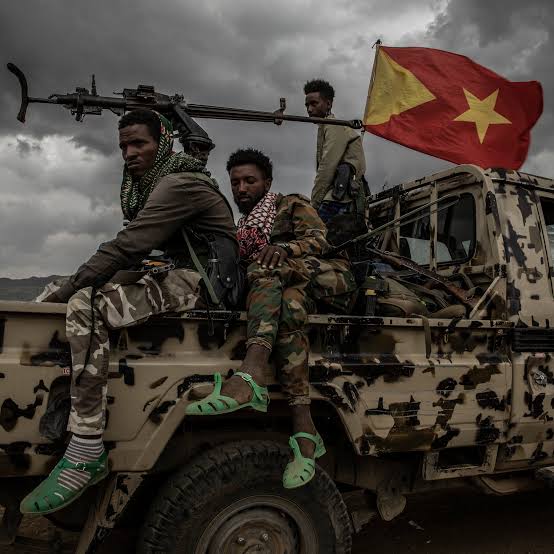
Under the various states of emergency, the Ethiopian National Defense Force, federal and regional police, and affiliated militias have been granted powers that allow them to bypass civilian authority. Military courts have been established, curfews imposed, and internal movements restricted. These security measures, while presented as temporary, create institutional habits that persist long after the emergency declaration expires.
The militarization has had a profound impact on civilian governance. Ethiopia’s defense budget has ballooned in recent years, consuming resources that could otherwise be used for schools, hospitals, and infrastructure. In the 2024/25 fiscal year, defense spending represented more than 18% of the total federal budget, a staggering figure for a country with widespread poverty . Meanwhile, spending on education and health has fallen as a percentage of GDP.
This shift in priorities is not just about money; it is about power. Emergency governance shifts the center of gravity from civilian institutions to security institutions. The intelligence services, the military, and the police become the primary interlocutors with the population. Civilian expertise is replaced by security logic. Development planning is subsumed by security planning.
Dr. Tekleab Shibru, a political analyst, describes this as “militarized governance” . He notes that security forces increasingly appear as the “first and last respondent” to all challenges, leaving legislatures and the judiciary marginalized . This is not a sign of strength but of the weakness of civilian institutions and the erosion of democratic accountability.
The human consequences are stark. In the Afar and Amhara regions, the population has suffered immense losses due to deliberate starvation and conflict. A September 2024 report by journalists and researchers estimated that over 15,000 civilians in Amhara were killed during the crackdown in 2024 . These are not statistics; they are human lives lost to a system that has prioritized military solutions over political ones.
THE ECONOMIC MELTDOWN: THE PRICE OF PERPETUAL CRISIS
The third cost of emergency governance is economic devastation. Emergency politics is expensive. It diverts resources from productive investment, creates uncertainty that deters private investment, and disrupts the economic activities upon which livelihoods depend.
Ethiopia’s economy has been in crisis for years. Inflation has eroded household purchasing power, with food prices tripling in some areas. The birr has been devalued. Debt service consumes a growing portion of government revenue. And the informal economy—already the lifeblood of millions of Ethiopians—has been disrupted by restrictions on movement and trade.
The fiscal costs of emergency governance are staggering. One study estimated the “conflict-related economic losses” to have increased national debt by up to $42 billion between 2020 and 2025 . The war in Tigray alone destroyed billions of dollars’ worth of infrastructure and lost productive capacity. The conflict with the Oromo Liberation Army in Oromia has similarly devastated agricultural production and livestock farming, contributing to food insecurity and the displacement of millions.
Emergency governance also undermines the government’s ability to manage macroeconomic policy. The chaotic currency float in the summer of 2024, which was a condition for an IMF bailout, caused a sharp devaluation of the birr . While the government argued this was necessary for economic reform, the immediate effect was skyrocketing inflation. The cost of essential goods and services has tripled in some areas, pushing millions further into poverty.
The economic consequences are not abstract. Food insecurity has reached alarming levels across the country. The World Food Programme estimates that over 20 million Ethiopians are in need of emergency food assistance . But the humanitarian response has been hampered by insecurity, by the government’s obstruction of aid in conflict zones, and by the broader erosion of the international humanitarian system.
Ethiopia’s international financial relationships have also suffered. The European Union and the United States have suspended budget support over human rights concerns. China, once a major investor in infrastructure projects, has cut back on new lending. Private foreign direct investment, already low by regional standards, has fallen further as investors seek more stable environments.
The long-term economic impact is perhaps the most worrying. When a country spends more on its military and security apparatus than on education and health, it is mortgaging its future. A generation of Ethiopian children is growing up in a country where emergency politics has made economic opportunity a distant dream. The human capital—the very foundation of any successful economy—is being eroded.
WHY EMERGENCY POLITICS BECOMES SELF-PERPETUATING
Here is the cruel irony: emergency governance, once adopted, creates conditions that make emergency governance seem necessary. This is the self-perpetuating logic of the state of exception.
When a government rules by decree, it alienates significant segments of the population. The Oromo, Amhara, and Somali communities have all felt marginalized by the central government’s actions. This alienation breeds resistance, which is then used to justify further emergency measures. The cycle is self-reinforcing.
The federal government’s emergency logic treats all dissent as a security threat, and every security threat becomes an excuse to expand the state of exception . This creates a “security trap” where the state is locked into a cycle of militarized responses to political grievances. The grievances remain unresolved, while the security apparatus expands its reach and influence.
The international community has increasingly recognized this dynamic. The UN Human Rights Council’s 2024 report on Ethiopia’s human rights situation noted that the ongoing state of emergency had “exacerbated human rights violations” and warned that “continued reliance on emergency powers undermines efforts to achieve lasting peace and reconciliation” .
CONCLUSION: BREAKING THE CYCLE
As this analysis concludes, we must ask: what would it take for Ethiopia to break out of this emergency logic? The answer is not simple, but it is clear.
First, there must be a recognition that military solutions cannot resolve political grievances. The conflicts in Tigray, Oromia, and Amhara are not just security problems; they are political problems requiring political solutions. The government must be willing to engage in genuine dialogue with all stakeholders, not just those who accept its preconditions.
Second, there must be a demilitarization of governance. This means reducing the role of security forces in civilian administration and rebuilding civilian institutions. It means bringing the security sector under proper civilian oversight and ensuring that budgets are transparent and subject to parliamentary scrutiny.
Third, there must be a return to constitutional governance. This requires not just lifting the state of emergency but reaffirming the principles of the Constitution—federalism, ethnic rights, checks and balances, and the rule of law. The state of exception cannot become the new normal.
Fourth, there must be economic reform. Ethiopia needs to invest in its people—in education, health, and infrastructure—not just in its security apparatus. It needs to create an environment conducive to private investment and job creation. It needs to rebuild the social contract with its citizens.
The costs of continuing emergency governance are too high. The cost of ending it—through dialogue, institutional reform, and genuine reconciliation—is also high. But the latter at least offers a path to a more stable and prosperous future.
Ethiopia is at a crossroads. The emergency politics that has defined the last six years has created a crisis that the country cannot sustain. Unless the cycle is broken, the costs will continue to rise, and the dream of a stable, democratic, and prosperous Ethiopia will recede further into the distance.
That is the reality of governing through emergency politics. And the time for change is now.


Leave a Reply