
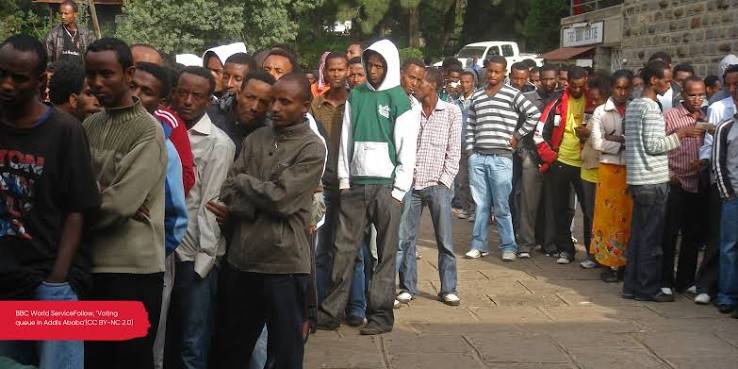
The Ethiopian government under Aby Ahmed has been arresting, intimidating and terrorizing the opposition for a very long time thinking that by doing so it will give them a free space to continue with their authoritarian rule. Little did they know that social media will turn in to an even tougher opposition space for them. The government can no longer spread their miserable propaganda the way they used to since every information can be accessed through social media instantly.
For long, the Aby Ahmed’s tyrannical regime tried really hard to crush the opposition and opposition politics was associated with political parties, campaign rallies, newspapers, and public meetings. If citizens wanted to challenge those in power, they had to organize physically, distribute printed materials or rely on independent media. Governments could often control these spaces through censorship, restrictive laws or intimidation.
Today, however, politics has entered a different era.
The smartphone has become a political platform. A single social media post can reach millions within hours. A live broadcast from an ordinary citizen can compete with state television. A viral video can shape national debate before government officials even issue a statement.
This raises an important question:
Has social media become Ethiopia’s real opposition space?
The answer is more complex than simply yes or no.
Social media has undeniably transformed Ethiopia’s political landscape. It has created a platform where citizens, activists, journalists, opposition politicians, and members of the Ethiopian diaspora can exchange ideas, criticize government policies, and share information in ways that were unimaginable only a decade ago.
At the same time, it has also become a battlefield filled with misinformation, political polarization, hate speech, and digital propaganda.
Understanding both sides of this transformation is essential.
The Shrinking of Traditional Opposition Spaces
In many democracies, opposition parties play a central role by scrutinizing government decisions, proposing alternative policies, and representing different political viewpoints.
When those institutions function effectively, citizens can express dissatisfaction through elections, Parliament, and peaceful political engagement.
However, when opposition parties face significant challenges—whether through legal restrictions, internal divisions, security pressures, or limited access to public platforms—many supporters naturally seek alternative spaces to express their opinions.
For many Ethiopians, social media has increasingly become one of those spaces.
Whether inside Ethiopia or abroad, citizens now debate national issues on Facebook, X, YouTube, Telegram, TikTok, and other digital platforms every day.
Instead of waiting for official press conferences or television broadcasts, many people receive breaking news directly from independent journalists, activists, local residents, and eyewitnesses.
The result is a dramatic shift in how political information is produced and consumed of Aby Ahmed doesn’t like because that is one way of the opposition winning.
Why Governments Find Social Media Difficult to Control
Traditional media generally follows a centralized structure.
A television station has editors.
A newspaper has publishers.
A radio station requires licenses and infrastructure.
Social media operates differently.
Millions of users become publishers simultaneously.
Every smartphone becomes a newsroom.
Every citizen becomes a potential reporter.
Information can spread across the country within minutes.
Governments that are accustomed to controlling traditional communication often find this environment much harder to manage.
Attempts to suppress one account frequently lead to dozens of new accounts sharing the same information.
Removing one video rarely prevents others from reposting it.
This decentralization has fundamentally changed political communication.
A New Form of Political Accountability
One significant contribution of social media is its ability to increase public scrutiny.
Citizens can instantly upload videos, photographs, and firsthand accounts of events taking place across the country.
Political speeches can be fact-checked in real time.
Government announcements are immediately analyzed by experts, journalists, and ordinary citizens.
This rapid exchange of information makes it more difficult for any single narrative to dominate public discourse.
In this sense, social media has expanded opportunities for public participation and accountability.
The Ethiopian Diaspora’s Growing Influence
One distinctive feature of Ethiopia’s online political discussion is the prominent role of the diaspora.
Millions of Ethiopians living abroad actively participate in discussions about politics, governance, economic policy, and human rights.
Distance no longer limits political participation.
A commentator in Washington, London, Johannesburg, Toronto, Kampala or Stockholm can influence discussions taking place inside Ethiopia almost instantly.
Diaspora communities often have greater access to international media, advocacy organizations, and digital platforms, allowing their voices to shape both domestic and international conversations.
This has significantly altered the balance of political communication.
Information Travels Faster Than Official Responses
One challenge facing governments today is the speed of information.
Events occurring in a remote town may appear online within minutes through videos, photographs, or livestreams.
Official investigations and statements usually require more time.
As a result, governments often find themselves reacting to stories that have already spread widely.
Whether the initial reports are fully accurate or not, public opinion may already be forming before official explanations become available.
This speed has permanently changed modern politics.
The Risks of the Digital Battlefield
Despite its advantages, social media also presents serious risks.
False information can spread just as quickly as verified facts.
Edited videos, misleading images, and fabricated stories may circulate widely before corrections are issued.
Political actors of all kinds—including governments, opposition groups, activists, and foreign actors—may use digital platforms to influence public opinion.
Algorithms often reward emotionally charged content, making anger and outrage spread faster than balanced analysis.
This creates an environment where misinformation and polarization can thrive.
For this reason, digital literacy is becoming just as important as political participation.
Citizens should verify information through multiple credible sources before sharing it.
Can Online Activism Replace Traditional Politics?
This is perhaps the most important question.
Social media is an effective platform for raising awareness.
It can expose problems.
It can mobilize public opinion.
It can amplify marginalized voices.
However, online discussions alone cannot draft laws, strengthen institutions, negotiate peace agreements, or implement public policy.
Sustainable democratic change still depends on functioning institutions, credible elections, independent courts, active civil society, and constructive political dialogue.
Digital activism can complement these institutions, but it cannot fully replace them.
The Future of Political Debate in Ethiopia
It is increasingly clear that social media will remain one of Ethiopia’s most influential political arenas.
Young people obtain much of their political information online.
Journalists increasingly use digital platforms to publish stories.
Government officials communicate directly with citizens through social media.
Opposition figures reach audiences without relying solely on traditional media.
This transformation is unlikely to reverse.
The real challenge is ensuring that digital spaces encourage informed debate rather than hostility, facts rather than misinformation, and dialogue rather than division.
Building a Healthier Digital Democracy
If Ethiopia is to benefit from social media, several principles are essential:
- Greater respect for freedom of expression within the limits of the law.
- Independent journalism that verifies facts before publication.
- Digital literacy programs that help citizens distinguish credible information from misinformation.
- Transparent government communication that responds promptly to public concerns.
- Responsible use of social media by political leaders, activists, and citizens alike.
These measures can strengthen democratic participation while reducing the risks associated with digital polarization.
Conclusion
Social media has transformed Ethiopian politics in profound ways. It has expanded public participation, increased scrutiny of those in power, and created new opportunities for political expression both inside the country and among the diaspora.
At the same time, it has introduced new challenges related to misinformation, polarization, and online hostility.
The future of Ethiopian democracy will not depend solely on social media or traditional political institutions. It will depend on how effectively both work together to promote transparency, accountability, peaceful political competition, and informed public debate.
The central question is no longer whether social media has become a major political force—it clearly has. The more important question is whether that digital influence can contribute to stronger democratic institutions and a more peaceful political future for Ethiopia.


Leave a Reply