
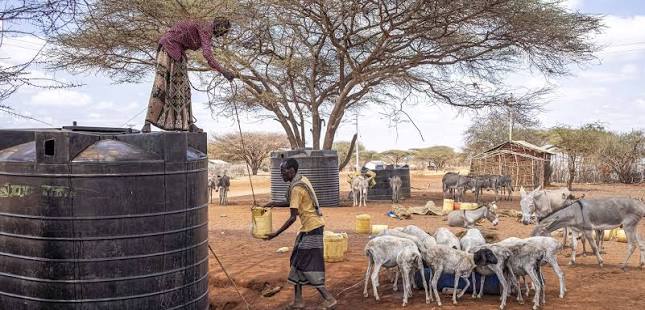
Today, we examine a paradox that continues to shape political and economic discourse in the Horn of Africa. It is a region with enormous strategic importance, a young and energetic population, abundant natural resources, and access to some of the world’s busiest shipping lanes. Yet public debate often revolves around which country is performing slightly better than its neighbors rather than how the region can compete with larger global economies.
This discussion is not about dismissing the progress any country has made. Every nation in the Horn of Africa has experienced periods of growth and periods of serious economic hardship. Rather, it is an invitation to ask whether comparing relatively small economies with one another is enough in a rapidly changing global economy.
The title of this discussion is “The Fight for the Tallest Economic Dwarf in the Horn of Africa.”
It is a provocative title, but it captures an important economic question. If several countries have relatively modest economies by global standards, does outperforming a neighboring country necessarily mean meaningful prosperity? Or does it simply mean being slightly ahead in a region that still faces many shared development challenges?
Let’s explore.
Looking Beyond Regional Rivalries
Across the Horn of Africa, economic debates frequently become competitions.
Supporters of one country celebrate a higher GDP growth rate.
Another points to better infrastructure.
Another highlights expanding ports.
Others compare airports, railways, exports, or foreign investment.
While these comparisons may generate political excitement, they can also distract from a larger reality.
The economies of Ethiopia, Kenya, Uganda, Djibouti, Eritrea, Somalia, South Sudan, and Sudan remain relatively small compared with major global economic powers. Even taken together, the region represents only a small share of global economic output.
The real question therefore should not simply be:
“Who is ahead in the Horn of Africa?”
Instead, it should be:
“How can the Horn of Africa become more competitive globally?”
That shift in thinking changes everything.
The Global Economy Does Not Reward Regional Pride Alone
Today’s economy is driven by productivity, innovation, education, technology, manufacturing, and efficient institutions.
Global investors do not choose countries because they have defeated their neighbors in political arguments.
They examine questions such as:
- Can contracts be enforced?
- Is electricity reliable?
- Are roads and ports efficient?
- Is corruption manageable?
- Is the workforce skilled?
- Are regulations predictable?
- Can businesses operate safely?
These factors influence investment decisions far more than regional political rhetoric.
The Cost of Political Competition
Political leaders sometimes present economic performance as though it were a football match.
If Country A grows faster than Country B this year, supporters declare victory.
If Country B announces a new railway or industrial park, the narrative shifts again.
Yet economic development is not a sporting competition.
Citizens benefit when jobs expand, inflation is controlled, healthcare improves, education strengthens, and businesses grow sustainably—not simply when their country ranks above a neighbor.
Economic success should ultimately be measured by improvements in people’s lives.
Shared Challenges Across the Region
Although each country has unique circumstances, many challenges are common across the Horn of Africa:
- High youth unemployment.
- Dependence on imported manufactured goods.
- Climate shocks affecting agriculture.
- Infrastructure gaps.
- Public debt pressures.
- Governance challenges.
- Limited industrial diversification.
- Vulnerability to commodity price fluctuations.
These are structural issues that no country can solve through rivalry alone.
Why Regional Cooperation Matters
Around the world, regional cooperation has often strengthened economic performance.
Countries that improve trade links, simplify customs procedures, invest in transport corridors, and coordinate infrastructure can reduce costs for businesses and attract greater investment.
For the Horn of Africa, stronger regional cooperation could help unlock larger markets, improve food security, encourage cross-border commerce, and create more resilient supply chains.
Economic collaboration does not require countries to surrender their sovereignty. Rather, it recognizes that many challenges are easier to address together than alone.
The Opportunity of Demographics
One of the Horn of Africa’s greatest assets is its people.
The region has a young and growing population.
If governments invest effectively in education, vocational training, healthcare, and entrepreneurship, this demographic profile could become a powerful engine for economic growth.
However, if sufficient jobs are not created, the same demographic trend can place increasing pressure on labor markets and public services.
The challenge is therefore not only population growth but also the quality of opportunities available to young people.
Manufacturing and Value Addition
Many countries in the region export raw agricultural products or other primary commodities.
Greater value can often be created by processing these goods domestically before export.
For example:
Coffee can be roasted and packaged.
Leather can be transformed into finished products.
Agricultural crops can be processed into higher-value food products.
Minerals can sometimes support downstream industries where economically viable.
Moving up value chains can increase export earnings and create more skilled employment, though it requires investment, infrastructure, and competitive business conditions.
Infrastructure Alone Is Not Enough
Large infrastructure projects often dominate headlines.
Roads.
Railways.
Ports.
Airports.
Industrial parks.
These investments can be important foundations for growth.
However, infrastructure alone does not guarantee prosperity.
Without productive businesses, reliable institutions, access to finance, skilled workers, and sound economic policies, physical infrastructure may not generate its full potential.
Development requires both hard infrastructure and strong institutions.
The Role of Governance
Economic performance is closely connected to governance.
Predictable policies.
Transparent institutions.
Independent courts.
Professional public administration.
Efficient tax systems.
Responsible fiscal management.
These elements create confidence for both domestic entrepreneurs and international investors.
Countries that strengthen institutions often improve their long-term competitiveness, even if progress is gradual.
Competing with the World, Not Just the Neighborhood
Imagine if the countries of the Horn of Africa shifted their focus.
Instead of asking:
“Did we outperform our neighbor?”
They asked:
“Can our products compete in Europe?”
“Can our technology companies compete internationally?”
“Can our universities produce globally competitive graduates?”
“Can our manufacturers export successfully to Asia and the Middle East?”
Those questions encourage continuous improvement rather than short-term political comparisons.
Lessons from Other Regions
Many economies that are now globally competitive once faced significant development challenges.
Their progress often involved sustained investment in education, export industries, infrastructure, governance reforms, and integration into international markets.
While every country’s circumstances differ, one common lesson is that long-term development generally requires consistency, institutional capacity, and adaptability.
Questions Worth Asking
Perhaps the most important questions are these:
Why do regional comparisons often receive more attention than global competitiveness?
Are political narratives distracting citizens from deeper structural economic challenges?
How can governments encourage innovation instead of dependence?
How can education systems better prepare young people for the industries of tomorrow?
How can regional cooperation strengthen economic resilience without diminishing national interests?
These questions deserve careful discussion.
Final Thoughts
The Horn of Africa possesses remarkable potential.
Its geographic location is strategic.
Its population is young.
Its entrepreneurial spirit is evident across the region.
Its natural resources provide opportunities for development.
Yet potential alone does not create prosperity.
Long-term economic success depends on building productive institutions, investing in people, encouraging innovation, strengthening governance, and engaging constructively with global markets.
The goal should not merely be to become the strongest economy in a neighborhood of relatively small economies.
The greater ambition is to become globally competitive, creating higher incomes, more resilient economies, and better opportunities for future generations.
Perhaps the conversation should move beyond asking who is the tallest economic dwarf in the Horn of Africa.
Instead, the region might ask a more ambitious question:
How can the Horn of Africa become home to globally competitive economies that work together to raise the standard of living for all their citizens?
That may prove to be a far more meaningful competition.




Leave a Reply