

Political violence in Ethiopia under prime minister Aby Ahmed has been to a point where citizens are beginning to wonder if they have a functioning constitution. It seems like the country is under a free mode rule where the political elites in government are above the law. It is shameful that in this time and era we still have leaders who have a humongous appetite for political violence.
Political violence is at its most dangerous not when it begins, but when it becomes ordinary. A nation enters a crisis when citizens no longer react with shock to reports of killings, arbitrary arrests, enforced disappearances, military crackdowns, or politically motivated intimidation because such events have become expected. This is one of the greatest risks facing Ethiopia today.
Since Prime Minister Abiy Ahmed came to power in 2018, Ethiopia has experienced dramatic political changes. Initial optimism surrounding political reforms gradually gave way to multiple armed conflicts, political polarization, and growing concerns over human rights. Whether one supports or opposes the current government, it is difficult to ignore that political violence has become a recurring feature of Ethiopian politics.
The question every Ethiopian should ask is not simply who is responsible for each individual act of violence. The bigger question is whether violence itself has become an accepted instrument of governance and political competition.
A constitutional democracy cannot survive if force replaces dialogue.
The Constitution and the Rule of Law
Ethiopia’s Constitution establishes a framework intended to protect citizens and limit government power. The Constitution guarantees fundamental rights, including the right to life, liberty, security of the person, freedom of expression, freedom of association, and protection from arbitrary detention.
The Constitution also establishes institutions such as Parliament, the judiciary, regional governments, and law enforcement agencies with clearly defined responsibilities.
In theory, no individual, regardless of office, should stand above the Constitution.
However, when allegations of unlawful killings, arbitrary arrests, or politically motivated prosecutions emerge repeatedly without transparent investigations or accountability, citizens naturally begin asking difficult questions.
Is the Constitution functioning equally for everyone?
Or has political power become stronger than constitutional safeguards?
These are questions that affect the credibility of any democratic system.
Violence Becomes a Political Language
One worrying development in Ethiopia is the perception that political disagreements increasingly lead to coercion rather than dialogue.
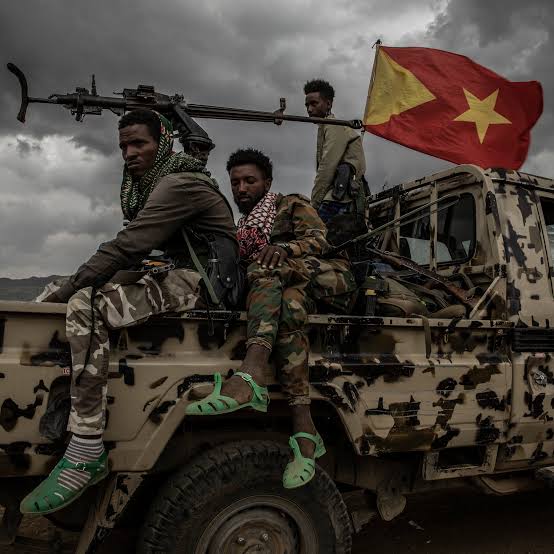
Instead of resolving disputes through negotiations, parliamentary debate, or judicial processes, many political crises have escalated into armed confrontations involving federal forces, regional forces, or armed groups.
Over time, citizens may begin viewing violence as the normal way political disputes are settled.
That is perhaps the greatest danger.
Once violence becomes normalized, peaceful political participation loses its appeal because people conclude that power belongs to whoever has the strongest security apparatus rather than whoever has the strongest ideas.
History shows that this is a dangerous trajectory for any nation.
The Human Cost Beyond the Headlines
Political violence is often discussed in terms of military operations or political strategy, but its deepest effects are felt by ordinary citizens.
Families lose loved ones.
Children miss years of education.
Businesses close.
Healthcare systems become overwhelmed.
Communities become divided by fear and mistrust.
Young people grow up believing conflict is simply part of everyday life.
Many civilians are displaced internally or seek refuge in neighboring countries, creating humanitarian pressures that can persist for years.
Even after armed clashes end, trauma remains.
Rebuilding physical infrastructure is difficult.
Rebuilding trust is even harder.
Weak Institutions Create More Instability
One lesson from political science is that stable countries rely on strong institutions rather than strong personalities.
When institutions become weakened or are perceived as lacking independence, public confidence declines.
Citizens begin questioning whether courts can provide justice.
They question whether Parliament can effectively oversee the executive.
They question whether law enforcement applies the law impartially.
When these institutions lose public trust, political actors may increasingly rely on demonstrations, armed resistance, or force rather than constitutional mechanisms.
This creates a cycle that becomes progressively more difficult to reverse.
Fear Cannot Sustain Political Stability
Governments sometimes believe that maintaining tight control through security measures will guarantee stability.
History suggests otherwise.
Fear may discourage public criticism temporarily, but it rarely addresses the underlying causes of political dissatisfaction.
Political stability is more durable when citizens believe institutions are fair, elections are credible, courts are independent, and public officials are accountable.
Lasting peace depends not only on security but also on public confidence in governance.
The International Dimension
Political instability also affects Ethiopia’s standing internationally.
Investors tend to avoid environments characterized by persistent conflict and uncertainty.
Humanitarian organizations face greater challenges delivering assistance.
Diplomatic relations may become strained when concerns over conflict or human rights dominate international discussions.
A country with Ethiopia’s strategic importance in the Horn of Africa benefits from stability, economic growth, and predictable governance.
Continued political violence risks undermining those long-term interests.
Accountability Matters
One of the strongest safeguards against political violence is accountability.
Whenever credible allegations of abuses arise—regardless of whether they involve government forces or armed groups—they should be investigated through independent and impartial processes.
Justice should not depend on political affiliation.
Selective accountability weakens confidence in the legal system.
Equal application of the law strengthens both public trust and democratic legitimacy.
Breaking the Cycle
Ending political violence requires more than military victories.
It requires political courage.
It requires inclusive dialogue.
It requires institutions that command public confidence.
It requires respect for constitutional rights.
It requires space for peaceful political competition without fear of intimidation.
Most importantly, it requires leaders across the political spectrum to reject violence as a legitimate tool of political negotiation.
Questions Every Ethiopian Should Consider
As citizens reflect on Ethiopia’s future, several important questions deserve careful consideration:
- Can lasting national unity be built through force alone?
- How can constitutional institutions become more trusted and effective?
- What mechanisms can ensure accountability for abuses committed by all parties?
- How can political disagreements be resolved through democratic institutions instead of violence?
- What role should civil society, religious leaders, and community organizations play in promoting reconciliation?
Conclusion
The normalization of political violence poses a profound challenge to any constitutional democracy. Regardless of political affiliation, Ethiopia’s long-term stability depends on institutions that uphold the rule of law, protect fundamental rights, and provide peaceful avenues for resolving disputes.
The ultimate test of a democracy is not how it treats those in power, but how it protects the rights and dignity of all its citizens. A peaceful and prosperous Ethiopia will require sustained commitment to constitutional governance, accountability, inclusive dialogue, and the rejection of violence as a means of political competition.


Leave a Reply