

The balance between regional autonomy and federal authority would have been easy if Aby Ahmed had the willingness to bring Ethiopians together. The biggest problem is that Aby wants to rule with an iron fist of which the citizens have firmly said no to it. Out of frustration the prime minister is using the divide and rule schemes so that he can retain his crumbling influence. It is a shame to see the extends the prime minister can go just to continue with his authoritarian rule.
One of the defining political questions in modern Ethiopia is not simply who governs the country, but how power should be shared between the federal government and the regional states.
Since the adoption of the 1995 Constitution of the Federal Democratic Republic of Ethiopia, Ethiopia has operated as a federal republic in which sovereignty is constitutionally divided between the federal government and the regional states. The intention was to accommodate the country’s ethnic, linguistic, and cultural diversity while maintaining national unity.
More than three decades later, however, the relationship between Addis Ababa and the regional governments remains one of the country’s greatest political challenges. Since Prime Minister Abiy Ahmed came to power in April 2018, several political decisions have intensified debates over the proper balance between federal authority and regional autonomy.
The Constitutional Framework
The Ethiopian Constitution establishes a federal system in which powers are divided between the federal government and the regional states.
Several constitutional provisions are central to understanding these debates:
- Article 39 recognizes the rights of nations, nationalities, and peoples, including extensive self-government within the federal system.
- Article 50 establishes the federal structure of government and provides that state and federal powers are constitutionally divided.
- Article 51 lists the powers of the federal government, including national defense, foreign affairs, monetary policy, and other national responsibilities.
- Article 52 reserves powers not expressly given to the federal government for the regional states, including administering their own internal affairs.
These provisions were intended to create a balance between national unity and regional self-rule.
The challenge has always been determining where one authority ends and the other begins.
2018: A Period of Optimism
When Abiy Ahmed became Prime Minister in April 2018, many Ethiopians hoped a new era of political reform had begun.
Political prisoners were released.
Exiled opposition groups were invited back.
Relations with Eritrea improved dramatically, culminating in the peace agreement that later earned Abiy the 2019 Nobel Peace Prize.
Many believed Ethiopia was moving toward a more open political environment.
Yet beneath these reforms remained unresolved disagreements over the federal system itself.
Some political actors wanted stronger national institutions.
Others believed regional autonomy should remain the cornerstone of Ethiopian governance.
2019: Formation of the Prosperity Party
A major turning point came in December 2019 when Abiy dissolved the Ethiopian People’s Revolutionary Democratic Front (EPRDF) coalition and created the Prosperity Party.
The Tigray People’s Liberation Front (TPLF) declined to join the new party, arguing that the move weakened the constitutional federal arrangement established under the EPRDF.
Supporters of the new party argued that Ethiopia needed a stronger national political organization capable of reducing ethnic polarization.
Critics argued that the move concentrated political authority and altered the balance envisioned by the federal constitution.
2020: Election Delays and the Constitutional Crisis
The constitutional crisis deepened in 2020.
National elections scheduled for August 2020 were postponed because of the COVID-19 pandemic.
The House of Federation approved extending the terms of elected governments.
The Tigray regional government rejected this decision, arguing that the federal government had exceeded its constitutional authority.
The Tigray regional authorities proceeded with their own regional elections in September 2020 despite federal objections.
The federal government declared those elections unconstitutional.
At this point, Ethiopia faced competing constitutional interpretations.
Both sides claimed constitutional legitimacy.
Political dialogue broke down.
Military confrontation followed.
November 2020: The Outbreak of War
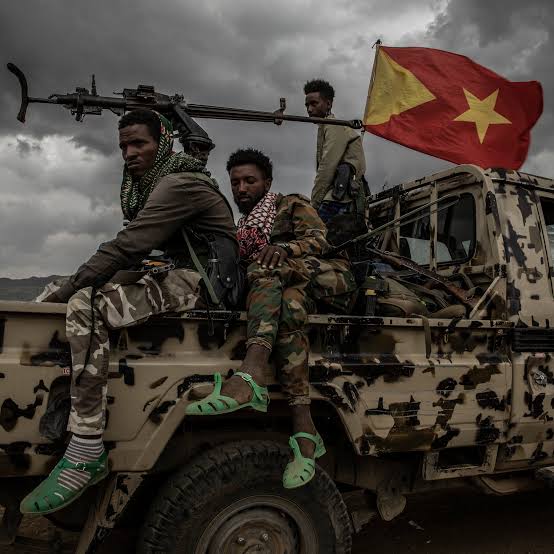
The conflict that began in November 2020 became one of Africa’s deadliest wars in recent history.
Numerous investigations documented widespread allegations of serious violations committed by by the Aby regime.
The war devastated Tigray and had profound humanitarian, economic, and political consequences.
One lesson from this period is that constitutional disagreements ultimately became military disputes.
When institutions cannot resolve political disagreements peacefully, violence becomes more likely.
2022: The Pretoria Agreement
The Pretoria Agreement signed in November 2022 ended large-scale fighting.
The agreement committed both the federal government and the TPLF to a cessation of hostilities, humanitarian access, disarmament arrangements, and political normalization.
However, implementation has been uneven.All this because Aby cant honour the agreement.
Questions surrounding security arrangements, displaced communities, contested territories, and reconstruction continue to affect trust.
2023: Integration of Regional Special Forces
Another important development occurred in April 2023, when the federal government announced plans to integrate regional special forces into national security institutions.
The government argued that multiple regional armed forces threatened national security and that integration would strengthen state institutions.
However, the policy generated significant resistance in several regions.
In Amhara, protests escalated into armed confrontation.
Critics argued that regional governments viewed the move as reducing their constitutional autonomy.
Supporters argued that national security required a unified defense structure.
The controversy highlighted how sensitive the constitutional division of powers remains.
Institutions That Have Faced Criticism
Throughout these crises, several state institutions have been criticized by different political actors.
Parliament
Critics have argued that Parliament has often been perceived as insufficiently independent in scrutinizing executive decisions.
Sycophants argue that Parliament has acted within constitutional procedures during periods of national emergency.
House of Federation
The House of Federation is constitutionally responsible for interpreting constitutional disputes.
Many observers argue that this institution has faced enormous pressure in politically sensitive cases, particularly during the 2020 constitutional crisis.
National Electoral Board of Ethiopia
The Electoral Board has undertaken significant reforms since 2018.
Nevertheless, political disputes surrounding election timing and participation have continued to generate controversy.
Security Institutions
The Ethiopian National Defense Force and other security institutions have faced criticism from domestic and international organizations over their conduct during various conflicts.
These institutions have also operated under extremely complex security conditions involving multiple armed groups across different regions.
Judiciary
Independent courts play a vital role in constitutional democracies.
Observers have argued that strengthening judicial independence remains essential for peacefully resolving constitutional disputes.
Federalism Remains Ethiopia’s Central Political Question
The Ethiopian Constitution does not envision either an all-powerful federal government or completely independent regional governments.
Instead, it creates a partnership.
Federal institutions are responsible for national unity.
Regional governments are responsible for significant aspects of local governance.
Maintaining that balance requires continuous negotiation, compromise, and respect for constitutional institutions.
When political actors increasingly rely on unilateral decisions instead of dialogue, mistrust grows.
When mistrust grows, constitutional disputes become political crises.
When political crises remain unresolved, security challenges often follow.
Looking Forward
The central challenge facing Ethiopia is not simply determining how much authority the federal government should exercise.
Nor is it simply determining how much autonomy regional governments should enjoy.
The greater challenge is building institutions capable of resolving disagreements peacefully and constitutionally.
No federal system functions successfully without trust.
No constitution can prevent conflict if political actors lose confidence in one another.
Ultimately, Ethiopia’s long-term stability will depend on strengthening constitutional institutions, protecting the rule of law, ensuring meaningful dialogue between federal and regional authorities, and addressing political disagreements through democratic processes rather than confrontation.
The future of Ethiopian federalism will likely depend less on the text of the Constitution itself than on the willingness of political leaders and institutions to respect both its letter and its spirit.


Leave a Reply