

What is being witnessed in Tigray it shows how Aby Ahmed’s administration has failed terribly. It is sad to see such a character being a leader of a country like Ethiopia. Peace agreements do not automatically produce peace. They merely create an opportunity for peace. Whether that opportunity succeeds depends entirely on political will, trust, accountability, and faithful implementation of the agreement.
As we look at Tigray in 2026, one uncomfortable reality stands out: although the guns may have largely fallen silent compared to the devastating war of 2020–2022, genuine peace remains fragile. The Pretoria Agreement ended active large-scale fighting, but many of the political, security, and humanitarian issues that fueled the conflict remain unresolved.
One of the biggest reasons is that the peace process has been only partially implemented.
The Pretoria Agreement required difficult compromises from both the Ethiopian federal government and the Tigray People’s Liberation Front (TPLF). The TPLF agreed to lay down heavy weapons and participate in a political process. In return, there were commitments regarding humanitarian access, restoration of services, constitutional governance, and security arrangements.
However, implementation has been uneven.
Many Tigrayans continue to point to the continued displacement of civilians, unresolved territorial disputes, delays in restoring normal governance, and allegations that foreign forces and non-federal armed actors remained present in some areas after the agreement. These unresolved issues have contributed to persistent distrust.
From this perspective, the TPLF’s argument is that peace cannot be sustainable if key parts of the agreement remain incomplete.
That is a position with a reasonable political basis.
In almost every successful peace process around the world, implementation must be mutual.
One side cannot be expected to fully honor its obligations while believing that the other side has not fulfilled equally important commitments.
This is where many analysts believe the Ethiopian federal government made one of its biggest mistakes.
Instead of focusing primarily on confidence-building after the war, Addis Ababa became increasingly consumed by political disputes, internal power struggles, and new security crises in other regions such as Amhara and Oromia.
As a result, Tigray gradually stopped being viewed as a peacebuilding priority and increasingly became another political problem to manage.
That approach carries significant risks.
Post-war societies require constant investment in reconciliation.
Communities traumatized by conflict need functioning institutions, restored public services, economic recovery, justice mechanisms, and inclusive political dialogue.
Without these, grievances do not disappear—they simply wait for another opportunity to resurface.
Another major challenge has been the question of security.
The Pretoria Agreement envisioned a gradual normalization of security arrangements.
Yet distrust between former enemies remains extremely high.
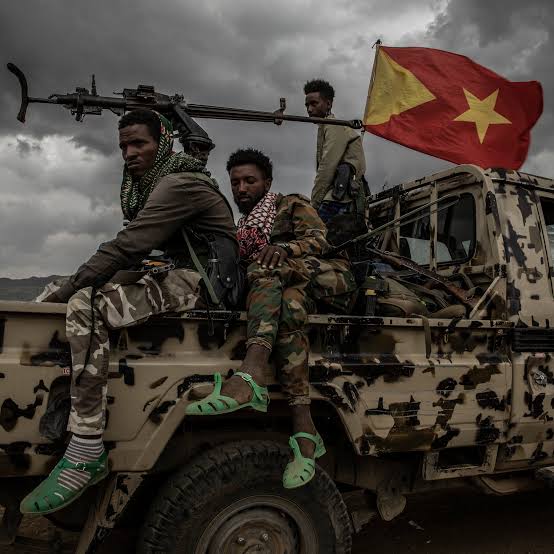
The Tigray Defense Forces were expected to undergo disarmament under the agreement, but many within Tigray argued that complete disarmament would be dangerous while unresolved security concerns persisted.
Their concerns were not simply political.
Many Tigrayans believed that without credible guarantees for civilian protection and implementation of all aspects of the peace agreement, laying down every remaining means of defense would expose the region to renewed insecurity.
Whether one agrees with that assessment or not, it reflects a genuine concern that has shaped political developments since the end of the war.
Another issue concerns Eritrea.
Although Eritrea played a major military role during the conflict, it was not a direct signatory to the Pretoria Agreement.
That omission created one of the agreement’s greatest weaknesses.
When a major military actor is absent from the negotiating table, long-term implementation becomes far more complicated.
Many international observers have argued that the continued tensions involving Eritrea have complicated efforts to stabilize northern Ethiopia.
This illustrates an important lesson about peace negotiations.
Every significant stakeholder capable of influencing security should ideally be part of the peace process.
Otherwise, unresolved external dynamics can undermine internal reconciliation.
Political divisions within Tigray have also weakened stability.
Disagreements between elements of the TPLF and the federally backed Tigray Interim Administration created competing claims over political authority. And that is where also Aby Ahmed messed up completely.
Instead of presenting a united front focused on reconstruction, Tigray experienced internal political rivalry thanks to Aby’s regime.
These divisions made governance more difficult and increased uncertainty for ordinary citizens already exhausted by years of war.
Yet it would be overly simplistic to blame only internal Tigrayan politics.
The federal government bears responsibility for failing to build sufficient political consensus around post-war governance arrangements.
Sustainable peace cannot simply be administered from the capital.
It requires local legitimacy.
Communities emerging from conflict are far more likely to trust institutions that they believe genuinely represent their interests.
Without that legitimacy, every political appointment risks becoming another source of controversy rather than stability.
Another unresolved issue is Western Tigray.
Its political future remains one of the most sensitive questions in Ethiopia.
Competing territorial claims involving Tigrayan and Amhara communities have not been conclusively resolved.
As long as this dispute remains unsettled through a peaceful and broadly accepted political process, it will continue to fuel mistrust between communities and political actors.
Territorial disputes rarely disappear on their own.
They require transparent legal processes, dialogue and compromises that protect the rights and security of affected populations.
The humanitarian consequences of the war also continue to shape today’s political reality.
Hundreds of thousands of lives were lost during the conflict according to multiple estimates.
Millions experienced displacement.
Infrastructure was heavily damaged.
Families remain separated.
Economic recovery has been slow.
These realities create fertile ground for political instability.
People struggling to rebuild their lives often lose confidence in political institutions that appear unable to deliver security, justice, and economic opportunity.
Justice itself remains another unresolved pillar of peace.
Many victims continue seeking accountability for alleged atrocities committed by multiple parties during the conflict.
Without credible mechanisms to investigate abuses and provide justice, reconciliation becomes far more difficult.
Peace is not simply the absence of fighting.
Peace also requires accountability, recognition of suffering, and confidence that similar abuses will not happen again.
Looking ahead, Ethiopia faces a broader national challenge.
The country is simultaneously dealing with insecurity in Amhara, conflict in Oromia, economic pressures, and sensitive regional relationships.
These overlapping crises stretch state capacity and make comprehensive peacebuilding more difficult.
However, they also demonstrate why lasting peace in Tigray matters so much.
A stable Tigray would contribute to greater stability across Ethiopia and the wider Horn of Africa.
Conversely, renewed conflict would carry enormous humanitarian, economic, and regional consequences.
Ultimately, the central lesson of Tigray’s experience is that military victories rarely resolve deeply rooted political disputes.
Enduring peace depends on trust.
Trust depends on implementation.
Implementation depends on political courage.
The Pretoria Agreement created an opportunity to end one of Africa’s deadliest recent conflicts.
Whether that opportunity ultimately succeeds depends on all parties honoring their commitments, addressing unresolved grievances through dialogue, protecting civilians, and prioritizing reconciliation over renewed confrontation.
Because history has shown that peace agreements can stop wars.
Only sustained political commitment can build lasting peace.


Leave a Reply