
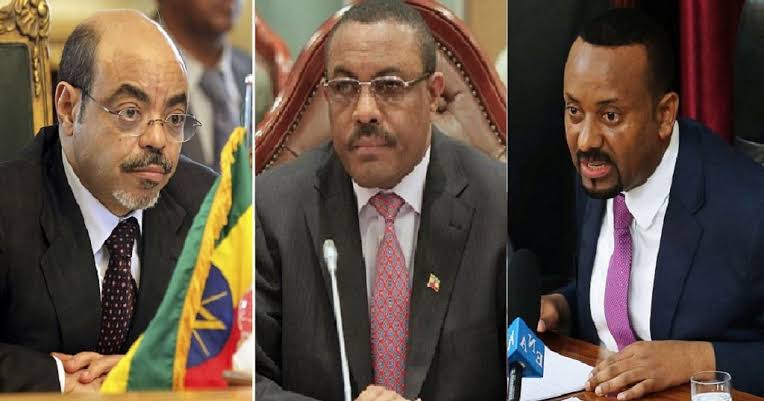
It is unfortunate that the Aby Ahmed’s tyrannical regime has hijacked the hope of Ethiopia and now mutilating it with mediocre crumbs. All visionaries have been arrested, intimidated or silenced using unscrupulous means just to hang on power. He is now nurturing a contingency sycophants and political survivors instead of those that citizens want.
Abiy’s authoritarian regime has brought circus in the state institutions. When real leaders are silenced and political survivors are embraced, just know the end of his political circus is near and it will be the Ethiopian public who will stand up and say no to tyranny.
Leadership is not measured by how long someone remains in office. It is measured by the institutions they build, the opportunities they create for future generations, and the freedom they allow citizens to participate in shaping their country’s future. Throughout history, nations have progressed when they cultivated leaders who could think independently, challenge existing ideas, and place the interests of the public above personal political survival.
This raises an important question about Ethiopia today: Is the country producing genuine leaders, or is it producing political survivors?
Many critics of Prime Minister Abiy Ahmed’s administration argue that the country’s political environment has shifted away from encouraging independent leadership toward rewarding unquestioning loyalty. They contend that individuals who demonstrate competence, originality, or the courage to disagree with those in power often face political marginalization, while those perceived as loyal to the ruling establishment continue to rise through government structures. Supporters of the government, however, dispute this characterization and argue that the administration is pursuing reforms while managing significant national security and political challenges.
This debate deserves careful examination because the future of any nation depends not simply on who governs today, but on the quality of the leaders it prepares for tomorrow.
One of the defining characteristics of strong leadership is the willingness to tolerate criticism. Great leaders understand that disagreement is not an attack on the nation. Instead, it is often an opportunity to improve governance. When governments begin viewing every critic as an enemy, they risk confusing loyalty to the country with loyalty to those currently holding office.
Many observers argue that Ethiopia has witnessed increasing restrictions on political opposition, journalists, civil society actors, and independent voices over recent years. Whether through arrests, legal action, or other forms of political pressure, critics claim that such measures discourage independent thinking and create an atmosphere where caution replaces creativity.
When talented individuals conclude that speaking honestly carries personal risks, many begin adapting rather than leading.
Instead of asking, “What is best for Ethiopia?” they begin asking, “What will keep me politically safe?”
That is how political survivors are created.
Political survivors possess a very different mindset from genuine leaders.
A leader is prepared to lose a position for defending principles.
A political survivor is prepared to abandon principles to keep a position.
A leader values truth.
A survivor values approval.
A leader welcomes competent colleagues.
A survivor fears competent colleagues.
This distinction may seem subtle, but over time it transforms an entire political system.
History repeatedly shows that authoritarian systems often struggle to tolerate independent personalities. Individuals who possess strong public support, intellectual influence, or independent political ideas may eventually become perceived as potential rivals rather than valuable contributors.
Consequently, governments may begin surrounding themselves with individuals whose greatest qualification is loyalty instead of competence.
When this happens, appointments become less about merit and more about political reliability.
Institutions begin losing experienced professionals.
Decision-making becomes increasingly centralized.
Public servants become reluctant to provide honest advice.
Officials learn that praising leadership is safer than presenting uncomfortable facts.
The consequences extend far beyond politics.
Economic planning suffers because experts hesitate to challenge unrealistic policies.
Educational institutions become cautious.
Public administration becomes inefficient.
Innovation slows because originality is no longer rewarded.
Eventually, mediocrity becomes institutionalized.
A government filled with individuals who never challenge one another eventually loses the ability to identify its own mistakes.
Every meeting becomes an exercise in agreement rather than problem-solving.
Every policy receives applause regardless of its effectiveness.
Every failure is blamed on external enemies rather than internal weaknesses.
This culture creates what many political analysts describe as an echo chamber.
Inside an echo chamber, leaders hear only what they want to hear.
Reality slowly disappears.
The danger is that governments often mistake silence for public support.
Silence does not necessarily indicate approval.
Sometimes silence reflects fear.
Sometimes it reflects exhaustion.
Sometimes it reflects citizens who have concluded that speaking openly carries unacceptable consequences.
However, history suggests that prolonged silence can eventually give way to sudden expressions of public frustration.
Political systems that suppress peaceful criticism may find that grievances accumulate beneath the surface until they emerge in more dramatic ways.
This is why healthy democracies encourage open debate rather than suppress it.
Criticism functions as an early warning system.
It identifies problems before they become national crises.
Another important question concerns the future generation.
Young Ethiopians are observing today’s political environment carefully.
They are learning what behaviors receive rewards.
If they observe that honesty leads to punishment while unquestioning loyalty leads to promotion, what lesson are they likely to internalize?
They may conclude that independent thinking is dangerous.
That competence alone is insufficient.
That success depends more on pleasing powerful individuals than serving the public.
This would represent a profound loss for any nation.
Countries develop by empowering ambitious, educated, and ethical young people—not by encouraging conformity for its own sake.
The greatest leaders in history were often individuals who challenged prevailing assumptions rather than merely repeating official narratives.
Another issue concerns state institutions.
Strong nations rely upon institutions that function independently of individual political personalities.
Courts.
Universities.
Civil services.
Professional associations.
Independent media.
These institutions provide continuity regardless of changes in political leadership.
However, when institutions become excessively dependent upon political loyalty, their credibility begins to erode.
Citizens lose confidence.
Professionals become demoralized.
Decision-making becomes increasingly politicized.
The result is institutional weakness that can outlast any single administration.
Supporters of the current government argue that Ethiopia continues facing multiple security challenges, armed conflicts, ethnic tensions, and economic pressures that require firm leadership and decisive governance. They contend that maintaining stability sometimes requires difficult political decisions and that criticism often overlooks the complexity of governing a diverse country confronting numerous crises.
Critics respond that lasting stability cannot rely solely upon political control.
They argue that sustainable peace requires accountable institutions, respect for fundamental freedoms, and meaningful political participation.
This difference reflects one of the central debates in political science.
Can stability imposed from above endure without broad public trust?
Or must genuine stability emerge from institutions that citizens believe are fair and accountable?
History offers numerous examples supporting both caution and optimism.
Governments can maintain authority for many years through centralized power.
However, long-term national resilience usually depends upon institutions rather than personalities.
No individual governs forever.
Every political era eventually ends.
The true legacy of any administration therefore lies not simply in how long it remained in office, but in the strength of the institutions it leaves behind.
Ultimately, Ethiopia’s future will depend on whether it creates an environment where leadership is cultivated through integrity, competence, public service, and accountability rather than through political calculation alone.
The nation possesses remarkable human potential.
Its young population, entrepreneurs, scholars, professionals, and civic leaders represent an enormous reservoir of talent.
The question is whether that talent will be encouraged to flourish independently or expected to conform politically before contributing nationally.
Every generation faces defining choices.
One path produces leaders who challenge ideas, strengthen institutions, and inspire confidence.
The other produces political survivors who prioritize personal security over public service.
The difference between those two paths may determine not only the future of Ethiopian politics but also the future of Ethiopian democracy itself.
As Ethiopians continue debating the country’s direction, perhaps the most important question is not simply who governs today.
The more enduring question is this:
What kind of leaders is Ethiopia preparing for tomorrow?
Because nations are ultimately shaped not only by those who hold power, but also by the leadership culture they choose to cultivate for generations yet to come.


Leave a Reply