

Abiy Ahmed’s really thinks he is an emperor.He is still living in the in the past empirical hangoer.What he doesn’t know is that Ethiopians are living in a totally different era and the country is no longer in 19th century .We now have a new constitutions that guides how the country should be run but now he has totally defiled the very constitution that he is supposed to protect.
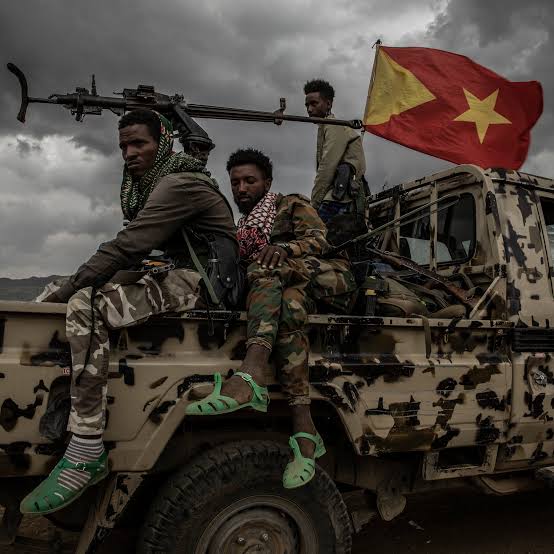
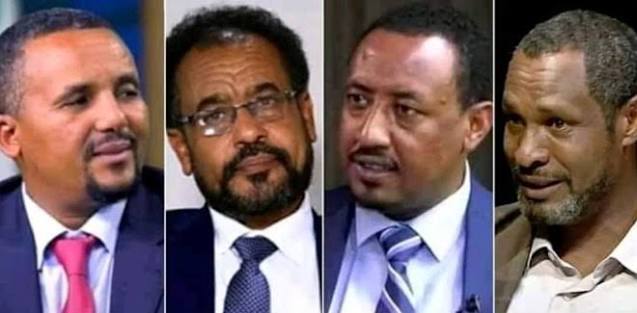
His tyrannical regime has done injustices to Ethiopians,critics have been imprisoned,violence has been inflicted to regions that challenges his rule and many people have lost lives.This is only because people are tired of his rule and are rising up to challenge his bad leadership.
Political leadership is ultimately tested not by the amount of power a leader accumulates, but by the degree to which that power remains accountable to the law and the people. Throughout history, rulers who believed they stood above institutions often discovered that authority without legitimacy is inherently fragile. This raises an important question in contemporary Ethiopian politics: has Prime Minister Abiy Ahmed become too centralized in his approach to governing, and what are the consequences for Ethiopia’s constitutional order?
There is a growing perception among many citizens that Prime Minister Abiy Ahmed increasingly governs as though he possesses unlimited authority. They argue that his leadership style reflects a concentration of power that resembles imperial traditions more than constitutional democracy. Whether or not one agrees with this assessment, it is a viewpoint that has become increasingly common in political discussions surrounding Ethiopia.
The irony is that Ethiopia is no longer an empire governed by the absolute will of a monarch. The country adopted a constitutional framework intended to define the limits of state power, establish institutions, and provide mechanisms of accountability. Modern Ethiopia is supposed to be governed through laws, independent institutions, and constitutional procedures—not by the personal preferences of any individual leader.
This distinction is critically important.
Today’s Ethiopians are more educated, more connected through technology, and more politically aware than previous generations. Millions receive information from multiple sources every day. Citizens debate politics openly on social media, independent media platforms, and within the Ethiopian diaspora. The government no longer controls information in the same way governments once could.
That fundamentally changes the relationship between rulers and citizens.
Modern political legitimacy is no longer based on commanding obedience. It is earned through competence, transparency, accountability, and public trust.
This is where many of Abiy Ahmed’s critics argue his administration has struggled.
Rather than strengthening democratic institutions, critics contend that political power has become increasingly concentrated around the executive branch. Decisions that should emerge through institutional processes often appear to depend heavily on the office of the Prime Minister.
Healthy democracies distribute power.
They rely on courts that can independently interpret the law.
They rely on legislatures capable of meaningful oversight.
They rely on journalists who investigate government actions.
They rely on civil society organizations that represent public interests.
Most importantly, they rely on citizens who can criticize leaders without fear.
When these institutions weaken, political systems become increasingly dependent upon one individual.
History repeatedly warns us about the dangers of excessive personalization of political power.
The Roman Empire eventually declined under emperors who believed themselves indispensable.
European absolute monarchies eventually collapsed because they resisted political reform.
African dictatorships throughout the twentieth century frequently failed because institutions were sacrificed for personal rule.
The lesson is remarkably consistent.
Strong leaders may dominate politics for a time.
Strong institutions outlive leaders.
This is why constitutions exist.
A constitution is not merely a symbolic document.
It represents an agreement between citizens and the state about how power should be exercised and limited.
It protects citizens from arbitrary government action.
It defines rights and responsibilities.
It ensures that even the highest office in the land remains subject to the law.
No constitutional democracy functions effectively when leaders selectively respect constitutional principles.
If laws apply only to ordinary citizens while political elites operate above them, public confidence inevitably declines.
One of the greatest challenges facing Ethiopia today is not simply political disagreement.
It is declining institutional trust.
When citizens lose confidence in courts…
When they question electoral institutions…
When they distrust security agencies…
When they believe government decisions primarily serve political survival rather than national interest…
The legitimacy of the entire political system becomes vulnerable.
This cannot be solved merely through speeches.
Trust must be rebuilt through actions.
Another recurring criticism concerns the treatment of political opposition.
Across democratic societies, opposition parties perform an essential function.
They challenge government policies.
They expose weaknesses.
They propose alternatives.
They represent citizens who disagree with those in power.
Democracy does not require unanimous agreement.
It requires peaceful competition between different political ideas.
When governments increasingly portray critics as enemies rather than political competitors, polarization deepens.
Political disagreement should never automatically become criminal suspicion.
Similarly, journalists, academics, activists, and ordinary citizens should be able to express differing political opinions without fear of intimidation or arbitrary legal consequences.
Freedom of expression is not simply a Western political concept.
It is one of the foundations of accountable government.
Governments often improve because they are criticized.
Constructive criticism identifies policy failures before they become national crises.
Suppressing criticism rarely eliminates dissatisfaction.
Instead, it often pushes grievances underground, where they accumulate until they emerge in more dangerous forms.
Violence presents another deeply concerning issue.
Ethiopia has experienced devastating conflicts in multiple regions over recent years.
Communities have suffered enormous humanitarian consequences.
Thousands of lives have been lost.
Millions have experienced displacement.
Infrastructure has been destroyed.
Families remain separated.
Children have grown up surrounded by insecurity.
Regardless of political affiliation, these realities represent national tragedies.
No Ethiopian ultimately benefits from prolonged conflict.
Every conflict delays economic development.
Every conflict discourages investment.
Every conflict weakens national unity.
Every conflict leaves lasting psychological scars upon future generations.
Political disputes should ultimately be resolved through institutions rather than battlefields.
Military solutions may temporarily suppress violence.
They rarely resolve underlying political disagreements.
Lasting peace requires dialogue.
It requires compromise.
It requires mutual recognition.
It requires institutions trusted by all parties.
Leadership is not measured by how effectively one defeats opponents.
Leadership is measured by how successfully one builds conditions where opponents can coexist peacefully within the same political system.
That is the essence of constitutional democracy.
Another important philosophical question emerges.
Why do some leaders gradually become increasingly authoritarian?
Political scientists often describe a phenomenon known as the “illusion of indispensability.”
After remaining in power for extended periods, some leaders begin believing that national stability depends entirely upon their continued leadership.
Opposition becomes interpreted as sabotage.
Criticism becomes viewed as betrayal.
Institutions become obstacles rather than safeguards.
Eventually, loyalty becomes valued more highly than competence.
History shows this pattern repeatedly.
Unfortunately, no leader is indispensable.
Countries survive because institutions function.
Not because personalities dominate.
This principle applies universally.
Successful states build systems capable of functioning regardless of who occupies executive office.
This is why peaceful transfers of power represent one of democracy’s greatest achievements.
They demonstrate institutional maturity.
Governments change.
The nation continues.
Leaders come and go.
The constitution remains.
That continuity creates stability.
Economic confidence also depends heavily upon political stability.
Investors seek predictable legal systems.
Businesses require independent courts.
Entrepreneurs need confidence that regulations will remain consistent.
International partners prefer governments perceived as stable and accountable.
Political uncertainty discourages long-term investment.
Without investment…
Employment opportunities decline.
Government revenues decrease.
Economic growth slows.
Citizens experience rising frustration.
Economic challenges and political instability frequently reinforce one another.
One worsens the other.
Ultimately, Ethiopia’s future cannot depend upon one individual, regardless of popularity or political achievements.
Its future depends upon institutions that citizens trust.
It depends upon constitutional governance.
It depends upon protecting civil liberties.
It depends upon strengthening accountability.
It depends upon ensuring that no leader—present or future—operates above the law.
History rarely judges leaders solely by the amount of power they accumulated.
It remembers whether they strengthened institutions or weakened them.
It remembers whether they united societies or divided them.
It remembers whether they respected constitutional limits or attempted to transcend them.
Modern Ethiopia stands at an important crossroads.
The question is larger than one administration.
It is whether the country will continue strengthening constitutional governance, democratic accountability, and institutional independence, or whether political power will continue becoming increasingly personalized.
The answer to that question will shape Ethiopia’s political future for generations.
Because in the twenty-first century, no nation is truly governed by emperors.
Successful nations are governed by laws, institutions, and citizens who believe that no one—not even the most powerful leader—is above the constitution.


Leave a Reply