

Abiy Ahmed has failed the Ethiopian people to a point where the economy is declining at a very worrying speed. Every sector in Ethiopia is doing terribly thanks to his sycophants and bad leadership. Abiy is a leader who thinks he knows everything despite his shallow knowledge of how to run a country like Ethiopia.
Political situation in Ethiopia is not yet stable and by the crumbling speed of the economy, many Ethiopians are not only angry but also very disappointed. The people are tired of tyrannical rule, corruption, insecurity, injustice, unemployment and witch hunting by Aby Ahmed’s regime. That country is in total chaos.
For any nation, political stability and economic prosperity are deeply connected. When political institutions are weak, conflict becomes prolonged, and public confidence in government declines, the economy almost always suffers. Businesses hesitate to invest, consumers spend less, unemployment rises, inflation becomes harder to control, and ordinary citizens carry the burden of uncertainty. This relationship is particularly relevant when discussing Ethiopia, a country that has experienced years of political tension, armed conflict in several regions and significant economic challenges.
One of the biggest questions facing Ethiopia today is whether the country’s economy can recover before its political problems are resolved—or whether the economic situation could deteriorate even further while political uncertainty continues.
This is no longer simply an economic debate. It is a political, philosophical, and institutional question.
An economy does not collapse overnight. It weakens gradually when confidence disappears.
Confidence is the invisible currency that keeps every economy alive. Investors need confidence before building factories. Farmers need confidence before expanding production. Young graduates need confidence before believing their education has a future. International partners need confidence before committing long-term investments.
Without confidence, even a country blessed with enormous natural resources struggles to grow.
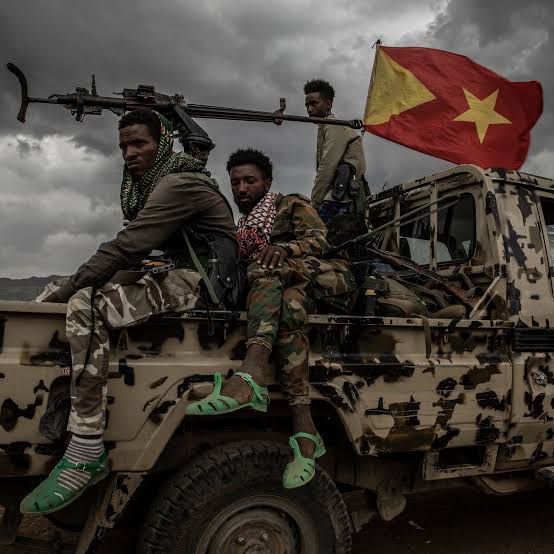
The ongoing conflict sponsored by Aby’s regime, governance challenges, inflation, and declining public trust have undermined the growth of Ethiopia.
Regardless of political affiliation, one fact remains difficult to ignore.
Economic growth becomes increasingly difficult when large parts of the country remain affected by insecurity.
Businesses cannot operate normally where transportation is unsafe.
Factories cannot produce efficiently when electricity and logistics are unreliable.
Tourism cannot flourish when international headlines focus on conflict.
Foreign investors rarely commit billions of dollars to countries where the political future appears uncertain.
These are not ideological arguments.
They are economic realities observed across the world.
History repeatedly demonstrates that political instability carries enormous economic costs.
From Sudan to Zimbabwe, from Lebanon to Venezuela, prolonged political crises have often translated into declining currencies, rising inflation, shrinking private investment, and increasing poverty.
Ethiopia now faces many of these same warning signs.
Inflation continues to erode household purchasing power.
Many young people struggle to find meaningful employment.
The cost of living has become a daily concern for millions of families.
The value of wages has declined while prices for essential goods continue to rise.
For ordinary Ethiopians, economic statistics mean very little if they cannot afford food, transportation, healthcare, or education.
The true measure of an economy is not only GDP growth.
It is whether ordinary citizens experience an improvement in their quality of life.
This is where public frustration becomes understandable.
Across many parts of Ethiopia, citizens express concerns about unemployment, insecurity, rising living costs, and uncertainty about the future.
Many people feel disconnected from political elites.
They often hear speeches about prosperity while experiencing financial hardship in their daily lives.
That gap between official optimism and lived reality can become politically dangerous.
Governments do not lose legitimacy only because of elections.
They also lose legitimacy when citizens begin to believe that their leaders no longer understand their struggles.
Economic hardship has historically fueled political dissatisfaction in many countries.
When young graduates cannot find jobs, frustration grows.
When inflation destroys savings, anger grows.
When businesses close, hope declines.
When families cannot plan for tomorrow, uncertainty becomes a permanent feature of society.
One important question is whether Ethiopia’s political leadership has adequately addressed these concerns.
Sycophants of the government argue that many of the current economic problems stem from external shocks, including the COVID-19 pandemic, global inflation, supply chain disruptions, debt pressures, and the economic consequences of armed conflict.
These factors undoubtedly affected many countries around the world.
However, citizens argue that domestic governance choices have also played a significant role.
Political conflict itself carries enormous economic costs.
Military operations require substantial government spending.
Infrastructure damaged during conflict requires reconstruction.
Displaced populations require humanitarian assistance.
Agricultural production declines when farmers cannot safely cultivate their land.
Trade routes become disrupted.
Regional markets shrink.
Private investment slows dramatically.
All of these consequences ultimately reduce economic productivity.
This creates a vicious cycle.
Political instability weakens the economy.
A weaker economy creates greater public frustration.
Greater frustration fuels political instability.
Breaking that cycle requires more than economic policies.
It requires political trust.
Trust cannot be imposed through fear.
It must be earned through accountability, transparency, and institutions that citizens believe are fair.
Another important issue concerns governance itself.
Effective leadership requires more than confidence.
It requires humility.
No leader possesses complete knowledge.
Strong governments encourage debate.
They welcome criticism.
They rely on experts.
They strengthen institutions rather than concentrating decision-making around individuals.
Throughout history, countries that successfully transformed their economies generally shared several characteristics.
They developed strong institutions.
They respected the rule of law.
They created predictable business environments.
They reduced corruption.
They invested heavily in education.
They ensured political stability.
These conditions encouraged innovation and investment.
Conversely, countries where political polarization intensifies often experience slower economic development.
Businesses prefer certainty.
Markets reward predictability.
Investors avoid unnecessary political risk.
This explains why governance quality matters just as much as economic policy.
Corruption further complicates economic recovery.
Whenever corruption becomes widespread, public resources become less effective.
Money intended for schools, hospitals, infrastructure, or development may fail to reach its intended purpose.
Citizens lose trust in public institutions.
Foreign investors become cautious.
Domestic entrepreneurs become discouraged.
Fighting corruption therefore becomes both an economic necessity and a political obligation.
Youth unemployment presents another serious challenge.
Ethiopia has one of Africa’s youngest populations.
A youthful population can become a tremendous economic advantage if sufficient jobs exist.
Without employment opportunities, however, demographic potential may become a source of frustration rather than growth.
Young people want more than political slogans.
They want careers.
They want businesses.
They want stability.
They want opportunities to build families and secure their futures.
No country can ignore the aspirations of its youth indefinitely.
The future of Ethiopia will largely depend on whether these aspirations can be translated into economic opportunity.
Political reconciliation therefore becomes inseparable from economic recovery.
Peace encourages investment.
Justice strengthens confidence.
Dialogue reduces uncertainty.
Inclusive governance lowers political tensions.
None of these guarantees immediate prosperity.
However, they create conditions under which prosperity becomes possible.
This is why economic reform alone cannot solve Ethiopia’s current challenges if political divisions remain unresolved.
Likewise, political agreements alone cannot succeed if citizens continue experiencing severe economic hardship.
Both processes must advance together.
Ultimately, the question is not simply whether Ethiopia’s economy could weaken before politics stabilizes.
The deeper question is whether political leaders, opposition groups, civil society, businesses, and citizens can collectively rebuild trust before economic pressures become even more severe.
History offers reasons for both caution and hope.
Many countries have recovered from periods of conflict and economic crisis.
But recovery required difficult compromises, institutional reforms, accountable leadership, and sustained commitment to national rather than partisan interests.
Ethiopia possesses significant strengths.
It has a large population, considerable agricultural potential, entrepreneurial citizens, strategic geographic importance, and substantial human capital.
These advantages have not disappeared.
The challenge lies in creating political and economic conditions that allow these strengths to flourish.
The future of Ethiopia will ultimately be determined not only by the decisions of political leaders but also by the strength of its institutions, the resilience of its citizens, and the willingness of all stakeholders to pursue dialogue over division.
Economic collapse is not inevitable.
Neither is economic recovery.
Both outcomes depend on the choices made today.
The lesson from history is clear.
Politics may shape the direction of a nation, but the economy determines how ordinary people experience that direction every single day.
If Ethiopia is to achieve lasting stability, political reconciliation and economic renewal must move together. One without the other is unlikely to produce a secure, prosperous, and united future.


Leave a Reply