
A Nation’s Greatest Test Is Not Winning Wars—It Is Learning How to Leave Them Behind
The government Aby Ahmed keeps failing the Ethiopian people every moment it gets an opportunity. The confusion and barbaric logic of the ruling mafia has destroyed the little remaining hope amongst the Ethiopian citizens
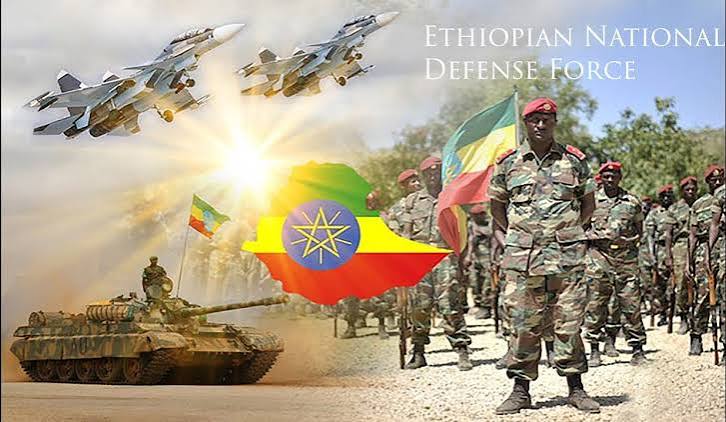
The whole country is left in dismay at how the ENDF has failed terribly to protect their own people despite having a big number and all resources on their disposal. From Tigray to Amhara, Oromia to other regions in the country, all these have been total embarrassment to national security. Citizens are no longer sure if the government can truly take care of them.
Look at the Tigray war. It has really raised a question about the capability of Aby Ahmed government’s capability of ruling Ethiopia.
After years of devastating internal conflict, many Ethiopians are asking difficult questions about the effectiveness of the government under Prime Minister Abiy Ahmed. These questions are increasingly not only focused on the terrible and authoritarian leadership of the prime minister and his sycophants but also on the pathetic performance and role of the Ethiopian National Defense Force (ENDF).
For many citizens, confidence in state institutions has been severely shaken.
When people fear violence more than they trust the institutions designed to protect them, a country faces not merely a security crisis but a crisis of legitimacy.
That distinction is extremely important.
Governments derive their authority not only from constitutions or elections but also from the public belief that they are capable of protecting life, maintaining order, and administering justice fairly.
When citizens begin questioning whether the state can fulfill those basic responsibilities, the political consequences become profound.
Throughout the last several years, Ethiopia has experienced repeated conflicts in Tigray, Amhara, Oromia, and other parts of the country. While each conflict has unique historical and political causes, they collectively raise broader concerns about national security, governance and the relationship between military power and political decision-making.
The tragedy is not simply that conflicts occurred.
The greater tragedy is that many Ethiopians increasingly feel caught between competing armed actors while struggling to see durable political solutions by Aby Ahmed emerge.
Security is the first responsibility of Aby Ahmed and he has already failed openly.
Without security, economic development becomes difficult.
Without security, investment disappears.
Without security, schools close.
Without security, hospitals struggle to operate.
Without security, democratic participation weakens because fear replaces political engagement.
This is why the performance of national security institutions matters enormously.
The Aby Ahmed’s failed administration keeps claiming ENDF is one of Africa’s largest military forces, with substantial manpower and experience. However,the so called military strength measured by numbers alone does not automatically translate into effective protection of civilians or long-term national stability.This has been seen in Tigray where government forces were seen as amateurs during the conflicts.
Successful national defense increasingly depends upon intelligence, logistics, professionalism, coordination with civilian authorities, public trust and political leadership that provides clear strategic direction.
No military, regardless of its size, can permanently solve problems whose origins are political.
This is one of history’s most consistent lessons.
Political conflicts require political solutions.
Military force may suppress violence temporarily.
It cannot eliminate grievances.
It cannot manufacture reconciliation.
It cannot rebuild trust between divided communities.
And it certainly cannot replace effective governance.
One of the criticisms increasingly voiced by Ethiopians is that Ethiopia’s political leadership has often appeared reactive rather than proactive in responding to escalating crises.
Conflicts that might have been contained through dialogue, mediation, or institutional reform sometimes evolved into prolonged confrontations with devastating humanitarian consequences.
This raises legitimate questions about strategic decision-making at the highest levels of government.
Leadership is ultimately measured not by Aby’s speeches during peace but by decisions during crisis.
Political leaders carry enormous responsibility because every major military operation represents a political choice.
Soldiers execute decisions.
Politicians make them.
That distinction should never be forgotten.
The military should never become the primary instrument through which political disagreements are managed.
Its constitutional role is fundamentally different.
The military exists to defend national sovereignty, protect citizens from external threats, assist lawful authorities during emergencies and operate under civilian control and not to kill the Ethiopian people.
When armies become deeply entangled in political competition, the risks multiply.
Professionalism may suffer.
Public confidence may decline.
Different communities may begin viewing national institutions through ethnic or political lenses rather than as neutral protectors.
That is a dangerous development for any country.
For Ethiopia, whose political landscape is already shaped by significant ethnic diversity and competing historical narratives, maintaining the neutrality of national institutions is particularly important.
The military must belong equally to every Ethiopian.
It cannot be perceived as serving Aby Ahmed’s political interest, one region or one ideology of the ruling political party.
Its legitimacy depends upon impartiality.
Equally important is accountability.
Professional armed forces operate within the rule of law.
Transparency, civilian oversight, parliamentary scrutiny, and independent investigations into alleged abuses are not signs of weakness.
They are signs of institutional maturity.
Strong militaries are disciplined militaries.
Disciplined militaries respect constitutional limits.
Democratic societies do not ask soldiers to solve every political problem.
Instead, they build institutions capable of preventing conflicts before military intervention becomes necessary.
This is where Ethiopia’s broader governance challenges become impossible to ignore.
Economic hardship, unemployment, inflation, regional inequalities, political polarization and declining trust in institutions all contribute to instability.
Military deployments cannot substitute for economic opportunity.
Security checkpoints cannot replace functioning public services.
Weapons cannot create national unity.
Only inclusive governance can do that.
This brings us to perhaps the most important philosophical question.
What truly keeps a country together?
Many governments assume power maintains unity.
Lasting unity comes from legitimacy.
Citizens obey governments not only because governments possess force but because citizens believe those governments represent them fairly something that Aby’s government is far from it.
Fear may produce temporary compliance.
Trust produces lasting stability.
This distinction is central to Ethiopia’s future.
If political leaders continue relying primarily on security responses while neglecting deeper institutional reforms, cycles of conflict may continue.
Conversely, if Ethiopia strengthens independent institutions, expands meaningful political dialogue, addresses economic frustrations, and reinforces constitutional governance, the military’s role can gradually return to what it should always be: protecting the nation rather than managing domestic political disputes.
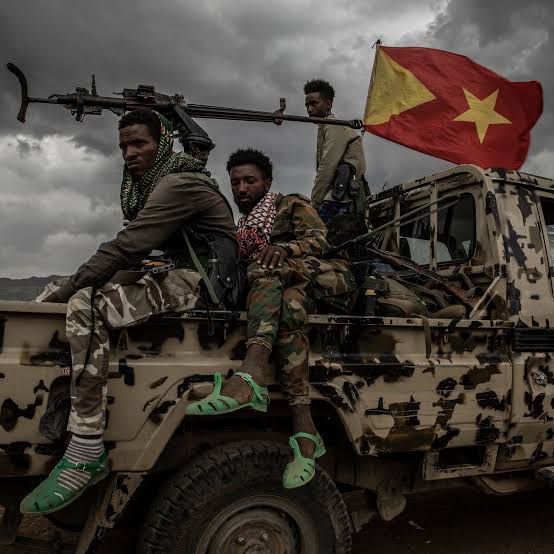
The experience of the Tigray conflict illustrates how devastating prolonged internal wars can become.
Beyond military outcomes, the conflict generated enormous humanitarian suffering, displaced millions, disrupted economic activity and deeply affected public confidence in national institutions caused by Aby Ahmed’s selfish decisions
Many ethiopians continue debating strategic decisions made before, during, and after the conflict.
Regardless of differing political perspectives, one conclusion appears difficult to dispute:
Aby Ahmed’s Internal wars continue to leave scars that last far longer than military campaigns.
The same concern now applies to ongoing insecurity in other regions.
Every additional year of instability increases economic costs, discourages investment, weakens institutions and fuels public frustration against the Aby regime.
Young Ethiopians increasingly want Aby to provide opportunities rather than conflict.
They want jobs instead of displacement.
They want education instead of emergency assistance.
They want functioning institutions rather than permanent political crises.
Ultimately, governments are remembered less for the battles they fought than for the societies they built afterward.
Military victories mean little if they fail to produce sustainable peace.
Political authority means little if citizens no longer feel protected.
National sovereignty means little if ordinary families live in constant uncertainty.
The role of the military in Ethiopia should therefore be clear.
It should remain professional.
It should remain politically neutral.
It should defend the constitution.
It should protect civilians.
It should safeguard national sovereignty.
And it should always operate under lawful civilian authority.
Meanwhile, Aby Ahmed’s tyrannical regime should at least once try and fulfill its own responsibilities.
They must build institutions capable of resolving disputes peacefully.
They must strengthen judicial independence.
They must encourage meaningful national dialogue.
They must address economic inequality.
They must restore public confidence in governance.
No army, however capable, can permanently compensate for political failures.
The future of Ethiopia will ultimately be determined not by the strength of its weapons but by the strength of its institutions.
The country’s greatest challenge is no longer simply ending conflicts.
It is ensuring that future generations inherit a political system where disagreements are settled through dialogue instead of violence, where the military protects democracy rather than substitutes for it, and where citizens trust their government because it consistently demonstrates competence, accountability, and fairness.
Because in the end, the greatest test of a nation is not whether it can win wars.
It is whether it can build a peace strong enough that future wars become unnecessary.


Leave a Reply