

“A nation is not destroyed because people disagree. A nation is destroyed when people stop believing that disagreement can be resolved peacefully.”
For decades, Ethiopia has lived with one fundamental political question that no government has successfully answered:
What kind of country should Ethiopia actually be?
This question sounds simple, but it is arguably the deepest political crisis facing the Ethiopian state today. Behind every election, every constitutional dispute, every armed conflict, every protest and every peace agreement lies this unresolved philosophical battle.
Today, Ethiopia is attempting one of the most ambitious political projects in its modern history—the National Dialogue.
The expectations are enormous.
Supporters believe it could become the foundation for lasting peace.
Critics dismiss it as political theatre.
Others see it as an opportunity that has already been compromised before it even began.
The real question is not whether dialogue is important.
Dialogue is always important.
The real question is whether Ethiopia’s National Dialogue can genuinely reconcile political visions that, for decades, have not merely disagreed—but have fundamentally rejected one another.
Because reconciliation is not simply about bringing people into one room.
It is about convincing people that the room itself is legitimate.
That is far more difficult.
Ethiopia’s Crisis Is Not Merely Military.
It Is Philosophical.
Many observers reduce Ethiopia’s crisis to armed conflict.
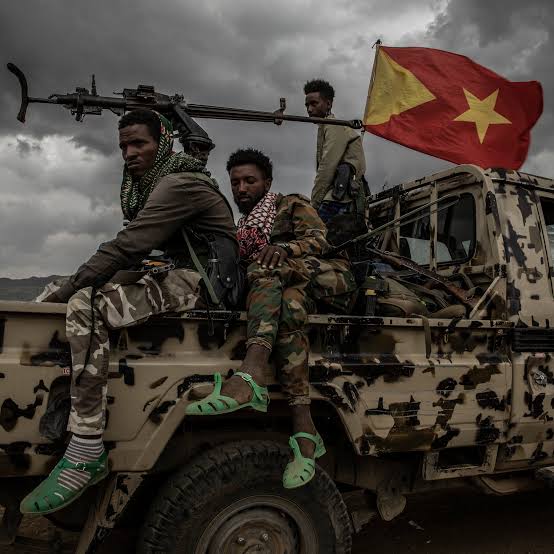
The fighting in Amhara.
The insurgency in Oromia.
The scars left by the devastating war in Tigray.
Localized violence across different regions.
These conflicts dominate headlines.
But they are symptoms.
The disease lies deeper.
At its heart, Ethiopia is experiencing a crisis of political identity.
Different groups imagine Ethiopia in completely different ways.
Some believe Ethiopia should become a highly centralized nation-state.
Others believe genuine federalism is the only guarantee of equality.
Others advocate stronger regional autonomy.
Some envision civic nationalism.
Others prioritize ethnic identity as the basis of political representation.
These visions are not minor policy disagreements.
They are competing definitions of the Ethiopian state itself.
A dialogue becomes extraordinarily difficult when participants are not arguing about tax rates or infrastructure.
They are arguing about the very architecture of the nation.
Every Political Camp Believes History Justifies Its Position
One of Ethiopia’s greatest political challenges is that almost every major political movement believes history supports its own narrative.
One community remembers oppression.
Another remembers national unity.
One remembers liberation.
Another remembers fragmentation.
One celebrates federalism.
Another blames federalism for division.
These historical memories are deeply emotional.
They shape political identity.
When politics becomes attached to historical trauma, compromise becomes psychologically difficult.
People begin to see compromise not as wisdom.
But as betrayal.
This explains why many political debates in Ethiopia become emotionally charged.
People are no longer debating policies.
They are defending identities.
National Dialogue Cannot Succeed If It Begins With Pre-Determined Conclusions
This is perhaps the greatest danger facing any national dialogue.
If participants believe major decisions have already been made before discussions begin, trust immediately collapses.
Dialogue only works when every participant believes that outcomes remain genuinely open.
If people suspect that dialogue is designed merely to endorse existing political arrangements, participation becomes symbolic rather than meaningful.
A successful dialogue requires uncertainty.
No one should know exactly how the conversation will end.
Otherwise, dialogue becomes public relations rather than nation-building.
Legitimacy Is More Important Than Agreement
Many people misunderstand political dialogue.
The purpose is not immediate consensus.
Consensus rarely exists in divided societies.
The real objective is legitimacy.
People must believe the process is fair—even if they dislike specific outcomes.
This distinction matters enormously.
Citizens often accept losing political arguments if they trust the system that produced those outcomes.
They reject outcomes when they believe the process itself was unfair.
In political philosophy, legitimacy is the currency that allows disagreement to exist peacefully.
Without legitimacy, every election becomes contested.
Every constitutional amendment becomes suspicious.
Every reform becomes controversial.
Every institution loses credibility.
Ethiopia Faces a Crisis of Trust More Than a Crisis of Ideas
Contrary to popular belief, Ethiopia does not suffer from a shortage of political ideas.
It has many ideas.
Perhaps too many.
The real shortage is trust.
Trust between political parties.
Trust between ethnic communities.
Trust between regional governments.
Trust between citizens and institutions.
Trust between opposition groups and the federal government.
Trust between intellectuals and policymakers.
Trust between ordinary citizens and political elites.
Trust cannot be legislated.
It cannot be imposed by military force.
It cannot be manufactured through speeches.
It must be earned through consistent political behavior over time.
Without trust, even good policies become controversial.
The Challenge of Representation
Another difficult question concerns who actually speaks for Ethiopia.
Who represents the Amhara?
Who represents Oromia?
Who represents Tigray?
Who represents Afar?
Who represents Somali communities?
Who represents young Ethiopians?
Who represents displaced citizens?
Who represents civil society?
Who represents women?
Who represents religious communities?
Who represents people who belong to no political organization at all?
This is one of the greatest dilemmas facing national dialogue.
Representation determines legitimacy.
If important voices are excluded, the dialogue risks becoming incomplete.
If participants are viewed as politically selected rather than genuinely representative, public confidence weakens.
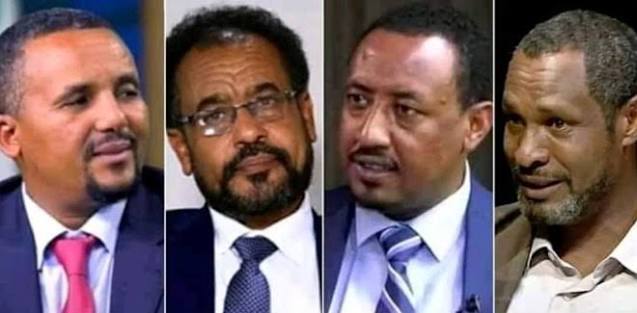
Dialogue cannot simply include famous politicians.
It must reflect society itself.
Can Political Elites Solve Problems They Helped Create?
This is an uncomfortable but necessary question.
Many of Ethiopia’s current political leaders—across different parties and movements—have participated in shaping the country’s present political landscape.
Some have governed.
Some have fought.
Some have opposed governments.
Some have influenced constitutional debates.
Some have mobilized ethnic constituencies.
This raises a philosophical question.
Can political elites transcend the political incentives that created division?
History shows that sometimes they can.
But history also shows they often cannot.
Successful reconciliation usually requires leaders willing to sacrifice short-term political advantage for long-term national stability.
That requires extraordinary political courage.
Young Ethiopians Are Watching Carefully
Perhaps the most important audience is not inside the dialogue hall.
It is outside.
Millions of young Ethiopians are watching.
Many have grown up knowing only political instability.
Some have experienced conflict.
Others have experienced unemployment.
Many have witnessed repeated promises of reform.
Young citizens increasingly judge governments not by historical speeches but by practical outcomes.
Jobs.
Education.
Security.
Opportunity.
Institutional fairness.
Political stability.
The younger generation may prove less interested in ideological purity than previous generations.
Their politics may become increasingly pragmatic.
If that happens, Ethiopia’s future political landscape could gradually change.
Peace Without Justice Rarely Lasts
One temptation in post-conflict societies is to prioritize stability above everything else.
But sustainable peace requires more than silence.
It requires accountability.
It requires truth.
It requires recognition of suffering.
Communities that feel ignored often preserve grievances for generations.
Ignoring painful history does not erase it.
It merely postpones future conflict.
National dialogue should therefore avoid becoming an exercise in forgetting.
Instead, it should become a process of honest national reflection.
Economic Frustration Complicates Political Dialogue
Political reconciliation becomes significantly harder during economic hardship.
Citizens struggling with inflation, unemployment, rising living costs, and limited opportunities often lose patience with lengthy political negotiations.
Economic frustration intensifies political polarization.
People become more vulnerable to emotional political messaging.
They demand immediate solutions.
Dialogue therefore cannot exist independently from economic reform.
Political peace and economic confidence reinforce one another.
Without visible improvements in everyday life, political agreements may struggle to gain lasting public support.
Institutions Matter More Than Individuals
Modern African politics frequently becomes centered around personalities.
Strong leaders.
Popular opposition figures.
Charismatic activists.
Yet stable democracies are built on institutions—not individuals.
Individuals eventually leave office.
Institutions remain.
The true measure of Ethiopia’s National Dialogue will therefore not be whether particular politicians emerge stronger.
It will be whether institutions become stronger.
Independent courts.
Professional security institutions.
Credible elections.
Reliable constitutional mechanisms.
Respect for political opposition.
Freedom of expression.
These institutions determine whether future disagreements become ballots instead of bullets.
National Identity Cannot Be Forced
Perhaps Ethiopia’s greatest philosophical challenge concerns national identity itself.
Identity cannot simply be declared by government decree.
People must genuinely feel that they belong.
Belonging grows through fairness.
Equal opportunity.
Mutual respect.
Shared prosperity.
Political inclusion.
When citizens believe the state treats them fairly, national identity strengthens naturally.
When citizens perceive unequal treatment, identity fractures.
National dialogue therefore cannot manufacture unity.
It can only create conditions under which unity becomes possible.
Conclusion
Can Ethiopia’s National Dialogue genuinely reconcile the country’s competing political visions?
The honest answer is that no dialogue alone can accomplish such an enormous task.
Dialogue is not magic.
It cannot erase decades of mistrust.
It cannot instantly reconcile competing historical narratives.
It cannot eliminate political ambition.
It cannot solve every constitutional disagreement.
But dialogue remains indispensable because the alternative is far worse.
History teaches that nations rarely collapse because people disagree.
They collapse when disagreement becomes impossible to manage peacefully.
The ultimate success of Ethiopia’s National Dialogue will not be measured by the number of speeches delivered, the length of official reports, or the number of delegates who attend meetings.
It will be measured years later.
When citizens lose elections without taking up arms.
When opposition parties criticize governments without fearing persecution.
When regional communities believe their voices genuinely matter.
When political institutions command greater trust than political personalities.
When constitutional disagreements are settled through debate instead of violence.
And when future generations inherit a country where political competition strengthens the nation rather than weakens it.
The deepest lesson is this:
A nation is not united because everyone thinks alike.
A nation is united because people with profoundly different ideas still believe they share a common future.
That is the real challenge before Ethiopia today.
And no National Dialogue will succeed unless it convinces Ethiopians that, despite their differences, their future is still worth building together.


Leave a Reply