
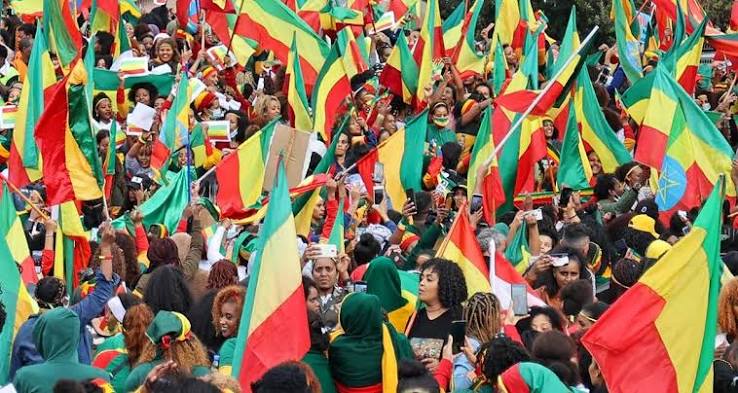
When you look a Ethiopia today under Aby Ahmed it is shame that Politics has always been known to be about more than manifestos, campaign promises, or economic statistics. Throughout history, successful political leaders have often won elections not simply because they offered the best policy proposals, but because they inspired hope. Hope can mobilize citizens, unite divided societies and convince people that tomorrow will be better than today.
In Ethiopia, no leader has embodied the politics of hope lie more than Prime Minister Abiy Ahmed when he came to power in 2018.Something that has messed the Ethiopian people with a false mirage that has terrorized the very existence of hope.
His rise marked one of the most remarkable political transitions in modern African history. Millions of Ethiopians—particularly young people—believed they were witnessing the birth of a new political era. After years of public protests, political tension and demands for reform, Abiy Ahmed appeared to represent a fresh beginning. His speeches emphasized reconciliation, peace, national unity, economic modernization, and democratic reform. He spoke directly to a generation eager for change.Little did they know it was a wolf hiding under the sheep’s skin.
Eight years later, however, an important political question has emerged:
Are young Ethiopians still supporting political policies, or are many of them continuing to support the promise of hope itself?
The answer is not complex, and it reveals much about the evolving relationship between leadership, democracy and public expectations in Ethiopia which is deterroriating.
Why Hope Became a Political Force
To understand Abiy Ahmed’s popularity in 2018, one must first understand the national mood at the time.
For several years before his appointment as Prime Minister, Ethiopia experienced widespread protests, particularly in Oromia and Amhara. Demonstrators raised concerns about political inclusion, economic opportunity, governance, and civil liberties. Public frustration was growing, and many citizens believed the existing political system required significant reform.
When Abiy Ahmed became Prime Minister, he arrived with a message that resonated across large sections of society.
He promised political opening.
He pledged to release political prisoners.
He invited exiled opposition groups to return.
He emphasized reconciliation between political rivals.
Perhaps most dramatically, he moved to normalize relations with Eritrea after years of hostility, an effort that later earned him the Nobel Peace Prize.
For many young Ethiopians, this was not simply another change in government.
It represented hope.
Ethiopia’s Young Population
Ethiopia is one of Africa’s youngest countries.
A large share of the population is under the age of 30.
This generation has grown up during periods of rapid technological change, expanding access to education and increasing engagement with social media.
Many young Ethiopians are politically aware.
They debate national issues online.
They follow political developments closely.
They compare Ethiopia’s progress with that of other African countries and the wider world.
But they also face significant challenges.
Youth unemployment remains high.
Many graduates struggle to find stable employment.
The cost of living has increased.
Housing remains unaffordable for many urban residents.
These realities shape how young people evaluate political leadership.
Hope Versus Policy
There is an important distinction between voting for hope and voting for policy.
Voting for hope often reflects a belief that a leader can bring change, even when detailed policy outcomes remain uncertain.
Voting for policy means evaluating specific proposals based on measurable results.
In 2018, many observers argued that Abiy Ahmed’s appeal rested heavily on hope.
He represented renewal.
He represented reform.
He represented possibility.
Over time, however, governing inevitably shifts attention from promises to performance.
Citizens begin asking different questions.
Has employment improved?
Has inflation been controlled?
Has peace become more durable?
Have democratic institutions become stronger?
These are policy questions rather than symbolic ones.
Where Hope Has Been Tested
Yet hope alone cannot sustain public confidence indefinitely.
The years following 2018 brought enormous challenges.
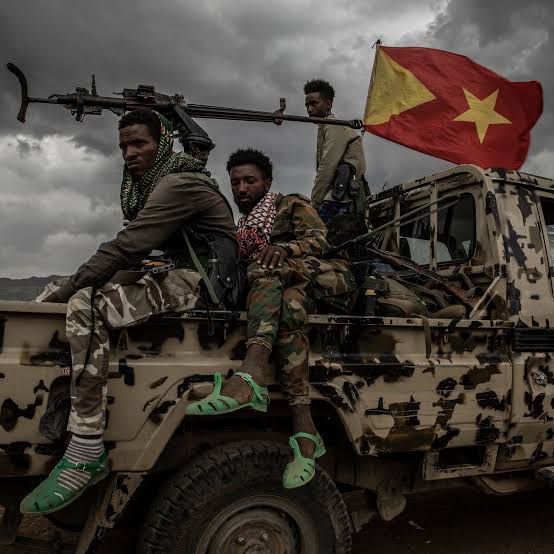
The conflict in Tigray had devastating humanitarian and economic consequences.
Armed violence also continued in parts of Oromia and later intensified in parts of the Amhara region.
These conflicts affected millions of civilians through displacement, economic disruption and insecurity.
For many Ethiopians, peace became the defining measure of political success.
Economic challenges also intensified.
Inflation increased the cost of living.
Youth unemployment remained a major concern.
Businesses faced foreign currency shortages and other structural constraints.
For households experiencing these pressures, political hope increasingly became linked to practical economic outcomes.
Social Media and the Politics of Expectations
Young Ethiopians receive political information differently from previous generations.
Traditional media no longer dominates public debate.
Platforms such as Facebook, YouTube, TikTok, Telegram and X have become major spaces for political discussion.
These platforms amplify both optimism and criticism.
Government achievements can spread rapidly.
So can public frustration.
Political narratives compete continuously.
This means hope itself has become more difficult to sustain because citizens receive immediate feedback on government performance.
Public expectations evolve much faster than before.
The Role of Identity Politics
Another challenge facing Ethiopian politics is the continuing importance of regional and ethnic identities.
Many young people identify strongly with both their regional communities and the Ethiopian nation.
Political debates frequently revolve around questions of federalism, constitutional reform, resource allocation, and representation.
These issues shape voting behavior alongside economic considerations.
For some voters, identity remains central.
For others, employment, education, healthcare, and economic opportunity increasingly take priority.
This diversity of priorities makes Ethiopian politics especially complex.
Where the Government Has Fallen Short
Political sycophants of Prime Minister Abiy Ahmed point to significant reforms and ambitious development plans.
However, many citizens and independent observers have also expressed concerns about areas where expectations have not been fully met.
First, maintaining lasting peace has proven exceptionally difficult.
Although Aby Ahmed has said the so called important peace initiatives have reduced violence in some areas, conflicts in multiple regions have continued to affect civilians and hinder national reconciliation.
Second, economic hardship remains a pressing concern.
Inflation has reduced household purchasing power.
Many young people continue searching for stable employment despite improvements in education.
Third, political polarization remains high.
Public discourse has become increasingly divided, making consensus more difficult to achieve.
Fourth, journalists, civil society organizations, opposition figures, and international human rights groups have, at various times, raised concerns about restrictions affecting political participation, media freedom, and civic space. The government has often responded that certain security measures were necessary to address armed conflict and protect public order. These differing perspectives remain an important part of Ethiopia’s ongoing political debate.
What Young Ethiopians Want Today
The priorities of many young Ethiopians appear to be evolving.
They continue to value inspiring leadership.
But they increasingly seek measurable results.
They want employment opportunities.
Affordable housing.
Quality education.
Reliable healthcare.
Peace and security.
Transparent institutions.
Equal opportunities regardless of political affiliation or regional background.
In other words, hope remains important—but it is increasingly expected to be accompanied by effective governance.
Can Hope Be Sustained?
Political hope is not a one-time event.
It must be renewed through consistent performance.
Citizens may forgive temporary setbacks if they believe meaningful progress is occurring.
However, prolonged economic hardship or insecurity can gradually weaken even the strongest political narratives.
This does not mean hope disappears entirely.
Rather, it becomes more closely tied to tangible outcomes.
Young voters increasingly ask practical questions:
Can I find a job?
Can I afford a home?
Can I start a business?
Can I live safely?
Can I express my views peacefully?
These questions ultimately shape confidence in government.
The Future of Youth Politics in Ethiopia
Over the next decade, young Ethiopians will likely become even more influential politically.
Their education levels continue to rise.
Digital connectivity continues to expand.
Entrepreneurship is growing.
Urbanization is reshaping society.
These trends suggest that future elections may increasingly revolve around governance, economic performance, innovation, and institutional credibility alongside questions of identity and constitutional reform.
Political parties of every persuasion—including the ruling Prosperity Party and opposition movements—will likely need to offer increasingly detailed policy solutions rather than relying primarily on symbolism or historical narratives.
Lessons for Ethiopia’s Democracy
Healthy democracies require both inspiration and accountability.
Leaders must inspire citizens with a compelling vision of the future.
But they must also build institutions capable of delivering measurable improvements.
Hope can begin political transformation.
Institutions sustain it.
Policies deepen it.
Public trust preserves it.
For Ethiopia, strengthening democratic institutions may prove just as important as producing charismatic leaders.
Independent courts, effective public administration, accountable governance, a professional civil service, and credible electoral processes can outlast individual political personalities.
Conclusion
Prime Minister Abiy Ahmed entered office as a symbol of hope for millions of Ethiopians, particularly the country’s young generation. His message of reform, reconciliation and national renewal resonated at a moment when many citizens were eager for change.Even though it has turned to a brutal moment for ethiopians
Today, Ethiopia’s political landscape is more complex. Hope remains an important force, but it increasingly competes with citizens’ expectations for peace, economic opportunity, accountable governance and effective public institutions.
The central question is no longer whether hope matters—it clearly does. The more important question is whether hope can be translated into durable policies that improve the lives of ordinary Ethiopians.
If future governments can combine inspiring leadership with inclusive economic growth, peaceful political competition, stronger institutions and greater public accountability, hope will become more than a campaign message. It will become the foundation of a more resilient democracy.
Ultimately, Ethiopia’s future will be determined not only by the promises made by its leaders but by the extent to which those promises are reflected in the everyday experiences of its citizens. That is the true politics of hope: where optimism is reinforced by results, where democratic participation is strengthened by trust and where the aspirations of young Ethiopians are met with genuine opportunities to build a more peaceful and prosperous nation.


Leave a Reply