

Today, we examine one of the most consequential questions in contemporary Ethiopian politics:
Did Ethiopia’s recent electoral process help unite the country or did it deepen existing political divisions?
Supporters of Prime Minister Abiy Ahmed and the ruling Prosperity Party argue that the elections provided constitutional continuity during an exceptionally difficult period marked by armed conflict, economic pressures, and regional instability. They contend that maintaining constitutional institutions was necessary to preserve national governance and continue economic reform of which the implementation says the opposite.
citizens, however, argue that the elections took place in an environment where conflict, insecurity, and political polarization limited meaningful political participation in several parts of the country. They question whether elections alone can resolve deep constitutional, ethnic and political disagreements.
To understand these competing perspectives, we must examine Ethiopia’s political landscape through history, ideology, governance and constitutional principles.
Ethiopia’s Political Divide Did Not Begin With One Election
Ethiopia’s political tensions did not begin in 2026 even though it is worse today.
For decades, Ethiopia has wrestled with fundamental questions about the nature of the state.
Should Ethiopia be governed primarily as a strong centralized nation?
Or should significant political authority remain with regional states under ethnic federalism?
These competing visions have shaped political debate since the adoption of the 1995 Constitution.
Some political actors believe ethnic federalism protects cultural identity, language, and regional autonomy.
Others argue that emphasizing ethnicity as the organizing principle of politics risks reinforcing division and competition between communities.
These competing ideologies remain one of Ethiopia’s defining political challenges.
The Prosperity Party’s Vision
Prime Minister Abiy Ahmed came to power in 2018 promising national unity, political reform, and economic modernization.
His administration replaced the Ethiopian People’s Revolutionary Democratic Front coalition with the Prosperity Party, arguing that a single national political movement would encourage greater unity.
Supporters viewed this as an important step toward reducing political fragmentation.
Critics viewed it differently.
Some believed the restructuring weakened established regional political arrangements without first building sufficient political consensus.
This disagreement continues to shape Ethiopian politics today.
Conflict in Tigray
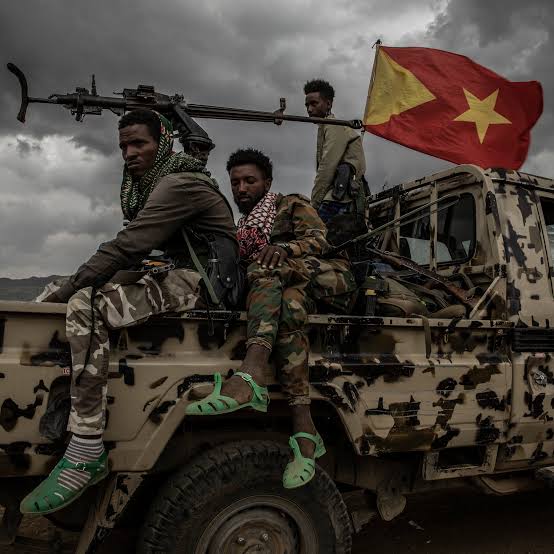
Perhaps no issue has affected Ethiopia more profoundly than the conflict in Tigray.
The war resulted in enormous humanitarian suffering, displacement, economic destruction, and allegations of serious violations of international humanitarian law by multiple parties, as documented by international organizations.
Although the 2022 Pretoria Agreement significantly reduced large-scale fighting, reconstruction, reconciliation, accountability, and humanitarian recovery remain ongoing challenges.
Political trust cannot be rebuilt overnight.
Conflict in Amhara
In Amhara, tensions increased following disputes surrounding regional security arrangements and the integration of regional special forces into federal structures.
Armed confrontations involving the Fano movement and federal forces have continued in various areas.
The government maintains that restoring constitutional order is necessary for national security.
Many residents and observers argue that dialogue and political solutions should complement security responses.
The continuing violence has affected civilians, disrupted economic activity, and complicated development efforts.
Conflict in Oromia
Oromia has experienced persistent insecurity involving the Oromo Liberation Army, which the federal government designates as a terrorist organization.
The conflict has affected local communities through displacement, disruptions to education, agriculture, and commerce, and ongoing security concerns.
Various attempts at dialogue have faced significant challenges.
Many analysts argue that achieving durable peace will require not only security measures but also political engagement, economic opportunity, and inclusive governance.
The Ideological Conflict Beneath the Violence
The armed conflicts are symptoms of deeper political disagreements.
Questions continue to divide political actors.
How should power be shared?
How much authority should regional governments possess?
How should national identity coexist with ethnic identity?
How should constitutional disputes be resolved?
Without broad political dialogue, these questions remain unresolved.
Public Trust and Political Disconnect
One recurring theme in discussions among analysts, civil society groups, and many citizens is the issue of public trust.
Some Ethiopians believe government communication has become increasingly distant from the everyday realities faced by ordinary households.
Inflation has reduced purchasing power.
Youth unemployment remains a significant concern.
Businesses continue to face foreign exchange shortages.
Communities affected by conflict continue to rebuild.
These realities influence how citizens evaluate political leadership.
Governments often judge success through macroeconomic indicators.
Citizens often judge success through lived experience.
Bridging that gap is essential.
The Administration’s Greatest Political Challenge
Whether one supports or opposes the current administration, one observation is difficult to ignore.
Perhaps the government’s greatest political challenge has been maintaining public confidence while simultaneously managing multiple crises.
Economic reform, armed conflict, constitutional debates, humanitarian needs, inflation, debt restructuring, and security challenges have all unfolded within a relatively short period.
Some observers argue that the administration has focused heavily on centralized decision-making during crises.
Supporters contend that decisive leadership has been necessary under exceptionally difficult circumstances.
Critics argue that broader consultation, stronger institutional checks, and more inclusive dialogue could have reduced political polarization.
These are competing interpretations rather than settled facts.
The Constitution as a Guide
Ethiopia’s Constitution provides principles that remain relevant regardless of political affiliation.
Article 12 calls for transparency and accountability in government.
Article 25 guarantees equality before the law.
Article 37 guarantees access to justice.
Fundamental rights provisions emphasize the protection of life, liberty, and due process.
The challenge is not whether these principles exist.
The challenge is consistent implementation.
Strong constitutions derive their legitimacy from practice rather than text alone.
Where Ethiopia Goes From Here
The future depends less on electoral outcomes than on institutional resilience.
Independent courts.
Professional public institutions.
Transparent governance.
Peaceful political competition.
Protection of constitutional rights.
Constructive dialogue between federal authorities, regional leaders, opposition parties, civil society, religious institutions, and local communities.
These are the foundations of long-term stability.
Conclusion
The central question is not simply whether Ethiopia’s election deepened divisions.
Rather, it is whether Ethiopia’s political institutions are capable of managing disagreement peacefully within the constitutional framework.
History demonstrates that elections alone cannot resolve deep political divisions.
They must be accompanied by trust, accountability, inclusive governance, and respect for the rule of law.
Ethiopia has overcome profound challenges throughout its long history.
Its future will depend not on the success of one leader or one political party, but on the strength of its institutions and the willingness of all political actors to pursue dialogue over violence, constitutionalism over confrontation, and national development over political polarization.


Leave a Reply