

Ethiopia stands once again at a defining moment in its long and complex history. A nation that has never been colonized, a civilization whose roots stretch back thousands of years and a country that has historically been regarded as one of Africa’s political and diplomatic pillars now faces one of the most important questions of the modern era:
Will Prime Minister Abiy Ahmed’s next five-year term strengthen national stability or deepen the political tensions that have already fractured parts of the country?
This is not merely a question about one leader or one political party. It is a question about the future of the Ethiopian state itself. It is a question about constitutionalism, justice, the rule of law and the social contract that binds millions of Ethiopians together.
The Promise of a New Ethiopia
When Abiy Ahmed first came to power in 2018, he was greeted by extraordinary optimism.
Many Ethiopians saw him as a reformer who could heal years of political division. Political prisoners were released. Opposition groups returned from exile. Media restrictions were eased. Peace with neighboring Eritrea was achieved after decades of hostility, earning Abiy Ahmed the Nobel Peace Prize.
At the time, many believed Ethiopia had entered a new democratic chapter.
The world watched with admiration. African leaders hailed Ethiopia as an example of peaceful reform and political renewal.
But history teaches us a profound lesson:
The beginning of political reform is often easier than the management of expectations that follow.
Political philosophers from Aristotle to John Locke understood that legitimacy is not won merely by promises. It is sustained by institutions, accountability, and justice.
The true test of leadership is not how one ascends to power but how one exercises power when confronted by crises.
The Ethiopian Constitution and the Social Contract
The Ethiopian Constitution of 1995 established a federal system built upon the recognition of the country’s diverse ethnic and linguistic communities.
Its architects believed that unity could only be achieved through the protection of diversity.
The constitution guarantees fundamental rights:
- Equality before the law.
- Freedom of expression.
- Political participation.
- Human dignity.
- Protection from arbitrary detention.
- The right of peoples to self-governance.
At its core, every constitution is a social contract.
Political philosopher Jean-Jacques Rousseau argued that governments derive legitimacy from the consent of the governed. Once citizens begin to believe that institutions no longer protect them equally, the social contract weakens.
This is the challenge facing Ethiopia today.
Many communities increasingly question whether state institutions are protecting all citizens fairly and impartially.
Questions have emerged regarding representation, political freedoms, accountability, and the use of force in resolving political disputes.
These concerns have become central to Ethiopia’s national debate.
The Shadow of Conflict and Allegations of Atrocities
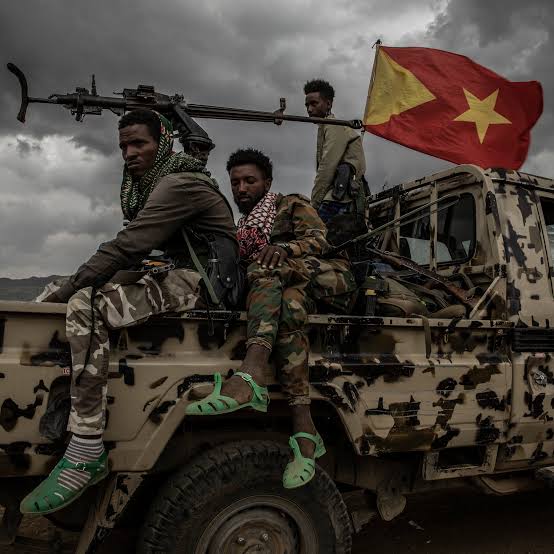
No discussion about Ethiopia’s future can ignore the painful conflicts that have engulfed the country over the past several years.
The war in the Tigray region resulted in one of Africa’s deadliest conflicts in recent history.
Numerous international organizations, including the United Nations, human rights groups, and independent investigators documented allegations of:
- Extrajudicial killings;
- Sexual violence;
- Forced displacement;
- Attacks on civilians;
- Restrictions on humanitarian access;
- Possible war crimes and crimes against humanity.
Serious allegations have also emerged from other regions, including parts of Amhara Region and Oromia Region, where reports of civilian casualties, arbitrary arrests, and human rights abuses have fueled concerns among both domestic and international observers.
It is important to note that allegations of atrocities often involve multiple actors in conflicts and require impartial investigation and due process. However, the persistence of these allegations has significantly affected public trust and Ethiopia’s international image.
A state cannot achieve lasting stability if sections of its population believe justice has been denied.
International Law and State Responsibility
International law exists precisely because history has shown that unrestrained political power can lead to immense suffering.
The principles contained in the:
- Universal Declaration of Human Rights;
- Geneva Conventions;
- International human rights treaties;
- International humanitarian law;
all emphasize one central principle:
The protection of civilians is not optional.
Governments possess the sovereign right to maintain order and preserve territorial integrity.
However, sovereignty is accompanied by responsibility.
International law increasingly recognizes that states must prevent abuses, investigate allegations of violations, and ensure accountability.
Without accountability, grievances accumulate.
Without justice, peace becomes fragile.
Without trust, constitutions become documents on paper rather than living agreements between citizens and the state.
The Philosophical Dilemma of Power
Political power has always carried a paradox.
The philosopher Lord Acton famously warned:
“Power tends to corrupt, and absolute power corrupts absolutely.”
No government begins with the intention of becoming authoritarian.
Most governments justify extraordinary measures in the name of national security, unity, or stability.
Yet history repeatedly demonstrates that when states rely excessively on coercion, political tensions often deepen rather than disappear.
The Roman Empire learned this.
The Soviet Union learned this.
Many post-colonial African states learned this.
Force can suppress dissent temporarily, but it rarely resolves the underlying causes of dissatisfaction.
The legitimacy of a state depends not merely on its capacity to govern but on the willingness of citizens to accept its authority as just and fair.
Is Ethiopia Heading Toward the Wrong Path?
This is perhaps the most difficult question.
Many observers argue that Ethiopia risks moving in a dangerous direction.
The growing militarization of political disputes, persistent allegations of human rights violations, restrictions affecting political space, and increasing polarization have generated fears that the country may be drifting away from the democratic aspirations that accompanied the reforms of 2018.
Political polarization has become increasingly severe.
Ethnic mistrust remains high.
Economic challenges continue to burden ordinary citizens.
Millions have been displaced by conflict.
If these issues remain unresolved, Ethiopia could face prolonged instability.
History shows that nations rarely collapse overnight.
They decline gradually when institutions weaken, when citizens lose confidence in justice, and when political leaders become unable to build consensus.
The danger for Ethiopia is not merely conflict itself.
The greater danger lies in normalizing conflict as a permanent method of governance.
The Opportunity of a Second Political Beginning
Yet Ethiopia’s future is not predetermined.
Prime Minister Abiy Ahmed’s next five-year term could also represent an opportunity.
History often grants leaders a second chance.
This term could become a period of:
- Genuine national dialogue;
- Constitutional reform through broad consultation;
- Stronger protection of human rights;
- Institutional independence;
- Accountability mechanisms;
- Reconciliation among Ethiopia’s diverse communities.
Stability cannot be built solely through military victories.
True stability emerges when citizens feel protected by law, represented by institutions, and respected by their government.
This is the essence of constitutional democracy.
This is also the essence of sustainable peace.
Conclusion
Will Abiy Ahmed’s next five-year term strengthen stability or deepen political tensions?
The answer ultimately depends on whether Ethiopia chooses the path of reconciliation or the path of continued confrontation.
The constitution offers a framework.
International law offers standards.
History offers warnings.
Philosophy offers wisdom.
But the decisions belong to Ethiopia’s leaders and its people.
A nation of more than one hundred million citizens cannot be held together by force alone.
It must be held together by justice, accountability, and a shared belief that every citizen matters equally under the law.
Ethiopia now stands at a crossroads.
One path leads toward institutional renewal and national reconciliation.
The other risks deeper polarization, prolonged grievances, and greater instability.
The choices made during the next five years may determine not only the future of Prime Minister Abiy Ahmed’s administration but also the future of the Ethiopian state itself and its place in the Horn of Africa and the wider world.


Leave a Reply