

For centuries, political philosophers have asked one fundamental question: Does a government control conflict, or does conflict eventually begin to control the government?
The answer to this question often determines the fate of nations.
Today, Ethiopia—a country once celebrated as Africa’s symbol of independence, diplomacy and pan-African pride—stands at this very crossroads.
The question facing Ethiopia is no longer simply about security, economics, or elections.
The deeper question is this:
Has the Ethiopian state become so consumed by conflict that conflict itself is now dictating the country’s political agenda?
Because history teaches us a dangerous lesson.
When governments begin to organize their politics around war, insurgencies, and security crises, the state slowly transforms. Institutions weaken. Constitutions become secondary. Human rights are suspended. The economy becomes militarized. And political leaders begin governing in a permanent state of emergency.
Eventually, conflict stops being a problem to solve and becomes the very framework through which power is exercised.
This is the path that many nations have taken before.
And history rarely remembers such periods kindly.
Ethiopia’s Constitutional Promise
When Ethiopia adopted its constitution in 1995, it sought to create a state based on several principles:
- Human dignity
- Equality before the law
- Federalism
- Self-determination of nations and nationalities
- Fundamental human rights
- Peaceful coexistence among communities
The constitution envisioned a democratic federation where diversity would become a source of strength rather than conflict.
At least in theory, the Ethiopian state would derive legitimacy from constitutional governance rather than military power.
However, constitutions are only as strong as the willingness of leaders to respect them.
Political philosopher John Locke argued that governments exist because citizens surrender some freedoms in exchange for protection of life, liberty, and property.
The moment a government begins violating these principles, the social contract begins to weaken.
And this is where Ethiopia’s current political challenges become deeply philosophical.
The country has faced multiple conflicts in recent years:
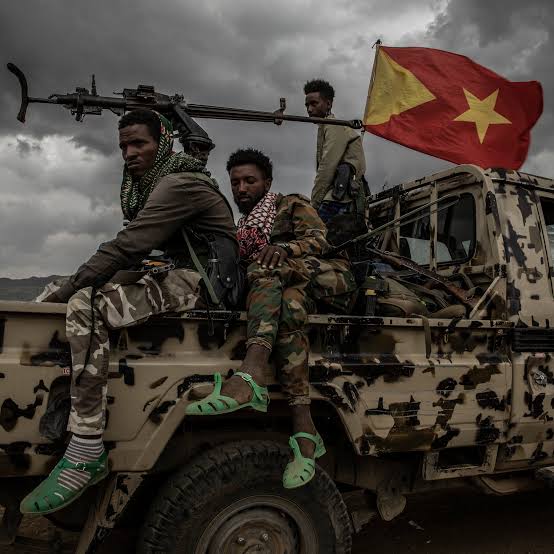
The conflict in the northern regions.
The violence in the Amhara region.
Security tensions in parts of Oromia.
Communal clashes and displacement in various parts of the country.
Each conflict has generated humanitarian consequences and placed immense pressure on state institutions.
The question is not whether governments have the right to maintain security.
Every sovereign state has that responsibility.
The question is whether security concerns are now becoming the central organizing principle of governance itself.
When Conflict Becomes Government Policy
Political history shows that prolonged conflicts often reshape governments.
Instead of governments managing conflict, conflict begins reshaping government institutions.
Budgets become centered on security.
Political discourse becomes centered on enemies.
Media narratives become centered on threats.
Criticism becomes interpreted as disloyalty.
Civil liberties become restricted.
The state begins operating as though society is permanently at war.
This is a dangerous trajectory because conflict gradually normalizes extraordinary measures.
Temporary measures become permanent.
Exceptional powers become ordinary.
Military solutions begin replacing political dialogue.
The philosopher Hannah Arendt warned that states entering permanent crises risk creating systems where violence becomes normalized and institutions become incapable of self-correction.
This is not merely a theoretical argument.
Africa has witnessed this phenomenon repeatedly.
International Law and Allegations of Atrocities
Under international law, all governments and armed groups have obligations during conflicts.
The four Geneva Conventions establish protections for civilians, prisoners, and non-combatants.
International humanitarian law prohibits:
- Deliberate attacks against civilians
- Collective punishment
- Extrajudicial killings
- Torture
- Forced displacement
- Starvation as a weapon of war
Various international organizations and human rights groups have, over the years, documented allegations of abuses committed by multiple parties in Ethiopia’s conflicts, including government forces, allied forces, and armed groups. These allegations have generated significant international concern and calls for investigations and accountability.
It is important to distinguish between allegations and legal findings by competent courts.
However, history teaches another important lesson:
When allegations of atrocities become frequent and accountability mechanisms weaken, public trust in state institutions begins to erode.
No nation can indefinitely sustain legitimacy if citizens lose faith in justice.
The Risk of Governing Through Force
Governments often argue that extraordinary security situations require extraordinary responses.
Sometimes this is true.
But history also warns us about the limits of governing through force.
Consider Sudan.
For decades, successive governments attempted to manage political grievances through militarized responses.
Conflicts multiplied.
Institutions weakened.
The economy deteriorated.
Eventually, the state itself fragmented into multiple crises.
Consider Libya.
The concentration of power and the suppression of political dissent under the government of Muammar Gaddafi produced a state that appeared stable on the surface but lacked resilient institutions.
When the crisis came, state structures collapsed.
Consider Zimbabwe.
Political polarization, economic decline, and excessive reliance on coercive state instruments gradually weakened public trust and democratic institutions.
Consider Eritrea.
Long-term securitization of governance has produced one of the world’s most militarized political systems, with significant implications for political freedoms and economic opportunities.
These examples are not identical to Ethiopia.
Every country has unique circumstances.
But they offer warnings.
When governments become increasingly shaped by conflict, they risk creating political systems where security imperatives overshadow constitutional governance.
Ethiopia’s Historical Irony
The irony is that Ethiopia has historically been one of Africa’s most important diplomatic actors.
African Union headquarters are located in Addis Ababa.
Ethiopia played major roles in peacekeeping missions across Africa.
The country has long portrayed itself as a symbol of African sovereignty and independence.
Yet today, Ethiopia faces difficult questions regarding internal cohesion, accountability, and national reconciliation.
The danger is not simply conflict itself.
Many nations experience conflict.
The danger emerges when conflict becomes politically self-perpetuating.
When leaders become trapped in endless cycles of security crises, governance becomes reactive rather than visionary.
Economic reforms slow.
Investments decline.
Social trust collapses.
Political polarization deepens.
Young people begin losing hope.
The national conversation becomes dominated by survival rather than progress.
The Constitutional Crossroads
The Ethiopian constitution provides mechanisms for governance, federalism, and the protection of rights.
But constitutions are not self-executing documents.
They depend on political culture.
They depend on accountability.
They depend on institutions capable of enforcing the rule of law.
Philosopher Montesquieu argued that liberty survives only where power is limited by institutions.
If institutions become weakened by prolonged conflict, constitutional guarantees become increasingly difficult to realize.
A state can win battles.
Yet still lose legitimacy.
A government can defeat armed groups.
Yet still struggle to restore trust.
Because peace is not merely the absence of gunfire.
Peace is the presence of justice, accountability, and political inclusion.
Is Ethiopia Heading Down the Wrong Path?
This is perhaps the most difficult question.
Many Ethiopians remain hopeful that reforms, dialogue, and reconciliation can still steer the country toward stability.
Others worry that increasing polarization and recurring violence risk placing Ethiopia on a dangerous trajectory.
History shows that nations rarely collapse overnight.
They decline gradually.
Institutions weaken step by step.
Public trust erodes slowly.
Constitutions become selectively applied.
Violence becomes normalized.
Political opponents become enemies.
National unity begins to fracture.
The warning signs often become visible long before the crisis reaches its peak.
The ultimate question facing Ethiopia today is therefore philosophical as much as political:
Can the Ethiopian state return to a model where conflict is managed within constitutional and legal frameworks?
Or has conflict itself become the engine driving political decision-making?
Because once conflict starts shaping the state more than the state shapes conflict, governments risk losing the very legitimacy they seek to protect.
And history teaches one final lesson.
Nations endure not because they possess armies.
Nations endure because citizens believe their institutions are fair, their laws are respected, and their leaders remain accountable to the constitutional principles they swore to defend.
The future of Ethiopia may ultimately depend on whether its leaders, institutions and citizens can restore that constitutional and moral balance before conflict becomes the defining architecture of the state itself.



Leave a Reply