

The Oromia region of Ethiopia stands today at one of the most critical crossroads in its modern history. As Ethiopia’s largest and most populous regional state, Oromia occupies a central place in the country’s political, economic, and cultural identity. It is home to millions of people, rich agricultural lands, strategic transport corridors, and the capital city, Addis Ababa, which is surrounded by Oromia territory.
Yet despite its enormous significance, Oromia has become synonymous with recurring insecurity, armed confrontations, political tensions, ethnic violence, and humanitarian suffering. Communities have experienced displacement, businesses have been disrupted, and trust between citizens and state institutions has been severely tested.
But to understand the security challenges in Oromia, one must move beyond daily headlines and military reports. One must ask deeper philosophical questions.
What is security?
Is security merely the absence of gunfire? Is it the presence of soldiers and checkpoints? Or is security something deeper—a condition where citizens trust the state, feel protected by the law, and believe they have a stake in the future of their society?
The ancient Greek philosopher Aristotle argued that the purpose of the state is not simply survival but the pursuit of the good life. A state exists so that people may live safely and flourish together. By this definition, security is not only about defeating armed groups. It is about creating conditions where justice, dignity, and opportunity become possible.
The security challenges in Oromia therefore raise fundamental questions about governance, citizenship, constitutional order, and the relationship between the state and the people.
Historical Context of the Oromia Question
The modern Oromo political question did not emerge overnight. For decades, many Oromo communities have expressed concerns over political representation, cultural recognition, land rights, economic inclusion, and self-governance.
The Oromo people constitute the largest ethnic group in Ethiopia. Their language, Afaan Oromo, is one of the most widely spoken languages in Africa. Yet throughout Ethiopia’s complex history, questions surrounding identity, autonomy, and political power have often generated tensions.
The protests that swept Oromia beginning in 2014 were rooted in concerns over land administration, governance, and perceptions of marginalization. These demonstrations eventually contributed to significant political reforms and the rise of new leadership in Ethiopia.
However, political transitions are often difficult. Expectations rise rapidly while institutions struggle to adapt. Various actors emerge, each with different visions for the future. In such periods, security challenges can intensify rather than diminish.
The Rise of Armed Conflict
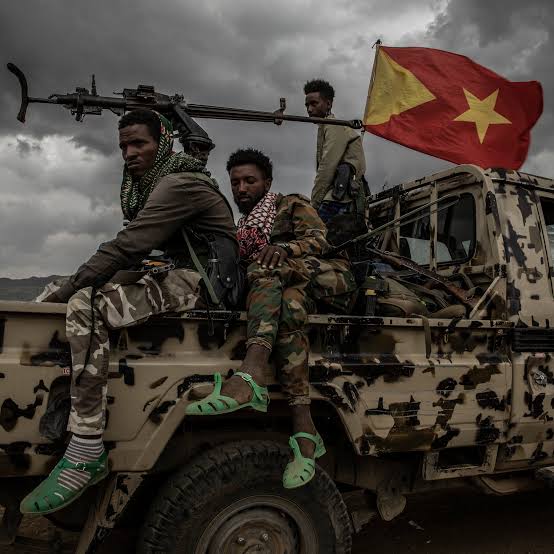
One of the most significant security challenges in Oromia has been the armed conflict involving state security forces and insurgent groups operating in various parts of the region.
The conflict has resulted in civilian casualties, displacement, destruction of property, and economic disruption.
But philosophy teaches us that violence is often the visible symptom of deeper structural problems.
The German philosopher Georg Wilhelm Friedrich Hegel argued that conflicts emerge when groups feel their identity and recognition are denied. Human beings seek not merely survival but recognition and dignity.
Where communities believe their grievances are unheard, mistrust grows. Where mistrust grows, institutions lose legitimacy. Where legitimacy declines, the temptation toward violence increases.
This does not justify armed rebellion or violence against civilians. International law is clear that attacks on civilians are prohibited under all circumstances.
However, understanding conflict requires asking why institutions fail to channel grievances through peaceful and constitutional means.
Constitutional Dimensions of the Crisis
The Constitution of the Ethiopia established an ethnic federal system intended to recognize diversity while maintaining national unity.
The constitution guarantees:
- Equality before the law
- Cultural and linguistic rights
- Self-administration of regional states
- Political participation
- Human rights and fundamental freedoms
The philosophical idea behind federalism is simple: unity can coexist with diversity.
The French philosopher Montesquieu argued that power must be distributed and balanced in order to preserve liberty.
Federal systems are therefore built upon negotiation, accommodation, and constitutional dialogue.
The security challenges in Oromia raise difficult constitutional questions:
Can federal arrangements effectively address local grievances?
How should governments respond when armed actors challenge constitutional authority?
How can constitutional rights be protected during security operations?
These questions have no easy answers.
Every democratic state possesses the right and duty to maintain public order. Yet constitutionalism requires that the exercise of state power remains subject to law.
Security without law risks becoming repression.
Law without security risks becoming meaningless.
The challenge lies in finding equilibrium.
Human Rights and International Law
International law provides important principles for managing internal conflicts.
The United Nations Charter recognizes state sovereignty and territorial integrity. Governments possess the right to maintain public order within their borders.
At the same time, international human rights law places limits upon the exercise of state authority.
The Universal Declaration of Human Rights affirms:
- The right to life
- Freedom from arbitrary detention
- Freedom of expression
- Freedom of association
- Equality before the law
When internal conflicts become prolonged and organized, principles of international humanitarian law become increasingly relevant.
These principles require all parties to:
- Distinguish between combatants and civilians.
- Protect non-combatants.
- Facilitate humanitarian assistance.
- Avoid collective punishment.
- Respect human dignity.
Violations by one party do not justify violations by another.
International law rejects the idea that security and human rights are mutually exclusive.
In fact, sustainable security depends upon the protection of rights.
The Humanitarian Cost
The security challenges in Oromia have generated significant humanitarian consequences.
Communities have faced displacement, interrupted education, reduced agricultural productivity, and economic uncertainty.
Children lose access to schools.
Farmers struggle to cultivate their land.
Businesses postpone investments.
Families become separated.
The philosopher Thomas Hobbes famously described life under conditions of insecurity as “solitary, poor, nasty, brutish, and short.”
While his description referred to a state of nature, the lesson remains relevant.
Where security collapses, social trust deteriorates.
Economic development becomes difficult.
Institutions weaken.
Fear becomes the organizing principle of society.
A society governed by fear cannot easily build prosperity.
The Crisis of Trust
Perhaps the greatest challenge in Oromia is not merely armed conflict.
It is the crisis of trust.
Trust between communities.
Trust between citizens and institutions.
Trust between regional and federal authorities.
Trust between political actors.
Political philosopher John Locke argued that governments derive legitimacy from the consent of the governed.
When citizens trust institutions, disagreements can be resolved peacefully.
When trust disappears, every action becomes suspicious and every policy becomes contested.
Security operations may suppress violence temporarily.
But lasting peace requires rebuilding legitimacy and confidence.
No society can indefinitely govern itself through force alone.
Economic Implications
Oromia is central to Ethiopia’s economy.
It contributes significantly to:
- Agriculture
- Coffee production
- Livestock
- Manufacturing
- Transport corridors
- Foreign investment
Persistent insecurity threatens all these sectors.
Investors seek predictability.
Businesses require stable environments.
Farmers require secure access to land and markets.
Economic growth and security are therefore inseparable.
Philosopher Amartya Sen argued that development itself constitutes freedom.
Poverty and insecurity reinforce one another.
Conflict destroys development.
Lack of development fuels grievances.
Breaking this cycle requires both security and inclusive economic opportunity.
The Path Toward Sustainable Peace
No military strategy alone can solve the Oromia question.
Neither can political rhetoric.
Neither can constitutional provisions that remain merely words on paper.
Sustainable peace requires several pillars.
First, the strengthening of constitutional institutions.
Second, meaningful political dialogue.
Third, accountability for violations of human rights.
Fourth, economic inclusion and development.
Fifth, community reconciliation.
Sixth, protection of civilians.
Philosopher Hannah Arendt warned that violence may destroy power, but it can never create legitimacy.
Legitimacy emerges from consent, justice, and participation.
The future of Oromia ultimately depends on whether institutions can rebuild trust and address grievances within constitutional frameworks.
Conclusion
The security challenges in Oromia are not merely military problems.
They are constitutional challenges.
They are governance challenges.
They are philosophical challenges concerning the nature of justice, recognition, and state legitimacy.
The Ethiopian Constitution envisioned a federal system capable of managing diversity through law rather than violence.
International law demands the protection of both security and human dignity.
Philosophy reminds us that peace is more than the silence of guns.
True security exists when citizens feel recognized, protected, and included in the national project.
The future of Oromia—and indeed the future of Ethiopia—may ultimately depend on whether the country can transform fear into trust, conflict into dialogue, and constitutional promises into lived realities.
Because nations are not held together by force alone.
They endure when their citizens believe that justice is possible, that their voices matter, and that the law belongs equally to all.


Leave a Reply