

The Horn of Africa once again finds itself watching Ethiopia with concern. Just when many believed that the devastating war in the Tigray region had come to an end following the signing of the Pretoria Peace Agreement in November 2022, renewed political and security tensions in Tigray are raising fears of another cycle of instability.
For millions of Ethiopians, especially the people of Tigray, the prospect of renewed conflict is not merely a political issue. It is an existential question. It is about survival, dignity, justice, and whether the state can protect its citizens or whether it has once again failed them.
The tragedy of Tigray is not simply a story of war. It is a philosophical lesson about the responsibilities of government, the meaning of constitutional order and the consequences when leaders place political interests above human security.
The great political philosopher John Locke argued that governments derive their legitimacy from a social contract with citizens. According to this idea, people surrender some freedoms in exchange for security, justice and protection of their rights.
When a government cannot protect its citizens from violence, displacement, starvation and insecurity, that social contract becomes damaged.
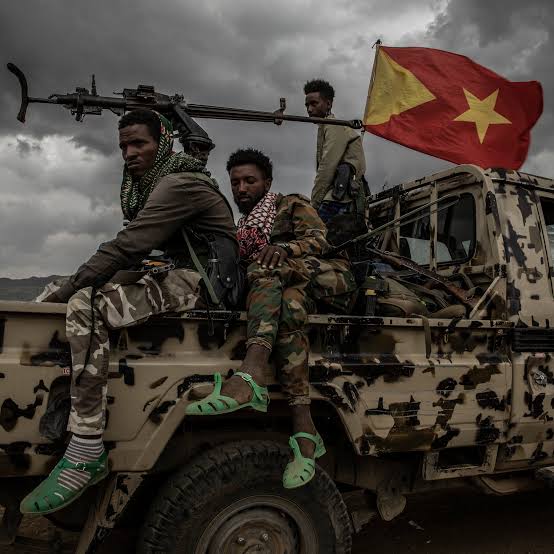
The people of Tigray have endured one of the deadliest conflicts of the twenty-first century. Hundreds of thousands of people were displaced. Communities were destroyed. Infrastructure was devastated. Families were separated. Hospitals and schools ceased functioning.
After so much suffering, citizens expected peace. They expected reconstruction. They expected political reconciliation.
Instead, they are once again confronted with uncertainty.
A government’s first duty is not to win political arguments. It is not to defeat rivals. Its first duty is to guarantee peace and security for its people.
This is where many Ethiopians believe the government has fallen short.
The Pretoria Agreement represented hope.
It promised disarmament, restoration of services, humanitarian access and political normalization.
Yet peace agreements are not magical documents. They require implementation, trust and sustained political commitment.
Many aspects of the agreement have proceeded slowly or remain incomplete.
The return of displaced populations has faced challenges. Questions regarding disputed territories remain unresolved. Reconstruction efforts have not matched the scale of destruction. Political divisions within Tigray continue to deepen.
The result is a dangerous vacuum of uncertainty.
History repeatedly teaches us that peace without justice is fragile and agreements without implementation become sources of new grievances.
The Ethiopian government had an opportunity to move beyond military logic and embrace genuine reconciliation. Instead, delays, mistrust, and unresolved issues have allowed tensions to re-emerge.
The Constitutional Question
At the heart of Ethiopia’s crisis lies a constitutional dilemma.
Ethiopia adopted a federal constitution designed to accommodate ethnic diversity, regional autonomy and self-governance.
The constitution recognizes the rights of regional states and establishes mechanisms for political participation and federal cooperation.
However, constitutions are not merely legal documents.
They are moral agreements between citizens and the state.
A constitution only works when all actors trust that its provisions will be respected equally and consistently.
The crisis in Tigray has exposed weaknesses in constitutional governance.
Political disputes have frequently moved from negotiation tables to battlefields.
Institutional mechanisms have often appeared unable to resolve disagreements before they escalate.
Citizens begin losing confidence when constitutional disputes are settled through force rather than dialogue.
The philosopher Aristotle warned that the purpose of the state is to enable citizens to live good and secure lives. When institutions become instruments of political competition instead of guardians of justice, instability inevitably follows.
The lesson from Tigray is clear:
No constitution can guarantee peace if political leaders fail to cultivate trust and if institutions fail to function independently.
International Law and the Responsibility of States
Under international law, states have obligations toward their citizens.
The principles of the United Nations Charter emphasize the protection of human rights and the maintenance of peace and security.
International humanitarian law obliges all parties during conflicts to protect civilians, allow humanitarian assistance and avoid actions that disproportionately harm non-combatants.
Furthermore, modern international law increasingly recognizes that sovereignty is not merely a privilege.
It is also a responsibility.
A state must protect its population from mass suffering.
The legitimacy of any government partly depends on its capacity and willingness to safeguard human dignity.
The tragedy of Tigray demonstrated what happens when institutions fail to protect civilians adequately.
The international community repeatedly raised concerns about humanitarian access, displacement, and human rights issues during the conflict.
The renewed tensions therefore raise difficult questions.
Has enough been done to address the grievances that fueled the war?
Have victims received sufficient justice?
Has reconciliation been prioritized over political competition?
Has the government created conditions that prevent the return of conflict?
Many citizens would answer these questions with uncertainty.
The Failure of Post-War Governance
Ending a war is only the beginning.
The true test of leadership comes after the guns fall silent.
Successful post-conflict governance requires four things:
First, justice.
Second, reconstruction.
Third, political inclusion.
Fourth, national healing.
Many communities in Tigray continue to face economic hardship and psychological trauma.
Young people who should be rebuilding their futures remain surrounded by political uncertainty.
Families displaced by war continue to seek permanent solutions.
Trust between communities remains fragile.
A government cannot declare peace while citizens continue living in fear.
Peace is not merely the absence of fighting.
Peace is the presence of justice, opportunity and security.
The government had a historic opportunity to transform the post-war period into a model of reconciliation and national renewal.
Instead, unresolved disputes and political fragmentation have allowed old wounds to remain open.
The Philosophical Tragedy of Repeating History
One of humanity’s greatest weaknesses is its tendency to repeat avoidable mistakes.
The philosopher George Santayana famously warned:
“Those who cannot remember the past are condemned to repeat it.”
The renewed tensions in Tigray are deeply troubling because they suggest that lessons from the devastating war have not been fully internalized.
Conflict should have produced wisdom.
Suffering should have produced urgency for reform.
Destruction should have inspired leaders to place citizens above political calculations.
Instead, the region risks returning to instability.
History shows that repeated conflicts gradually destroy not only infrastructure but also hope.
And when hope disappears, citizens lose faith in institutions.
The greatest danger facing any nation is not military defeat.
It is the erosion of trust between the people and the state.
The Human Cost
Behind every political disagreement are human beings.
There is a mother wondering whether her children will have a future.
There is a farmer afraid of losing another harvest.
There is a young graduate uncertain whether opportunities will ever return.
There are families still searching for relatives lost during conflict.
There are children whose understanding of life has been shaped by war rather than education.
Governments often focus on statistics and political calculations.
Citizens experience consequences.
For ordinary people, another conflict is not an abstract geopolitical event.
It means more displacement.
More poverty.
More trauma.
More interrupted lives.
The ultimate measure of governance is not political speeches or military victories.
It is whether citizens can live in dignity and security.
A Lesson for Ethiopia and the Horn of Africa
The crisis in Tigray offers lessons for the entire Horn of Africa.
Military solutions rarely resolve deeply rooted political problems.
Peace agreements require implementation.
Constitutions require trust.
Institutions require independence.
Citizens require justice.
Most importantly, governments exist to serve people, not the other way around.
A state that cannot protect its citizens, rebuild shattered communities and address legitimate grievances risks losing moral authority.
The renewed tensions in Tigray should therefore be a wake-up call.
Ethiopia’s future cannot be built upon recurring cycles of conflict.
It must be built upon constitutionalism, reconciliation, accountability and a renewed commitment to human dignity.
Because at the end of the day, nations are not defined by their military strength or political rhetoric.
They are defined by how they treat their most vulnerable citizens.
And the people of Tigray, after years of unimaginable suffering, deserve more than uncertainty.
They deserve peace.
They deserve justice.
They deserve a government capable of protecting them and honoring the promises made in both its constitution and under international law.
For without justice, peace remains fragile.
Without trust, constitutions become mere documents.
And without protecting its citizens, the state loses the very reason for which it exists.


Leave a Reply