

A Philosophical Examination of Ethiopia’s Political Crisis, Constitutional Challenges and the Search for National Reconciliation
Ethiopia is one of the world’s oldest civilizations. It is a country that defeated colonialism, inspired Pan-Africanism, and gave Africa symbols of pride and resistance. Yet today, this ancient nation stands deeply divided. Ethnic tensions, civil wars, displacement, economic hardship, and political distrust have left millions of Ethiopians asking one painful question:
Can the Ethiopian National Dialogue truly heal the country’s divisions?
This question is not merely political. It is philosophical. It is moral. It is constitutional. It is a question about the very meaning of nationhood itself.
Throughout history, nations have survived because their citizens believed they shared a common destiny. The philosopher Jean-Jacques Rousseau spoke of the “social contract”—the unwritten agreement between citizens and the state. Citizens surrender some freedoms, and in return, the state protects their rights, security, and dignity.
When that contract is broken, trust disappears.
And this is where Ethiopia finds itself today.
The Ethiopian government, despite inheriting a nation with enormous potential, failed to preserve this social contract. It failed to create sufficient political consensus in a country already burdened by historical grievances and ethnic suspicions.
Instead of building bridges, political polarization deepened.
Instead of strengthening institutions, trust in institutions weakened.
Instead of creating a culture of inclusion, many communities increasingly felt excluded from national decision-making.
The consequences have been devastating.
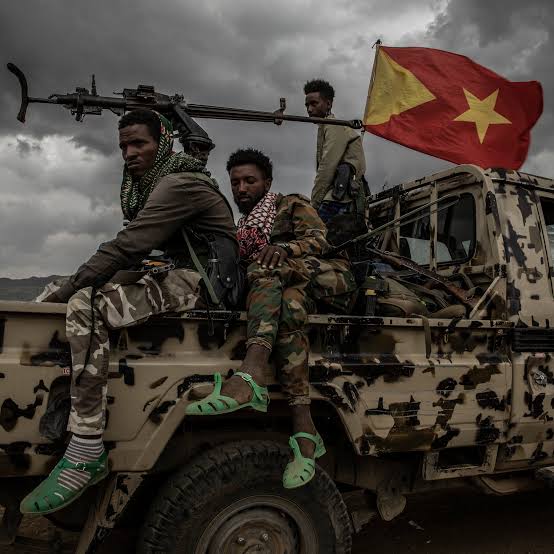
Thousands have lost their lives in conflicts across various regions. Millions have been displaced from their homes. Communities that once coexisted have become suspicious of one another. Economic opportunities have been lost, and the country’s image on the international stage has suffered.
A government exists primarily for one purpose: to serve its citizens.
The philosopher Thomas Hobbes argued that the first duty of the state is to guarantee security and prevent society from descending into chaos. Citizens do not create governments merely for administration; they create governments to preserve peace and protect life.
In this regard, the Ethiopian state has struggled.
Regardless of political ideology or ethnic identity, citizens expect their government to provide security, justice, and equal protection under the law.
When people are displaced from their homes, when communities fear one another, when citizens feel that justice is selective, confidence in the state inevitably declines.
This is not merely an Ethiopian problem.
History provides many examples.
The genocide in Rwanda in 1994 demonstrated what happens when political divisions are allowed to grow unchecked.
South Africa’s Truth and Reconciliation Commission showed that even deeply divided societies can find healing through dialogue, accountability, and mutual recognition.
Northern Ireland’s Good Friday Agreement proved that enemies can become partners when political courage triumphs over hatred.
National dialogues succeed when they address the root causes of conflict rather than merely managing symptoms.
This brings us to Ethiopia’s National Dialogue.
The initiative was designed to create a platform where Ethiopians could discuss the country’s most difficult questions:
What does Ethiopian identity mean?
How should power be shared?
What is the relationship between ethnicity and citizenship?
How can historical injustices be addressed?
What kind of federal system should Ethiopia have?
These are legitimate questions.
But many critics argue that the National Dialogue began with fundamental weaknesses.
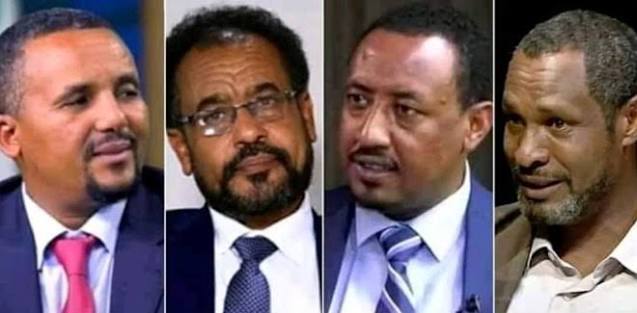
Some opposition figures questioned its inclusivity.
Some communities doubted its independence.
Others feared that the process was being managed from above rather than built from below.
Dialogue cannot succeed if significant sections of society feel excluded.
Philosophically speaking, dialogue is not simply the act of talking. It is the act of listening.
German philosopher Jürgen Habermas argued that genuine dialogue requires all participants to enter discussions as equals and to communicate without coercion.
If participants believe outcomes are predetermined, dialogue becomes performance rather than reconciliation.
The challenge facing Ethiopia is therefore not simply organizing meetings.
The challenge is rebuilding trust.
Trust is the most valuable currency in politics.
Without trust, constitutions become pieces of paper.
Without trust, elections become contests of fear.
Without trust, institutions lose legitimacy.
The Ethiopian Constitution itself remains at the center of the national debate.
The country’s federal system is based upon ethnic federalism, granting nations, nationalities, and peoples extensive rights, including the controversial right to self-determination and secession.
Supporters argue that the Constitution recognizes Ethiopia’s diversity and protects historically marginalized communities.
Critics argue that it has institutionalized ethnic identity and encouraged political competition along ethnic lines.
The Constitution was designed to manage diversity.
But over time, many Ethiopians believe it has also become a source of division.
This constitutional debate cannot be avoided.
No national dialogue can succeed while ignoring the foundational questions of statehood.
Should Ethiopia remain an ethnic federation?
Should it move toward civic nationalism?
Can both ethnic identity and national identity coexist?
These are not legal questions alone.
They are philosophical questions about human belonging.
People seek both recognition and unity.
People desire both identity and citizenship.
The challenge of statecraft is balancing these competing aspirations.
International law also provides important principles.
The Universal Declaration of Human Rights recognizes equality, dignity, freedom of expression, and participation in governance as fundamental human rights.
The International Covenant on Civil and Political Rights guarantees the right of citizens to participate in public affairs and enjoy equal protection under the law.
The African Charter on Human and Peoples’ Rights recognizes both individual rights and collective rights.
These principles matter because national dialogues cannot succeed without respecting human rights.
Peace without justice is fragile.
Stability without inclusion is temporary.
Security without rights becomes coercion.
Governments derive legitimacy not simply from power but from consent.
The Ethiopian government made several strategic mistakes that weakened national cohesion.
First, it underestimated the depth of historical grievances among various communities.
Second, it often struggled to communicate a shared national vision that transcended ethnic differences.
Third, it failed to build sufficient trust among political competitors.
Fourth, security responses to political crises frequently deepened mistrust and produced accusations of exclusion and injustice.
Fifth, the state failed to create institutions that all citizens viewed as equally impartial and representative.
No government is perfect.
But governments are judged by their ability to respond to crises and protect their citizens.
The primary responsibility of any state is safeguarding human dignity.
When citizens feel abandoned, they turn toward narrower identities—ethnicity, clan, region, or religion—for protection.
This is precisely the danger facing Ethiopia.
The philosopher Hannah Arendt warned that political communities become unstable when citizens lose confidence in common institutions and retreat into identity-based camps.
A nation cannot survive indefinitely when its people no longer trust one another.
Yet despite all these challenges, there remains hope.
Ethiopia possesses remarkable strengths.
Its young population is energetic.
Its history is rich.
Its people are resilient.
Its strategic location gives it enormous economic and diplomatic importance.
Most importantly, millions of Ethiopians still desire peace.
National dialogues succeed not because everyone agrees.
They succeed because people accept that disagreement should never lead to violence.
Reconciliation requires courage.
It requires humility.
It requires admitting mistakes.
Governments must acknowledge where they failed.
Political opposition must accept responsibility where necessary.
Communities must reject collective blame and embrace coexistence.
The future of Ethiopia cannot be built upon perpetual victimhood.
It cannot be built upon revenge.
It cannot be built upon fear.
It can only be built upon a renewed social contract that guarantees security, equality, justice, and dignity for every Ethiopian citizen.
Can the National Dialogue heal Ethiopia’s divisions?
The answer is yes—but only if it is genuinely inclusive, independent, and courageous enough to address the country’s most difficult constitutional and philosophical questions.
Dialogue alone cannot heal Ethiopia.
Justice must accompany dialogue.
Trust must accompany dialogue.
Accountability must accompany dialogue.
And above all, political leaders must remember a simple truth:
Governments do not own nations.
Citizens do.
Ethiopia’s future will depend not on military victories, political slogans, or constitutional texts alone.
It will depend on whether Ethiopians can once again believe that they share a common destiny.
Because nations survive not merely through borders or governments.
They survive through trust.
And perhaps the greatest task before Ethiopia today is rebuilding that trust—one conversation, one compromise and one act of courage at a time.


Leave a Reply