
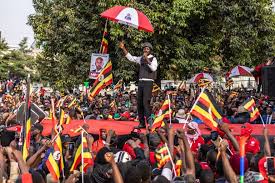
The rise of opposition politics in Uganda is becoming one of the most important political stories in East Africa today. For nearly four decades, President Yoweri Museveni and the ruling National Resistance Movement, commonly known as the NRM, have dominated Uganda’s political landscape. What began as a revolutionary movement promising stability, security, and democracy after years of political chaos has gradually evolved into one of Africa’s longest-serving political administrations.
But today, Uganda is changing.
A new generation is emerging.
Economic frustrations are growing.
Political awareness is expanding.
And opposition politics is becoming stronger, louder, younger, and far more organized than at any point in recent Ugandan history.
Tonight, we examine the rise of opposition politics in Uganda, the forces driving it, the personalities shaping it, and what it could mean for the future of the country and the wider East African region.
To understand the rise of opposition politics, we must first understand Uganda’s political journey.
When Yoweri Museveni came to power in 1986 after years of armed struggle, many Ugandans viewed him as a liberator. Uganda had suffered through devastating periods under leaders such as Idi Amin and Milton Obote. Civil wars, economic collapse, human rights abuses, and instability had deeply traumatized the country.
Museveni and the NRM promised a “fundamental change” in Ugandan politics. In the early years, the government restored relative stability, improved infrastructure, expanded education, strengthened state institutions, and rebuilt parts of the economy. For many Ugandans and international partners, Museveni represented hope, order, and reform.
However, as the years passed, political tensions began to grow.
Critics increasingly accused the government of concentrating power, limiting democratic competition, suppressing dissent, and weakening institutions meant to ensure accountability. Constitutional amendments removing presidential term limits and later the presidential age limit intensified public debate about Uganda’s democratic future.
Many Ugandans began asking a difficult question:
Can a country remain politically healthy when one leader stays in power for nearly forty years?
This question became the foundation of modern opposition politics in Uganda.
One of the earliest major opposition figures was Kizza Besigye, a former ally of Museveni who later became one of his strongest critics. Besigye’s political journey symbolized the growing frustration within parts of Uganda’s political class. Through the Forum for Democratic Change, commonly known as FDC, Besigye challenged Museveni multiple times in presidential elections.
Although he never won power, Besigye helped normalize opposition politics in Uganda. He built a culture of resistance, public mobilization, and political confrontation that inspired many younger activists. He transformed opposition politics from isolated criticism into a sustained national movement.
For years, opposition politics in Uganda faced enormous challenges.
State institutions remained heavily controlled by the ruling establishment.
Security agencies maintained strong influence.
Opposition rallies were often restricted.
Activists and journalists frequently complained about intimidation and arrests.
And many rural areas continued supporting the ruling party because of historical loyalty, patronage networks, and security concerns.
Despite these obstacles, opposition politics continued growing slowly beneath the surface.
Then came a major political shift:
the rise of Uganda’s urban youth population.
Uganda is one of the youngest countries in the world. A large percentage of the population is under the age of thirty-five. Many young Ugandans were born long after Museveni took power. Unlike older generations who remember the chaos before 1986, younger citizens often judge leadership based on current economic realities rather than historical liberation narratives.
And the economic realities are difficult.
Youth unemployment remains a serious challenge.
Living costs continue rising.
Many graduates struggle to find stable opportunities.
Urban poverty has expanded.
And social inequality has become more visible.
This growing frustration created fertile ground for a new kind of opposition politics — one driven not only by traditional politicians, but also by musicians, social media activists, youth movements, and urban protest culture.
This is where Bobi Wine enters the story.
Bobi Wine, whose real name is Robert Kyagulanyi, transformed Uganda’s opposition landscape in ways few people expected. Originally famous as a musician and entertainer, he built strong support among ordinary Ugandans through music that addressed poverty, corruption, injustice, and social struggles.
Unlike traditional opposition leaders, Bobi Wine connected directly with the youth through popular culture and digital communication. His message was simple but powerful:
“People power.”
That slogan became more than a political phrase.
It became a movement.
When Bobi Wine entered politics and later formed the National Unity Platform, known as NUP, Uganda witnessed the rapid rise of a youthful opposition force capable of mobilizing huge crowds, dominating online discussions, and challenging state authority in urban centers.
The 2021 Ugandan elections demonstrated how significantly opposition politics had evolved.
Bobi Wine emerged as Museveni’s strongest challenger in years. Campaign rallies attracted massive support, especially among young people. Social media platforms became political battlegrounds. Music, digital activism, and youth identity became central tools of political mobilization.
But the elections also exposed the deep tensions inside Uganda’s political system.
There were reports of arrests, violence, internet shutdowns, media restrictions, and confrontations between security forces and opposition supporters. Opposition leaders accused the state of suppressing democratic freedoms, while the government argued that it was maintaining national security and public order.
The election revealed something important:
Uganda was no longer politically predictable.
The opposition had become too large, too organized, and too emotionally connected to sections of the population to simply ignore.
Another major factor behind the rise of opposition politics is the growth of political awareness across East Africa. Ugandans are increasingly connected to regional and global conversations through smartphones, YouTube, TikTok, Facebook, and X. Citizens now compare governance systems, economic opportunities, and democratic standards across countries more than ever before.
Young Ugandans are asking hard questions:
Why is unemployment still high?
Why are living costs increasing?
Why do corruption scandals continue?
Why has leadership remained unchanged for decades?
Why do political freedoms remain contested?
These questions are reshaping Uganda’s political environment.
At the same time, the ruling government still maintains significant strengths.
The NRM has deep organizational structures across the country.
Museveni remains politically experienced and strategically skilled.
Large parts of rural Uganda still support the ruling establishment.
Security institutions remain powerful.
And the government continues investing in infrastructure, regional security operations, and economic projects.
This means Uganda’s opposition movement faces a difficult challenge:
how to transform public frustration into a sustainable political alternative.
Opposition politics often becomes strongest when movements are united around clear national agendas. But Uganda’s opposition has sometimes struggled with internal divisions, leadership rivalries, and strategic disagreements. Some critics argue that opposition movements focus heavily on protests and emotional mobilization without presenting detailed economic and governance solutions.
Still, the political momentum is undeniable.
One of the most important developments is the psychological transformation happening inside Uganda’s political culture. For many years, some citizens believed political change was impossible. Today, millions openly debate governance, constitutional reform, corruption, and leadership transition. That alone represents a major political shift.
The rise of opposition politics in Uganda is also affecting the wider East African region.
Neighboring governments are watching closely because Uganda is one of the region’s most strategically important countries. It plays a central role in regional security, trade, military cooperation, and diplomacy. Political instability in Uganda could affect countries such as Kenya, South Sudan, Rwanda, and Democratic Republic of the Congo.
This is why the future of Uganda’s politics matters far beyond its borders.
The country now stands at a critical crossroads.
One path could lead toward greater democratic openness, institutional reforms, peaceful political competition, and generational leadership transition.
Another path could lead toward deeper political polarization, state crackdowns, mistrust, and instability.
Much will depend on how both the government and opposition choose to navigate the coming years.
Will opposition politics mature into a disciplined national alternative capable of governing?
Will the ruling establishment allow broader democratic space?
Will institutions become stronger than individuals?
Will Uganda achieve a peaceful long-term political transition?
These are the questions shaping Uganda’s future today.
What is clear is that Uganda’s political environment is no longer defined only by one dominant narrative. A new political generation has emerged. Young people are demanding participation, accountability, and opportunity. Technology has changed political communication forever. And opposition politics has become a permanent force within Uganda’s national conversation.
The rise of opposition politics in Uganda is not simply about elections.
It is about generational change.
It is about democracy.
It is about economic frustration.
It is about freedom of expression.
And ultimately, it is about the struggle to define the future direction of Uganda in the twenty-first century.


Leave a Reply