
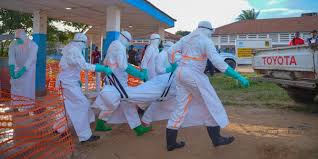
For decades, eastern Democratic Republic of the Congo has been a region where tragedy, conflict, disease outbreaks and immense mineral wealth have collided in ways that continue to raise difficult questions.
Today, the world once again finds itself watching developments in the Kivu region with concern. Reports of Ebola outbreaks, ongoing insecurity, international interest in critical minerals and growing foreign involvement in the region have created an environment where many people are asking whether these events are simply separate occurrences—or whether they are connected in ways the public does not fully understand.
This is not a story about making accusations.
It is a story about asking questions.
And in journalism, difficult questions matter.
The eastern provinces of North Kivu and South Kivu are among the most resource-rich regions on Earth. Beneath the soil lies enormous deposits of gold, coltan, cobalt, tin, tungsten, rare earth minerals and other strategic resources essential for modern technology.
These minerals power smartphones.
They power electric vehicles.
They power military technologies.
They power the global digital economy.
Yet despite this wealth, eastern Congo remains one of the poorest and most unstable regions in the world.
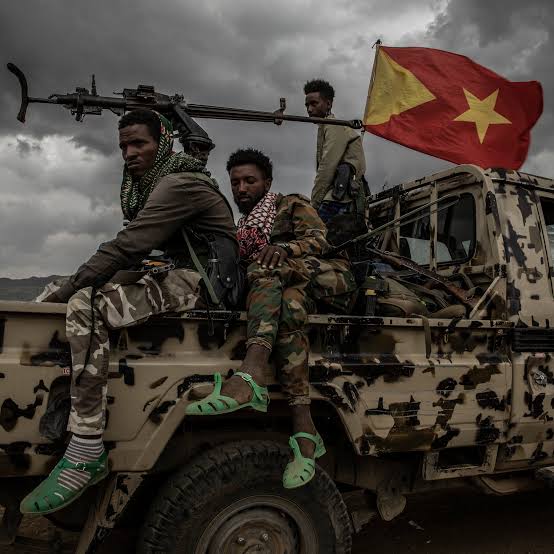
For decades, armed groups, foreign interests, governments, multinational corporations, and local communities have all competed for influence in this strategic region.
The Banyamulenge community, among many other communities living in eastern Congo, has often found itself caught in the middle of larger regional and political struggles.
Now another issue has emerged.
Disease.
Throughout history, Ebola outbreaks have repeatedly appeared in different parts of the Democratic Republic of the Congo.
Public health experts explain that Ebola is a naturally occurring viral disease that has appeared in Central Africa multiple times since it was first identified in 1976.
Scientists generally believe fruit bats serve as a natural reservoir for the virus, with outbreaks occurring when the virus spills over into human populations.
That is the scientific explanation.
Yet many citizens across Africa continue to ask difficult questions whenever outbreaks occur in strategically important regions.
Why do some outbreaks appear in areas already affected by conflict?
Why do outbreaks sometimes emerge in places where international interests are increasing?
Why do rumors and suspicions spread so quickly?
The answer may be simple.
Or it may be more complicated.
Recently, international attention has increasingly focused on eastern Congo’s mineral resources.
Global competition for critical minerals has intensified as countries race to secure supply chains for batteries, electronics, renewable energy technologies, and defense industries.
The United States, China, European countries, Gulf states, and many multinational corporations are all interested in Africa’s mineral future.
This has naturally led many observers to ask:
Is it merely coincidence that the world’s interest in eastern Congo is growing at the same time that health emergencies and security crises continue to dominate headlines?
There is currently no credible evidence proving that Ebola outbreaks are deliberately linked to mining activities.
That fact must be stated clearly.
However, the absence of evidence does not prevent citizens from asking questions about transparency, governance and accountability.
Why do resource-rich regions often remain conflict-prone?
Who benefits economically from instability?
Who controls access to strategic minerals?
Who profits when local communities remain vulnerable?
These are legitimate questions.
Another issue generating debate involves Kenya.
In recent years, discussions have emerged regarding disease preparedness facilities and quarantine capabilities intended to help East African countries respond rapidly to future epidemics.
Supporters argue that such facilities are necessary because diseases do not respect borders.
The COVID-19 pandemic demonstrated how quickly health emergencies can spread across continents.
From this perspective, preparedness is common sense.
But critics have raised their own questions.
Why are certain locations chosen for health infrastructure?
What role do foreign governments play in funding such facilities?
How transparent are agreements between governments and international partners?
How much information reaches the public before major decisions are made?
Again, questions do not automatically prove wrongdoing.
But they do highlight public concerns.
Some observers have pointed to the existence of foreign military facilities within East Africa and asked whether there could be any connection between military interests, strategic resources, disease preparedness programs, and regional security operations.
At present, there is no verified evidence demonstrating such a connection.
Yet the very existence of these questions reflects a deeper problem.
Trust.
When populations lose confidence in institutions, almost every major event becomes vulnerable to suspicion.
An Ebola outbreak becomes more than a health crisis.
A mining agreement becomes more than an economic deal.
A quarantine facility becomes more than a medical project.
Everything becomes part of a larger narrative.
And that narrative often emerges because information gaps exist.
Perhaps the most important question is not whether a conspiracy exists.
Perhaps the most important question is why so many people believe one could exist.
What has happened over the years that has created such deep skepticism?
In eastern Congo, communities have witnessed conflict after conflict.
Foreign interventions.
Armed groups.
Resource extraction.
Humanitarian crises.
Political instability.
Broken promises.
Against this background, suspicion becomes understandable even when evidence is lacking.
History teaches us that secrecy fuels speculation.
Transparency reduces it.
If governments, corporations, and international organizations want public trust, they must be willing to answer difficult questions openly.
Who owns what?
Who profits from what?
Who makes decisions?
Who monitors agreements?
Who benefits?
Who is held accountable?
These questions should not be dismissed.
At the same time, responsible journalism requires caution.
A coincidence is not proof.
A suspicion is not evidence.
A theory is not a fact.
The challenge for journalists is to investigate rigorously while avoiding conclusions unsupported by evidence.
As the world watches developments in eastern Congo, one reality remains undeniable.
The intersection of minerals, geopolitics, public health, foreign interests, and regional security has created one of the most strategically important regions in Africa.
The stakes are enormous.
The questions are legitimate.
And the demand for transparency will only grow.
Whether the story is ultimately about disease, minerals, security, economics, or all of them combined, the people of eastern Congo deserve clear answers, accountable leadership, and the truth.
Because in regions where so much wealth exists alongside so much suffering, the biggest question of all remains:
Who truly benefits from the current system—and who continues to pay the price?


Leave a Reply