
Few African leaders have experienced a political journey as dramatic as that of Ethiopia’s Prime Minister, Abiy Ahmed.
When he emerged on the national stage in 2018, many Ethiopians viewed him as a transformational leader. International media celebrated him as a reformer. Political prisoners were released. Exiled opposition groups returned home. Censorship appeared to be easing. Relations with neighboring Eritrea suddenly improved after two decades of hostility.
For many observers, Abiy Ahmed represented a new chapter for Ethiopia.
Yet today, eight years later, the same leader faces accusations from critics, opposition groups, and human rights organizations that Ethiopia has become increasingly centralized under his leadership.
How did this happen?
How did a man who won the Nobel Peace Prize become one of Africa’s most controversial leaders?
To understand the story, we must begin long before Abiy Ahmed became prime minister.
Abiy Ahmed was born in 1976 in the town of Beshasha in western Ethiopia. His father was Muslim, while his mother was an Orthodox Christian. Growing up in a country marked by ethnic, religious, and political divisions, Abiy developed an early appreciation for Ethiopia’s diversity.
As a teenager, he joined the armed struggle against the military government of Mengistu Haile Mariam. After the fall of the Derg regime in 1991, he became part of Ethiopia’s new security establishment and later worked in military intelligence and communications. He eventually rose through the ranks and became involved in government and politics.
During the 2000s and early 2010s, Ethiopia was governed by the Ethiopian People’s Revolutionary Democratic Front (EPRDF).
Although the country experienced significant economic growth, the government was often criticized for restricting political freedoms, controlling the media, and limiting opposition activity.
By 2015, widespread protests had erupted, especially in the Oromia and Amhara regions. Many citizens felt excluded from political decision-making and demanded reforms.
The protests grew so large that they threatened the stability of the government.
In 2018, Prime Minister Hailemariam Desalegn resigned, creating a political opening that few expected. The ruling coalition selected Abiy Ahmed as its new leader, making him Ethiopia’s first Oromo prime minister in modern history.
His arrival generated enormous excitement.
Within weeks of taking office, Abiy launched a wave of reforms that stunned both Ethiopians and international observers.
Thousands of political prisoners were released.
Previously banned opposition groups were invited back into the political process.
Restrictions on media organizations were relaxed.
Websites that had long been blocked became accessible.
The government acknowledged past abuses and promised a more democratic future.
The speed of these reforms was extraordinary.
Many Ethiopians who had spent years fearing state repression suddenly felt hopeful.
Across the country, citizens spoke openly about democracy, reconciliation, and national renewal.
International media compared Abiy to some of the world’s most celebrated reformers.
The optimism grew even stronger in July 2018.
Abiy reached a historic peace agreement with neighboring Eritrea, ending nearly two decades of hostility following a devastating border conflict.
Flights resumed.
Borders reopened.
Families separated for years were reunited.
The agreement transformed regional politics and was widely praised as a breakthrough for peace in the Horn of Africa.
In 2019, Abiy Ahmed was awarded the Nobel Peace Prize.
The Nobel Committee recognized his efforts to achieve peace with Eritrea and promote reconciliation throughout the region. At that moment, he was widely seen as one of Africa’s most promising leaders.
However, beneath the optimism, serious challenges were already emerging.
Ethiopia is one of Africa’s most diverse countries, with more than eighty ethnic groups.
As political restrictions loosened, long-suppressed ethnic grievances resurfaced.
Violence erupted in several regions.
Communities that had coexisted uneasily for decades began competing for power, resources, and political influence.
Critics argued that the rapid opening of political space had outpaced the state’s ability to manage tensions.
Supporters countered that these conflicts reflected deep historical problems that existed long before Abiy came to power.
At the same time, Abiy sought to reshape Ethiopia’s political system.
He dissolved the EPRDF coalition and created a new national party known as the Prosperity Party.
Supporters saw this as an attempt to move beyond ethnic politics and create a more unified Ethiopia.
Opponents, particularly leaders associated with the Tigray People’s Liberation Front, viewed it as a concentration of power in the hands of the prime minister.
Political tensions escalated rapidly.
The relationship between the federal government and leaders in the Tigray region deteriorated.
Disputes over elections, constitutional authority, and political legitimacy intensified.
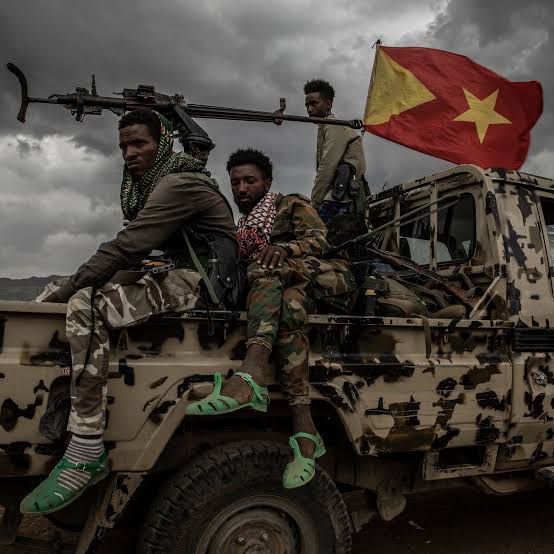
In late 2020, Ethiopia descended into one of the most devastating conflicts in its modern history.
War broke out between federal forces and the Tigray People’s Liberation Front.
What many expected to be a short operation evolved into a prolonged and destructive conflict.
Thousands of people were killed.
Millions were displaced.
The war attracted global attention and generated intense criticism from human rights organizations, foreign governments, and international institutions.
For many observers, this marked a turning point in perceptions of Abiy Ahmed.
The reformer who had promised reconciliation was now leading a country engulfed in war.
The international image that had helped earn him the Nobel Peace Prize began to fade.
As the conflict continued, critics accused the government of restricting media coverage, arresting opponents, and limiting dissent.
Government officials rejected many of these accusations, arguing that extraordinary security measures were necessary to preserve national unity and defend the state during wartime.
The debate over Abiy’s leadership became increasingly polarized.
Supporters described him as a strong leader confronting unprecedented challenges.
Critics described him as a leader who was becoming increasingly intolerant of opposition.
Following the signing of the Pretoria peace agreement, which helped end large-scale fighting in Tigray, many hoped Ethiopia would enter a period of recovery.
Instead, new security challenges emerged in other parts of the country, particularly in the Amhara and Oromia regions.
Armed groups continued to challenge federal authority.
The government responded with security operations and emergency measures.
Human rights groups and opposition parties continued to express concerns about arrests, restrictions on political activity, and shrinking civic space. Recent elections have also been criticized by some observers, who argue that opposition parties face significant obstacles.
Yet despite these criticisms, Abiy retains significant support among many Ethiopians.
Supporters point to infrastructure projects, economic reforms, efforts to modernize the economy, and initiatives aimed at strengthening national identity.
They argue that Ethiopia’s challenges are rooted in decades of political tensions and cannot be blamed solely on one leader. Economic reforms and market liberalization have remained important components of his administration.
The central question remains whether Abiy Ahmed’s political evolution represents a necessary response to governing a complex and conflict-prone country, or whether it reflects a broader shift away from the democratic aspirations that defined his early years in office.
History often presents leaders in shades of gray rather than simple categories.
Ethiopia’s Prime Minister Abiy Ahmed, initially hailed as a transformative leader and Nobel Peace Prize recipient, faces criticism for centralizing power and failing to manage ethnic tensions, leading to civil conflict. His early reforms raised hopes for democracy, but ongoing violence and repressive measures have marred his legacy, revealing complexities in his leadership.
5–7 minutes


Leave a Reply