
According to critics, regarding the alliance of forces consisting of FANO, TDF, OLA, ONLF, as well as the Benishangul-Gumuz and Afar forces; the insecurity, economic decline, political failures, diplomatic setbacks, and human rights abuses associated with the government of Dr. Abiy Ahmed, which many believe has entered its final phase.
Security
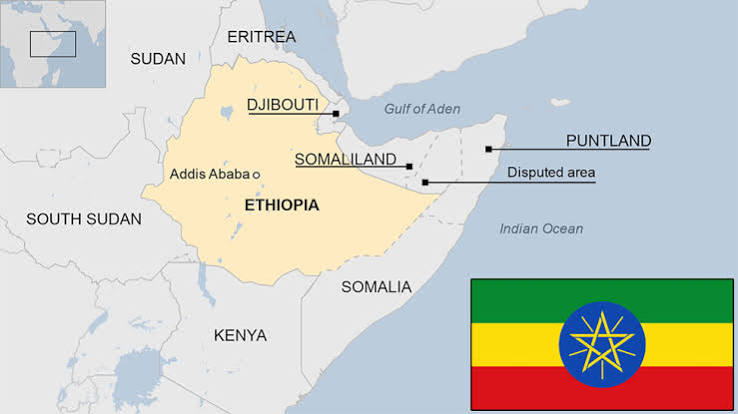
Major conflicts are taking place across the country between government forces and armed groups including TDF, FANO, OLA, Agaw, and Benishangul forces. According to critics, the government no longer exercises effective control over large parts of Tigray, Amhara, Oromia, and Benishangul-Gumuz. It is further claimed that the Agaw area and parts of Wollo, particularly the town of Woldia, have fallen outside government control.
Dr. Abiy Ahmed’s authority is said to be largely concentrated in Addis Ababa. Even around the capital, OLA forces are reportedly engaged in operations that restrict the government’s ability to move freely and securely. Critics argue that it is practically impossible for Dr. Abiy Ahmed, despite being Oromo and the Prime Minister of Ethiopia, to travel freely throughout Oromia. The same claim is made regarding Deputy Prime Minister Temesgen Tiruneh, who is from the Amhara region and is reportedly unable to visit his own birthplace without extraordinary security arrangements.
Whenever senior government officials travel, critics claim that preparations begin a week in advance, involving more than 10,000 soldiers, heavy weapons, tanks, fighter jets, helicopters, and drones to secure their movements.
The country is also experiencing ethnic and clan-based conflicts. Millions of people have been displaced by the ongoing wars. Hundreds of thousands of Ethiopians have fled the country due to hunger and difficult living conditions, and many have reportedly lost their lives while crossing dangerous seas during migration journeys.
The transportation network, which critics say functioned safely during the EPRDF era, has become increasingly dangerous. Drivers and passengers are reportedly killed, vehicles burned, and property destroyed. According to these accounts, safe transportation is no longer guaranteed, and bloodshed has become common on major routes.
Mass killings and attacks against civilians are also frequently reported. Critics argue that Amharas, Tigrayans, Oromos, Benishangul-Gumuz communities, Afars, Somalis, Sidama, and others have all been affected. Particular attention is given to attacks against followers of the Orthodox Christian faith, with churches reportedly being burned on a regular basis.
Economy
According to critics, poverty has risen significantly since Dr. Abiy Ahmed came to power.
Farmers have allegedly lost access to fertilizer, transportation for their products, and secure markets where they can safely sell their goods. Some claim that farmers are pressured to cultivate crops they do not wish to grow.
Citizens are said to be encouraged to declare that Ethiopia has become self-sufficient in wheat production, no longer depends on imported wheat, and has even begun exporting wheat abroad. Those who challenge such claims or openly state that they are suffering from shortages are, according to critics, accused of supporting anti-government armed groups and may face arrest.
Meanwhile, critics maintain that more than 40 million people continue to suffer from hunger, lack of medical care, and limited access to clean water.
The Ethiopian Birr has experienced a major decline in value. During the EPRDF period, particularly before Dr. Abiy Ahmed succeeded former Prime Minister Hailemariam Desalegn, 100 US dollars could reportedly be exchanged for approximately 2,000 Birr. Today, critics point out that the same amount is worth roughly 19,000 Birr.
Critics further argue that Ethiopia has reached a stage where it struggles to meet its debt obligations. They claim the country has been threatened with legal action by creditors if payments are not made, a development that has attracted international media attention.
Politics
Political stability, according to critics, does not exist in Ethiopia.
The seventh national election is described as neither free nor fair. Critics argue that no serious challenger competed against Dr. Abiy Ahmed and that the Prosperity Party effectively competed against itself and emerged victorious.
There have also been allegations that ballot boxes were filled outside official polling stations, particularly in areas where government authority was weak or absent.
The country continues to experience large-scale political conflicts. Critics maintain that the absence of political stability and the dominance of a single ruling party have contributed to the departure of wealthy Ethiopians and foreign investors.
Diplomacy
Critics argue that Ethiopia’s diplomatic standing has deteriorated because of ongoing armed conflicts, ethnic tensions, religious disputes, economic difficulties, widespread insecurity, political instability, and allegations of abuse of power.
According to this view, Ethiopia has lost much of the international prestige it enjoyed during the EPRDF era. Its diplomatic influence has weakened, and its former regional leadership role has been overtaken by countries such as Kenya, Egypt, Somalia, and Eritrea.
Critics often point to Eritrea’s improved relations with the United States as one example of changing regional dynamics.
Human Rights
Regional and federal prisons are said to contain tens of thousands of individuals detained because of their political or religious views, according to family members and some human rights organizations.
Freedom of expression is described by critics as severely restricted. Individuals who criticize the government, whether through articles, social media posts, or public comments, allegedly face arrest.
Even members of parliament are said to have limited freedom to challenge government policies.
As an example, critics cite federal parliament member Christian Tadele from the Amhara region, who reportedly asked Prime Minister Abiy Ahmed why the government had failed to address growing insecurity and when he intended to leave office. Following the meeting, critics claim that the MP was arrested. They present this case as evidence of restrictions on freedom of speech and political dissent.
Corruption
According to critics, corruption in Ethiopia has moved beyond individual or group misconduct and has evolved into what political scientists describe as a kleptocracy, a system in which corruption is embedded throughout the state apparatus, from the highest levels of government to the lowest administrative structures.
Stay tuned for our next segment, where we will examine the fear and concern that critics believe Dr. Abiy Ahmed has regarding the Tsimdo alliance and the possibility of a future conflict in Ethiopia.

Examining The Collapse of Dr. Abiy Ahmed’s Government and The Deep Fear And Anxiety
According to critics, regarding the alliance of forces consisting of FANO, TDF, OLA, ONLF, as well as the Benishangul-Gumuz and Afar forces; the insecurity, economic decline, political failures, diplomatic setbacks, and human rights abuses associated with the government of Dr. Abiy Ahmed, which many believe has entered its final phase. Security Major conflicts are taking…
4–6 minutes


Leave a Reply