
Throughout history, one lesson has repeated itself with remarkable consistency: governments change, leaders come and go, but nations endure. Political power may appear permanent while it is being exercised, yet history repeatedly demonstrates that no administration, party, military establishment, or political elite remains in power forever.
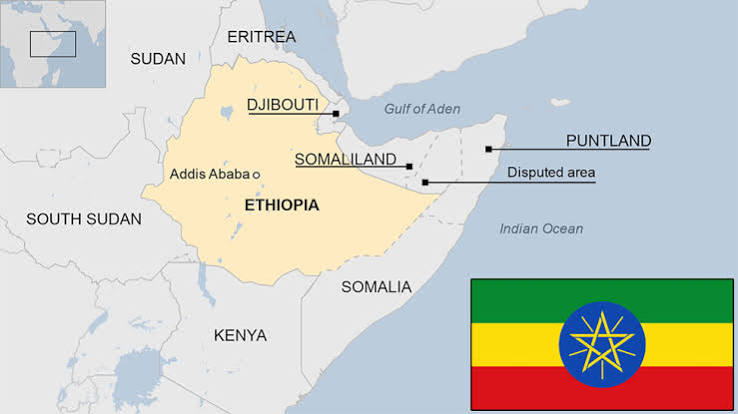
This lesson is particularly relevant when examining Ethiopia—a civilization with thousands of years of recorded history that has outlived emperors, military governments, political parties, revolutions, wars, and constitutional transformations. Ethiopia existed long before today’s political leaders assumed office, and it will continue to exist long after they leave public life.
For investigative journalists, this historical perspective raises an important question: are Ethiopia’s governing institutions being strengthened for future generations, or are political decisions being driven primarily by short-term calculations of power?
Power, by its very nature, is temporary.
History offers countless examples. Governments that once appeared politically invincible eventually lost public support or transitioned peacefully—or, in some cases, through conflict. Across Africa and beyond, administrations that concentrated authority without building strong institutions often discovered that political legitimacy depends not simply on maintaining control but on maintaining public confidence.
This is why constitutional government matters.
A constitution is designed to ensure that the authority of any government is limited by law rather than by the preferences of individuals. In Ethiopia, the Constitution establishes principles intended to guide every administration regardless of political affiliation.
Article 12 states that the conduct of government shall be transparent and that public officials are accountable for the performance of their duties.
Article 25 guarantees equality before the law and equal protection without discrimination.
Article 37 guarantees every person the right to seek justice before competent courts.
Articles 14, 15, and 17 protect fundamental rights, including the rights to life, liberty, and protection against arbitrary arrest.
These constitutional guarantees exist not only to protect citizens but also to protect the legitimacy of the state itself. Institutions gain public trust when citizens believe that laws are applied fairly and consistently.
One recurring challenge in many political systems is the temptation to confuse electoral victory with permanent political entitlement. Winning an election gives a government the authority to govern within constitutional limits; it does not place leaders above constitutional accountability.
Political philosopher John Locke argued that governments derive their legitimacy from serving the people rather than ruling over them. Similarly, Montesquieu emphasized that liberty depends on checks and balances that prevent excessive concentration of power. These ideas continue to influence constitutional democracies around the world.
From an investigative journalism perspective, one of the central questions is whether public institutions are sufficiently independent to hold every public official accountable, regardless of rank or political influence.
Corruption is another issue that deserves careful scrutiny.
Transparency organizations and governance experts have consistently argued that corruption weakens economic development by diverting public resources, discouraging investment, increasing inequality, and reducing confidence in state institutions. Where accountability mechanisms are weak, corruption becomes more difficult to detect and prosecute.
Investigative journalism plays an essential role in uncovering evidence, following public expenditure, examining procurement processes, and asking difficult but necessary questions. Its purpose is not to determine guilt but to inform the public through verified facts and documented evidence.
At the same time, responsible journalism requires fairness. Allegations should be clearly distinguished from proven findings, and individuals are entitled to due process under the law.
Another important development in Ethiopia is the emergence of a large, educated, and digitally connected generation of young citizens.
Young Ethiopians increasingly participate in discussions about governance, constitutional rights, economic opportunity, public accountability, entrepreneurship, and civic engagement. Through universities, civil society, digital media, and public debate, many seek greater transparency, improved institutions, and expanded opportunities.
Like previous generations, today’s youth hold diverse political views. They do not speak with one voice, nor should they be viewed as a single political movement. However, they share a significant stake in Ethiopia’s long-term future because they will inherit the institutions that are built—or weakened—today.
History demonstrates that lasting political stability depends less on the strength of individual leaders than on the strength of national institutions. Independent courts, professional civil services, transparent public finance, credible elections, accountable security institutions, and a vibrant civic space contribute to resilience even during periods of political transition.
When institutions are stronger than personalities, countries are better equipped to manage disagreements peacefully.
Conversely, when political competition becomes personalized, every election risks being viewed as an existential struggle rather than a constitutional process. Such dynamics can deepen polarization and make national reconciliation more difficult.
For Ethiopia, the stakes are especially high. The country possesses substantial economic potential, a young population, strategic geographic importance, rich cultural diversity, and a long history of statehood. Realizing this potential requires public confidence that institutions serve all citizens equally.
Political leaders of every generation should therefore recognize a simple historical truth: they are temporary custodians of permanent institutions. Their decisions will be judged not only by today’s political supporters or critics but also by future generations who will evaluate whether they strengthened or weakened Ethiopia’s constitutional order.
The ultimate measure of leadership is not how long power is retained but whether institutions become more accountable, laws more fairly applied, and opportunities more widely shared.
Investigative journalism contributes to this process by documenting evidence, questioning official narratives, scrutinizing public decisions, and encouraging informed public debate. It performs its greatest service when it remains independent, rigorous, and committed to facts rather than political outcomes.
In the end, Ethiopia’s future will not be defined by any single political generation. It will be shaped by the ability of its institutions, leaders, and citizens to uphold constitutional principles, respect the rule of law, and ensure that political power remains accountable to the people it exists to serve.
History is clear on one point: nations endure far longer than governments. Leaders change. Parties change. Policies change. But the responsibility to preserve the state, protect constitutional rights, and leave stronger institutions for the next generation remains one of the highest obligations of public service.



Leave a Reply