
A Deep Constitutional and Philosophical Analysis of the Region’s Economic Future
The conversation about the future of Africa is increasingly shifting toward a region that for decades was primarily associated with conflict, humanitarian crises, droughts, piracy, political instability and geopolitical rivalries.
Today, however, a different question is emerging.
Can the Horn of Africa become Africa’s next economic growth corridor?
When people hear the term “economic corridor,” they often think of roads, railways, ports, airports, and industrial parks. They think of infrastructure, trade routes and investment projects.
But economic corridors are not fundamentally about roads.
They are about ideas.
They are about institutions.
They are about constitutions.
They are about the philosophy that guides the relationship between the state, the citizen, and the economy.
The real question facing the Horn of Africa is not whether it can build enough highways.
The real question is whether it can build the political and constitutional foundations necessary for sustained prosperity.
Because history has repeatedly shown that nations do not become rich because they possess strategic geography.
They become rich because they develop systems that convert geography into opportunity.
And this is where the future of the Horn of Africa will be decided.
Geography Does Not Create Prosperity—Institutions Do
The Horn of Africa sits on one of the most strategic locations on Earth.
It overlooks the Red Sea.
It controls access to the Bab el-Mandeb Strait.
It links Africa to the Middle East, Asia, and Europe.
Every year, enormous volumes of global trade pass through waters adjacent to the region.
Yet geography alone has never guaranteed development.
Many countries throughout history possessed excellent geography and remained poor.
Others possessed limited natural advantages and became economic giants.
The difference has almost always been institutions.
The question is not whether the Horn is strategically located.
The question is whether its political institutions can convert strategic location into sustainable economic value.
Without strong institutions, ports become symbols.
With strong institutions, ports become engines of prosperity.
Without effective governance, infrastructure becomes monuments.
With effective governance, infrastructure becomes wealth.
The Constitutional Question
One of the least discussed but most important factors in economic growth is constitutional design.
Investors do not invest because governments promise growth.
They invest because legal systems provide certainty.
Entrepreneurs do not create businesses because politicians make speeches.
They create businesses because property rights are protected.
Economic growth is ultimately a vote of confidence in a country’s future.
That confidence depends heavily on constitutional stability.
Across the Horn of Africa, one recurring challenge has been the relationship between political authority and economic freedom.
The central question remains:
Can governments create systems that are stronger than individual leaders?
This is the constitutional challenge of the twenty-first century.
A country becomes truly investable when investors believe contracts will be honored regardless of who wins the next election.
A country becomes truly prosperous when institutions matter more than personalities.
The future growth corridor of the Horn will not be determined by who occupies presidential palaces.
It will be determined by whether constitutional systems can survive political transitions.
The Philosophy of the Developmental State
Another important question involves the role of government itself.
Across the world, successful economies have followed different models.
Some relied heavily on state planning.
Others relied heavily on markets.
The Horn of Africa is still debating this balance.
How much should government control?
How much should markets decide?
How much economic freedom should citizens possess?
How much regulation is necessary?
These are not merely economic questions.
They are philosophical questions.
At their core lies a debate about human nature.
Do governments trust citizens to create prosperity?
Or do governments believe prosperity must be directed from above?
The most successful economic corridors often emerge when governments become enablers rather than controllers.
Their role becomes creating conditions for growth rather than attempting to manage every aspect of growth.
The Citizen as an Economic Actor
Perhaps the greatest philosophical shift needed in the Horn of Africa is a change in how citizens are viewed.
For decades, many African political systems have treated citizens primarily as voters.
But prosperous societies treat citizens as producers.
As innovators.
As creators of wealth.
The most valuable resource in the Horn of Africa is not oil.
It is not natural gas.
It is not ports.
It is not minerals.
It is people.
A young entrepreneur in Nairobi.
A software developer in Addis Ababa.
A logistics innovator in Djibouti.
A trader in Hargeisa.
A manufacturer in Mogadishu.
These individuals create more sustainable value than any natural resource.
The future economic corridor of the Horn will depend largely on whether governments empower citizens to innovate or burden them with excessive bureaucracy.
The Problem of Political Borders and Economic Reality
One of the paradoxes facing the Horn is that economic reality increasingly ignores political borders.
Capital moves across borders.
Technology moves across borders.
Information moves across borders.
Investment moves across borders.
Yet political systems often remain trapped within national boundaries.
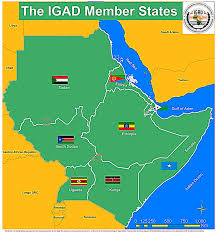
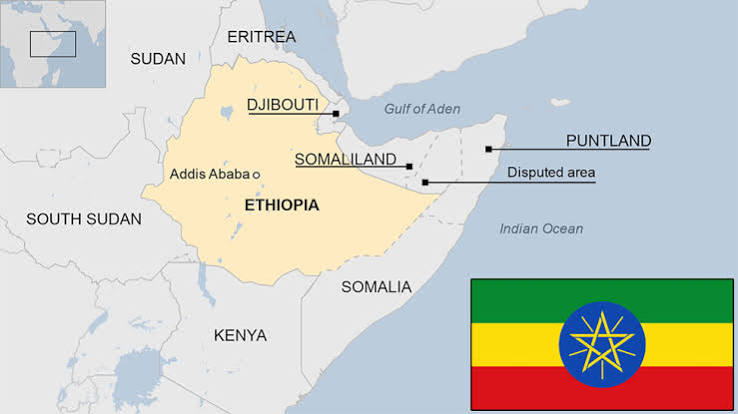
A modern investor does not see Kenya, Ethiopia, Somalia, Djibouti, Eritrea, and South Sudan as isolated entities.
They increasingly view them as a regional market.
This creates a constitutional challenge.
Can governments cooperate without sacrificing sovereignty?
Can regional integration occur while maintaining national identity?
Can economic coordination become stronger than political rivalry?
These questions may determine whether the Horn develops into a genuine economic corridor or remains a collection of disconnected economies.
The Rule of Law Versus the Rule of Power
Economic growth ultimately depends on trust.
Trust is perhaps the most undervalued economic resource in the world.
A businessman invests because he trusts the system.
A bank lends because it trusts repayment.
A foreign investor enters a market because it trusts legal protection.
Trust emerges from one source above all others:
The rule of law.
When citizens believe that laws apply equally to everyone, economic activity expands.
When citizens believe success depends primarily on political connections, economic activity contracts.
The Horn of Africa’s economic future may depend less on attracting foreign aid and more on strengthening legal predictability.
Markets thrive where rules are predictable.
They struggle where power is unpredictable.
The Competition Between Extraction and Production
Another philosophical challenge concerns the purpose of the economy itself.
Many developing regions become trapped in extractive economic models.
They export raw materials.
They import finished products.
They consume more than they produce.
The Horn faces a critical choice.
Will it become merely a transit route for global commerce?
Or will it become a center of production?
There is a profound difference between facilitating wealth and creating wealth.
Ports alone do not create prosperity.
Factories create prosperity.
Research institutions create prosperity.
Technology companies create prosperity.
Educational systems create prosperity.
The most successful economic corridors eventually evolve from transportation corridors into innovation corridors.
That transition will be crucial for the Horn.
The Demographic Opportunity
The Horn of Africa possesses one of the youngest populations in the world.
This reality creates enormous potential.
But demographics alone do not guarantee growth.
A young population can become a demographic dividend.
Or it can become a demographic crisis.
The difference depends on education.
The difference depends on opportunity.
The difference depends on governance.
If millions of young people are equipped with skills and opportunities, they become engines of growth.
If opportunities remain limited, frustration grows.
The constitutional challenge is therefore not simply job creation.
It is creating systems that allow future generations to participate meaningfully in economic life.
A New Philosophy of Regional Cooperation
Perhaps the greatest opportunity facing the Horn is the possibility of redefining regional cooperation.
Historically, regional politics has often been dominated by security concerns.
Border disputes.
Political rivalries.
Military calculations.
Yet the future may require a different philosophy.
A philosophy where neighboring countries see each other primarily as economic partners rather than strategic competitors.
A philosophy where ports complement one another.
Where infrastructure networks connect economies.
Where prosperity becomes a shared objective.
Economic corridors succeed when cooperation becomes more profitable than conflict.
The Real Test
The real test facing the Horn of Africa is not whether investors arrive.
Investors are already arriving.
The real test is whether institutions can manage growth responsibly.
Can governments resist corruption?
Can legal systems maintain credibility?
Can constitutional frameworks provide stability?
Can economic policies outlive political cycles?
These are the questions that separate temporary growth from lasting transformation.
Conclusion
Can the Horn of Africa become Africa’s next economic growth corridor?
Yes.
The geography exists.
The population exists.
The strategic location exists.
The investment interest exists.
The opportunity exists.
But economic corridors are not built primarily with concrete.
They are built with institutions.
They are built with trust.
They are built with constitutional stability.
They are built with a philosophy that places productive citizens at the center of national development.
The future of the Horn of Africa will therefore not be decided solely by ports, railways, highways, or foreign investments.
It will be decided by whether the region can create political systems that reward innovation, protect freedom, strengthen the rule of law, and encourage cooperation over conflict.
If that happens, the Horn of Africa may not simply become Africa’s next economic growth corridor.
It may become one of the most important economic crossroads of the twenty-first century.


Leave a Reply