
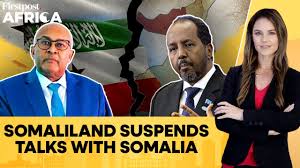
Understanding Somalia and Somaliland: Why They Went Separate Ways, Why They Are Different and What the Future Holds.
The story of Somalia and Somaliland is one of Africa’s most complex political and historical questions. To many people outside the Horn of Africa, Somalia and Somaliland may appear to be the same place, inhabited by the same people, speaking the same language, sharing the same religion and belonging largely to the same ethnic identity. Yet for more than three decades, they have followed very different political paths.
Today, Somaliland operates as a self-governing territory with its own government, military, currency, elections and institutions, while Somalia continues to struggle with political instability, security challenges and state-building efforts. Understanding why this happened requires a journey through history, colonialism, civil war and competing visions of nationhood.
The Colonial Origins of the Division
To understand the separation between Somalia and Somaliland, we must go back to the colonial era.
The territory known today as Somaliland was a British protectorate called British Somaliland. Meanwhile, southern Somalia was controlled by Italy and became Italian Somaliland.
For decades, the two territories were administered separately by different colonial powers. They developed different legal systems, administrative structures, educational models and governance traditions.
When the wave of African independence swept across the continent, British Somaliland gained independence on June 26, 1960. Five days later, on July 1, 1960, it voluntarily united with Italian Somaliland to form the Somali Republic.
The dream was simple and powerful: unite all Somali-speaking people into one nation. This vision, known as “Greater Somalia,” sought to bring together Somalis living in Ethiopia, Kenya, Djibouti, and the newly independent Somali Republic.
At the time, many Somalis viewed the union as a symbol of African unity and national pride.
However, the honeymoon would not last long.
Growing Discontent in the North
Soon after unification, many people in the former British Somaliland began feeling marginalized.
Political power became concentrated in Mogadishu, the capital in the south. Many northern communities argued that development projects, government resources, and political appointments disproportionately favored the southern regions.
The legal systems inherited from Britain and Italy also proved difficult to harmonize. As years passed, dissatisfaction grew.
The situation worsened dramatically after military leader Siad Barre seized power in 1969 through a coup.
Initially, Barre promoted Somali nationalism and modernization. However, his government gradually became increasingly authoritarian.
Opposition movements emerged across the country, including the Somali National Movement, or SNM, which drew significant support from northern communities.
The Civil War and the Collapse of Trust
The 1980s marked one of the darkest chapters in Somali history.
The Barre government launched military operations against SNM fighters in the north. Cities such as Hargeisa and Burao suffered extensive destruction. Thousands of civilians were killed, displaced, or forced to flee.
For many people in Somaliland today, these events represent more than a political conflict. They are viewed as a profound betrayal by a government that was supposed to represent all Somalis.
The memories of the war remain a central part of Somaliland’s identity and help explain why many residents strongly oppose reunification with Somalia.
When the Barre government collapsed in 1991, Somalia descended into state collapse and civil war.
That same year, leaders in the north declared the restoration of the independent Republic of Somaliland, arguing that they were simply reclaiming the sovereignty they briefly held in June 1960 before entering the union.
Since then, Somaliland has maintained that it is not seceding from Somalia but rather restoring a sovereignty that existed before the union.
Why Somalia and Somaliland Are Different Today
More than thirty years after the separation, the differences between Somalia and Somaliland have become increasingly pronounced.
Governance
Somaliland has built relatively stable political institutions.
It has conducted multiple elections, developed local governance structures, and established mechanisms for peaceful political transitions.
Its government controls most of the territory it claims and maintains functioning public institutions. Somalia, by contrast, has spent decades rebuilding from state collapse.
The internationally recognized government in Mogadishu has made substantial progress since the 1990s but continues to face significant security and governance challenges.
Security
One of the most visible differences is security.
Somaliland is often viewed as one of the more stable areas in the Horn of Africa.
Somalia continues to confront threats from the militant organization Al-Shabaab, which remains a major security concern despite ongoing military operations by Somali forces and international partners.
International Recognition
Perhaps the most significant difference is recognition.
Somalia is recognized internationally as a sovereign state and is a member of the United Nations, the African Union, and other international bodies.
Somaliland, despite operating as a de facto independent state, remains unrecognized by any UN member state as a fully sovereign country.
This lack of recognition limits access to international finance, diplomatic representation, and development opportunities.
Economic Development
Both territories face economic challenges, but their circumstances differ.
Somalia benefits from international recognition and access to global institutions.
Somaliland relies heavily on livestock exports, remittances from the diaspora and trade through the strategic Port of Berbera.
Recent investments in Berbera have strengthened Somaliland’s economic prospects and increased its strategic importance along the Gulf of Aden.
Why Somalia Opposes Somaliland’s Independence
From Somalia’s perspective, Somaliland remains an integral part of the Somali Republic.
Successive governments in Mogadishu have argued that recognizing Somaliland’s independence could encourage fragmentation elsewhere and undermine national unity.
Many Somali leaders believe that preserving territorial integrity is essential for the country’s future stability.
There is also a broader African context.
The African Union has historically been reluctant to alter colonial borders because doing so could trigger numerous separatist movements across the continent.
As a result, many African governments remain cautious about supporting Somaliland’s recognition despite acknowledging its relative stability.
Why Somaliland Insists on Independence
For Somaliland, the argument centers on self-determination and historical experience.
Supporters of independence argue that Somaliland has already demonstrated its ability to govern itself peacefully and effectively.
They point to decades of stability, elections, institution-building, and security achievements.
Many residents believe the union with Somalia failed and that returning to it would risk undoing the progress achieved since 1991.
For them, independence is not merely a political aspiration but a reflection of historical reality and collective experience.
The Geopolitical Importance of Somaliland
In recent years, Somaliland has attracted growing international attention.
Its location along the Gulf of Aden places it near one of the world’s most important shipping routes.
Global powers increasingly view the Horn of Africa as a strategic region due to maritime trade, energy security, military competition, and regional stability.
The Port of Berbera has become particularly significant because of its potential role in regional commerce.
Several countries are closely monitoring developments in Somaliland, especially as geopolitical competition intensifies across the Red Sea corridor.
This growing strategic importance may influence future discussions about Somaliland’s status.
What Does the Future Hold for Somalia?
The future of Somalia depends largely on continued state-building efforts.
The country has made notable progress compared to the chaos of the early 1990s.
Government institutions are stronger than they were decades ago. Infrastructure projects are expanding. Economic reforms are being implemented. International partnerships continue to grow.
However, significant challenges remain.
Security concerns, political rivalries, federal-state tensions, and economic development will continue to shape Somalia’s trajectory.
If these challenges are successfully managed, Somalia could emerge as one of East Africa’s major economic and political powers.
What Does the Future Hold for Somaliland?
For Somaliland, the central question remains international recognition.
The territory has spent more than three decades building institutions while seeking acceptance as a sovereign state. Whether recognition comes in the near future remains uncertain.
Some observers believe gradual diplomatic engagement and strategic partnerships could eventually lead to wider international acceptance.
Others argue that geopolitical realities and concerns about regional stability will continue to delay recognition.
Regardless of formal recognition, Somaliland appears determined to continue strengthening its institutions and expanding its international relationships.
Conclusion
The story of Somalia and Somaliland is not simply a border dispute. It is a story shaped by colonial history, political union, civil war, state collapse and competing visions of sovereignty.
Somalia seeks to rebuild a unified nation and preserve territorial integrity. Somaliland seeks recognition for a state it believes it has already established through decades of self-governance.
Both territories face opportunities and challenges. Both are important to the future of the Horn of Africa. And both will continue to play a critical role in shaping the political and economic landscape of one of the world’s most strategically significant regions.
The question of whether Somalia and Somaliland will one day reunite, coexist as separate entities, or develop an entirely new political arrangement remains one of Africa’s most important unresolved issues. What is certain, however, is that the future of both will have implications far beyond their borders, affecting regional stability, international trade, and the balance of power across the Horn of Africa and the Red Sea region.


Leave a Reply