

A Critical Examination of Governance, Constitutionalism, and Ethiopia’s Democratic Future
For much of the twentieth century, African nations fought long and painful struggles to free themselves from European colonial rule. Millions sacrificed their lives believing that independence would bring self-governance, dignity, equality before the law, and governments accountable to their own citizens.
The dream was simple. Africans wanted to govern themselves.
Yet decades after independence, many African societies continue to debate whether some governments have replaced foreign domination with centralized forms of internal political control. This has led scholars and political commentators to ask an uncomfortable question:
Can a country be politically independent while its citizens feel increasingly excluded from meaningful participation in governance?
This debate has become particularly significant in Ethiopia under the administration of Prime Minister Abiy Ahmed.
This discussion is not about ethnicity or nationality. It is about governance.
It is about whether constitutional principles are being respected, whether institutions remain independent, and whether political power is exercised within the limits established by law.
These are questions every democracy must continuously ask itself.
Ethiopia’s Promise of Reform
When Abiy Ahmed assumed office in 2018, many Ethiopians and international observers celebrated what appeared to be the beginning of a new political chapter.
Political prisoners were released.
Exiled opposition leaders returned.
Media restrictions were eased.
Peace was restored with Eritrea.
These developments earned Abiy Ahmed international recognition, including the Nobel Peace Prize.
Many believed Ethiopia was moving toward a more democratic future.
But governing a country as diverse and politically complex as Ethiopia proved far more difficult than the optimism of 2018 suggested.
From Reform to Growing Concerns
Over the following years, Ethiopia experienced increasing political tensions.
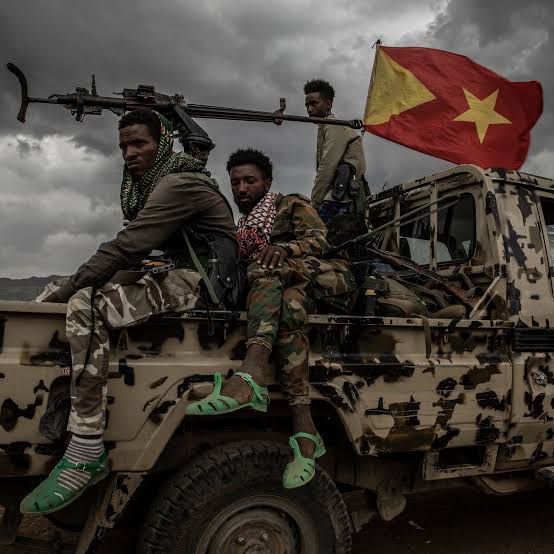
The devastating conflict in Tigray drew worldwide attention.
Violence spread into other regions.
States of emergency were declared.
Journalists, opposition politicians, and civil society actors raised concerns about shrinking civic space.
Supporters of the government argue these measures were necessary to preserve national unity and confront armed insurgencies.
Critics counter that prolonged emergency measures, restrictions on political activity, and pressure on independent media risk weakening democratic institutions.
The central question is therefore not whether governments should maintain security—they have that responsibility—but whether security measures remain consistent with constitutional guarantees and the rule of law.
The Constitution as the Foundation of Government
Every constitutional democracy is built upon one essential principle.
No individual is above the constitution.
In Ethiopia, the Constitution provides for fundamental rights, including freedoms of expression, association, religion, and due process, while also establishing the country’s federal structure and the distribution of powers among institutions.
Constitutions are designed precisely for moments of political crisis.
When governments face security threats, constitutions do not disappear.
Rather, they become even more important because they establish the legal limits within which governments may act.
The strength of a constitutional order is measured not during peaceful times but during periods of conflict and uncertainty.
The Risk of Concentrating Power
History repeatedly demonstrates that excessive concentration of political power carries significant risks.
Strong leaders may initially gain public support because they promise stability.
However, when institutions become dependent on one individual rather than on constitutional procedures, long-term governance becomes more fragile.
Independent courts, professional civil services, autonomous electoral institutions, and a free press serve as checks and balances that help prevent abuses of power.
When these institutions weaken, citizens may lose confidence in the fairness of government.
Political disagreements that could have been resolved peacefully may instead become more polarized.
Federalism and Ethiopia’s Diversity
Ethiopia is one of Africa’s most diverse countries, with numerous ethnic groups, languages, cultures, and regional identities.
The federal system was designed to balance national unity with regional autonomy.
Debates over the interpretation and implementation of federalism remain central to Ethiopian politics.
Some argue that stronger central authority is necessary to maintain national cohesion.
Others believe that weakening regional autonomy undermines constitutional commitments and risks deepening political tensions.
Whatever one’s position, sustainable solutions require dialogue, constitutional processes, and respect for differing political views rather than coercion.
International Law and Human Rights
International law recognizes the sovereignty of states while also affirming that governments have obligations to respect fundamental human rights.
Through treaties and international commitments, states are expected to protect freedoms such as expression, peaceful assembly, due process, and protection from arbitrary detention.
Governments also have the legitimate duty to protect citizens from violence and armed conflict.
These responsibilities are not mutually exclusive.
The challenge for every government is to strike an appropriate balance between national security and individual rights.
When that balance is perceived to tilt too far toward repression, domestic trust and international confidence may decline.
Lessons from African History
Africa’s post-independence history offers many examples of leaders who came to power promising reform but later presided over increasingly centralized systems.
The lesson is not unique to one country.
It applies across the continent and beyond.
Strong institutions matter more than strong personalities.
Governments endure when citizens believe institutions are fair, transparent, and accountable.
What Could Be at Risk?
If concerns about democratic backsliding are not addressed, Ethiopia could face several long-term risks.
Public trust in state institutions may continue to erode.
Political polarization could deepen.
Economic investors often prefer predictable legal systems and political stability; prolonged uncertainty can discourage investment.
Relations with international partners may become more complicated if allegations of human rights abuses or restrictions on civil liberties persist.
Most importantly, younger generations may lose confidence that peaceful political participation can bring meaningful change.
A Path Forward
Ethiopia possesses remarkable human potential, economic opportunities, and cultural diversity.
Its future need not be defined by conflict.
A sustainable path forward could include strengthening judicial independence, protecting media freedom, encouraging inclusive national dialogue, ensuring credible electoral processes, respecting constitutional guarantees, and allowing peaceful political competition.
Such measures are not signs of weakness.
They are hallmarks of resilient governance.
Conclusion
The central question facing Ethiopia is not whether the country should be strong.
It is what kind of strength will best secure its future.
History suggests that nations achieve lasting stability not through fear but through institutions that citizens trust.
Whether one supports or opposes the current government, constitutionalism, accountability, and respect for the rule of law remain essential foundations for long-term peace and prosperity.
The debate over Ethiopia’s future should therefore focus less on personalities and more on institutions. Governments come and go, but constitutions, democratic norms, and the rule of law are what enable nations to endure.
For Ethiopia, as for every nation, the ultimate measure of leadership is not simply maintaining power but strengthening the institutions that will serve generations to come.


Leave a Reply