
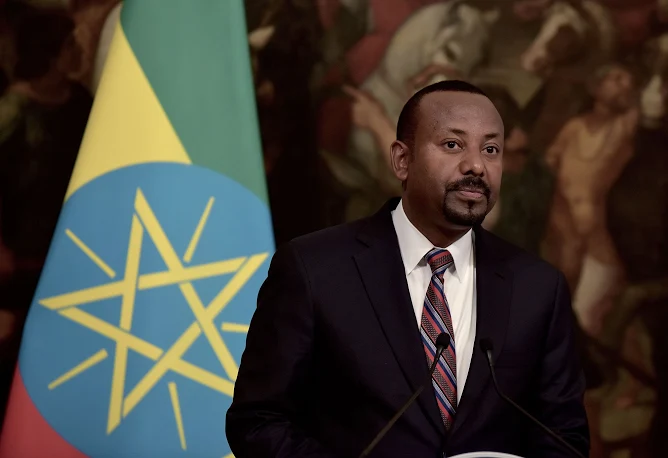


Today’s Ethiopia cannot be understood without closely examining the role played by Oromo political elites, particularly those who have dominated state power since the political transition of 2018. The issue today is no longer simply about historical Oromo grievances. That phase has largely passed. The central question now is: once Oromo elites reached the center of political power in Ethiopia, did they build an inclusive national state, or did they instead deepen ethnic polarization, power concentration, and national mistrust?
- The 2018 Transition and the Lost Opportunity
The Oromo protests from 2014 to 2018 were among the most significant political movements that transformed the EPRDF system. The uprising ultimately brought new leadership to power and removed the old political order from the center of state authority.
However, the historic opportunity of 2018 was not used to establish a system based on justice, democracy, and inclusive national ownership. Instead, Ethiopia entered a new phase characterized by wars, imprisonment, media repression, and the collapse of national trust.
Reports indicated that conflicts in the Amhara, Oromia, and Tigray regions continued, with serious abuses committed by multiple actors. Other reports also noted that freedom of movement and civil liberties had become increasingly restricted, particularly in Oromia, Amhara, Benishangul-Gumuz, Somali, Gambella, and Afar regions of Ethiopia, reflecting the weakening of normal state governance.
- The First Mistake: Turning Oromummaa into a State Project
Oromo identity, as a cultural identity and demand for equal rights, is entirely legitimate. The problem began when ethnic identity was transformed into a state project intended to shape and dominate the governance of the entire country.
Some Oromo nationalist elites view Ethiopia as a historical structure fundamentally hostile to Oromos. This perspective has encouraged the idea that the current state should be used as an instrument of political revenge.
When a country is governed through a mentality of historical retaliation, justice, legality, and national trust inevitably deteriorate.
This has created deep anxiety among:
- Amharas,
- Tigrayans,
- Somalis,
- Afars,
- and other communities,
many of whom increasingly feel that Ethiopia is no longer moving toward genuine nation-building, but toward domination by another ethnic elite.
- The Second Mistake: Replacing Democracy with Power Consolidation
Many Ethiopians who supported the 2018 transition expected:
- political openness,
- media freedom,
- and national reconciliation.
Instead, the country experienced new conflicts and growing restrictions on civil society.
Human Rights Watch warned in 2025 that the Ethiopian government suspended or pressured human rights organizations and civil society groups. Freedom House also reported increasing restrictions on independent media and internet freedoms, with many journalists fleeing the country due to fear of arbitrary arrest or abduction.
Democratic reform was gradually replaced by fear and centralized power accumulation, creating a major obstacle to rebuilding Ethiopian nationhood.
Such a system may produce a strong state apparatus, but not a legitimate or trusted nation.
- The Third Mistake: OLA and the Militarization of Politics
The OLA has become one of the clearest symbols of political failure in Oromia.
Supporters of Oromo nationalism argue that the OLA emerged because of political repression and security abuses. However, the current reality is that the militarization of politics is destroying:
- civilian life,
- state stability,
- and national cohesion.
Reports published in March 2026 stated that OLA fighters were accused of rape, sexual slavery, killings, and destruction of civilian property — abuses that could amount to war crimes.
At the same time, there are allegations that some armed groups linked to state structures were created to discredit the OLA and manipulate the conflict politically.
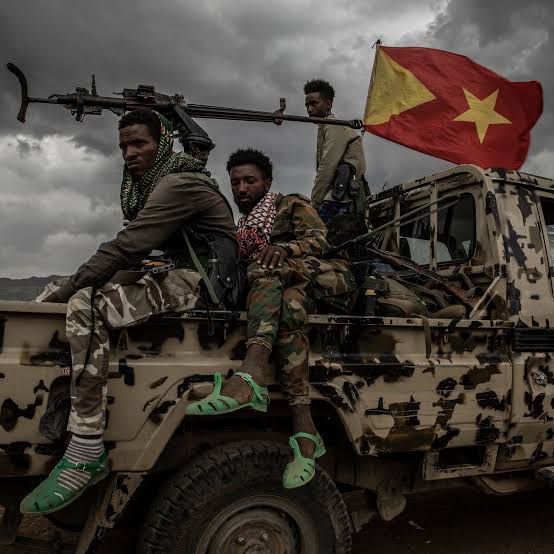
Reports also indicate that Ethiopia is currently facing three major internal armed conflicts:
- one between the ENDF and Fano,
- another between the ENDF and the OLA,
- and tensions involving the ENDF and TDF.
This demonstrates that Ethiopia’s crisis is no longer merely a political debate. It has evolved into a severe security crisis threatening the survival of the Ethiopian state itself.
- The Fourth Mistake: Exploiting the Amhara–Tigray Conflict
One of the most serious accusations directed at the ruling elite is that they have politically benefited from, and in some cases intensified, the conflict between Amharas and Tigrayans, especially over disputed territories such as Welkait.
If the central government views such conflicts as a “golden political opportunity” to weaken two historically influential groups, that is not responsible statecraft; it is national destabilization.
A responsible national government should:
- de-escalate conflicts,
- mediate fairly,
- and resolve disputes through law and constitutional mechanisms.
If it instead chooses to keep ethnic groups divided in order to maintain political control, it undermines the legitimacy of the state itself.
- The Fifth Mistake: Medemer Failed as a State-Building Philosophy
Medemer was presented as a unifying political philosophy for Ethiopia. However, in practical political terms, it failed to evolve into a coherent and scientific framework for state-building.
It remained largely a political slogan without clearly addressing:
- how to build balanced federalism,
- how to resolve ethnic conflicts,
- how power should be shared,
- how regional rights should be protected,
- and how to construct a national identity free from domination.
A national philosophy cannot survive as rhetoric alone. It must be reflected in:
- institutions,
- laws,
- justice,
- and public trust.
Those elements remain weak in Ethiopia today.
- The Scientific and Political Solution
Ethiopia cannot be saved through Oromo nationalism or Oromummaa alone. If left unchecked, both carry serious risks.
The first solution is a reformed federal system.
Not a system where every ethnic group defends itself through armed territorial politics, and not a centralized authoritarian system that suppresses regions.
Instead, Ethiopia needs a federal arrangement based on:
- regional rights,
- power sharing,
- fair economic distribution,
- and trusted national institutions.
The second solution is genuine power sharing.
Every community must feel: “This country belongs to us as well.”
Oromos, Amharas, Tigrayans, Somalis, Afars, Sidamas, and all other groups must not be treated as guests inside a state owned by others.
The third solution is national reconciliation based on truth-telling.
The mistakes of:
- the EPRDF,
- Medemer and Oromummaa,
- and the current administration
must all be openly confronted.
The fourth solution is ending revenge politics.
A nation built on revenge only creates future revenge.
Ethiopia needs justice, not another historical cycle where each group punishes others once it gains power.
Conclusion
Ethiopia’s current crisis has been significantly intensified by ruling elites who failed to transform the historic opportunity of 2018 into genuine nation-building.
They lost a rare chance to build a new Ethiopia based on:
- justice,
- democracy,
- and shared national ownership.
At the same time, ordinary Oromo people are not the problem facing Ethiopia.
The deeper problem lies in political elites who used Oromo identity as a tool for:
- power accumulation,
- ethnic polarization,
- and a system that failed to build national trust.
Ethiopia cannot survive if Oromummaa becomes a replacement for Ethiopian identity.
The country’s survival depends on building a new national order where:
- all ethnic communities are equal stakeholders,
- law stands above ethnicity,
- and the state serves the nation rather than a single ethnic elite.


Leave a Reply